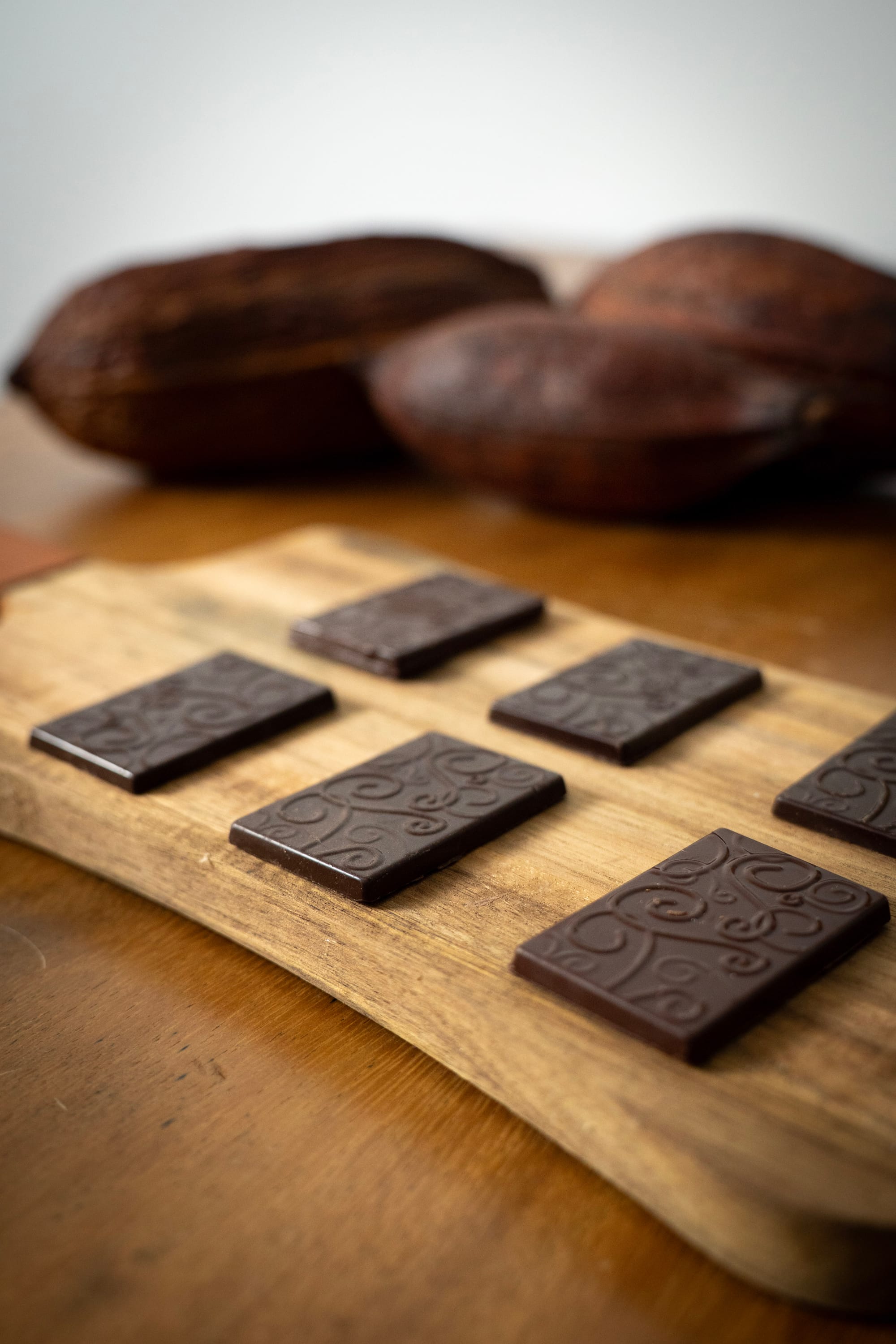

- agroforestry,
- artisanal chocolate,
- artisanal chocolate craft revival,
- cacao from costa rica,
- cacao nibs health benefits chocolate,
- costa rica forest,
- costa rican chocolate,
- costa rican tea,
- forest recovery,
- Maleku cacao heritage Costa Rica,
- maleku chocolate
Indigenous Knowledge Shaped the Best Cacao Systems in The World
ndigenous farming knowledge built the most resilient cacao systems on earth. Discover how the Maleku people's ancestral relationship with cacao shapes every bar we make.
Agricultural science has a habit of treating farmer knowledge as anecdote: useful color for a magazine piece, secondary to whatever a peer-reviewed trial concludes. Cacao keeps embarrassing that habit. The disease-resilient, high-flavor cacao systems still standing after a century of monoculture failures almost all trace back to people who never ran a controlled trial but spent generations watching one valley closely enough to know it. Llano Azul, in Upala at the base of Tenorio Volcano, is one of those valleys. The evidence for how long people have known it is not a claim. It is buried in the ground, and in 2019 it surfaced.
WHAT CAME UP OUT OF THE SOIL
In 2019, cacao planting work at Finca Blue Valley in Llano Azul turned up ceramic fragments. Instead of quietly continuing to plant, the farm stopped and reported the find to the National Museum of Costa Rica. What followed was a formal registration: the site is now a certified pre-Columbian archaeological monument, catalogued A-549 Ca and named Caju, the word for cacao in the Maleku language. The ceramics belong to the Ron Ron phase of Costa Rican prehistory, dated to roughly 300 BC to 300 AD, and the registered site covers approximately 6,300 square meters of the working farm.
Ron Ron-phase pottery sits within the Arenal/Cordillera de Tilarán ceramic sequence, a tradition that shows a transitional character blending influences from the Greater Nicoya region to the west and the Atlantic Watershed to the east. That is a real, dateable material record of human settlement in this exact valley two thousand years before anyone planted the trees standing here today. It is worth being precise about what the evidence does and does not prove: the connection between the Ron Ron-phase potters and the present-day Maleku people, who speak a Chibchan language with deep roots across northern Costa Rica, is plausible and geographically coherent, but it is not a documented, unbroken line. What is not in question is that this valley has been inhabited, worked, and valued by people for millennia, and that Maleku Chocolate is now legally responsible for protecting the physical record of that. No other chocolate maker anywhere holds a certified archaeological monument on its working farmland. This one is a genuine, singular obligation, not a marketing flourish.
WHAT SURVIVED WITHOUT A RECORD: THE MALEKU RELATIONSHIP TO CACAO
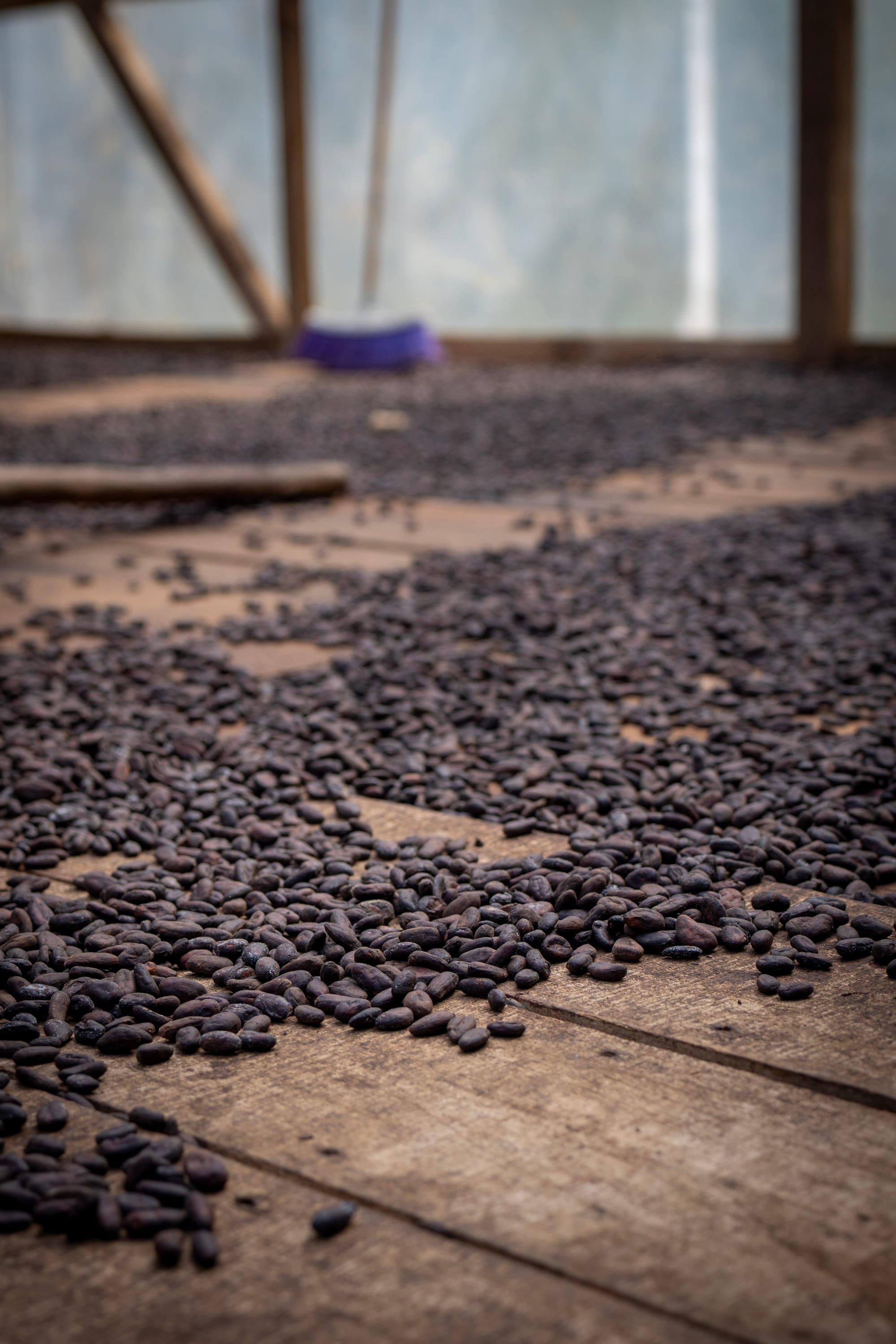
Separately from the archaeological record, the Maleku people, whose ancestral territory spans the Guatuso/Upala area of northern Alajuela, have a documented and continuing relationship with cacao that is practical and cultural: present in food, in traditional medicine, and in knowledge passed between generations about how the tree behaves. It is worth being exact about what this is and is not. It is not the shamanistic ceremonial framework documented among the Bribri and Cabécar of the Talamanca region, where cacao is treated as sacred, prepared by specific ritual roles, and central to formal ceremony. Even there, Bribri sources themselves are clear that the modern "cacao ceremony" popularized in wellness circles is a Western (sikua) invention layered onto their tradition, not an indigenous Costa Rican practice in its own right. Conflating the Maleku relationship with the Bribri one, or dressing either up as a spa-style ceremony, misrepresents both. The Maleku knowledge that matters here is a different kind: sustained, working familiarity with a specific tree in a specific valley, developed by people who depended on getting it right.
That kind of knowledge does not need embellishment to be significant. It is the same kind of knowledge every experienced cacao farmer still relies on today, and it is worth describing precisely, because precision is what makes it credible.
WHAT WATCHING A TREE FOR GENERATIONS ACTUALLY TEACHES
A farmer who has worked a cacao valley for years reads signals no lab test captures in real time. Leaf color shifts before a nutrient deficiency shows up in soil chemistry. Certain weeks in the dry season carry a particular humidity that farmers learn to associate with spore release from Moniliophthora roreri, the fungus behind frosty pod rot and one of the two dominant cacao disease threats in Central America (conditions of excess humidity and poor airflow are exactly what favor it). Low-lying, poorly drained sections of a farm behave differently after heavy rain, and farmers learn which corners of their own land become a liability for Phytophthora palmivora, a second major pathogen that thrives specifically in waterlogged soil. None of this is written down anywhere specific to Llano Azul. It lives in the people who walk the farm week after week, across enough seasons to have seen the pattern repeat.
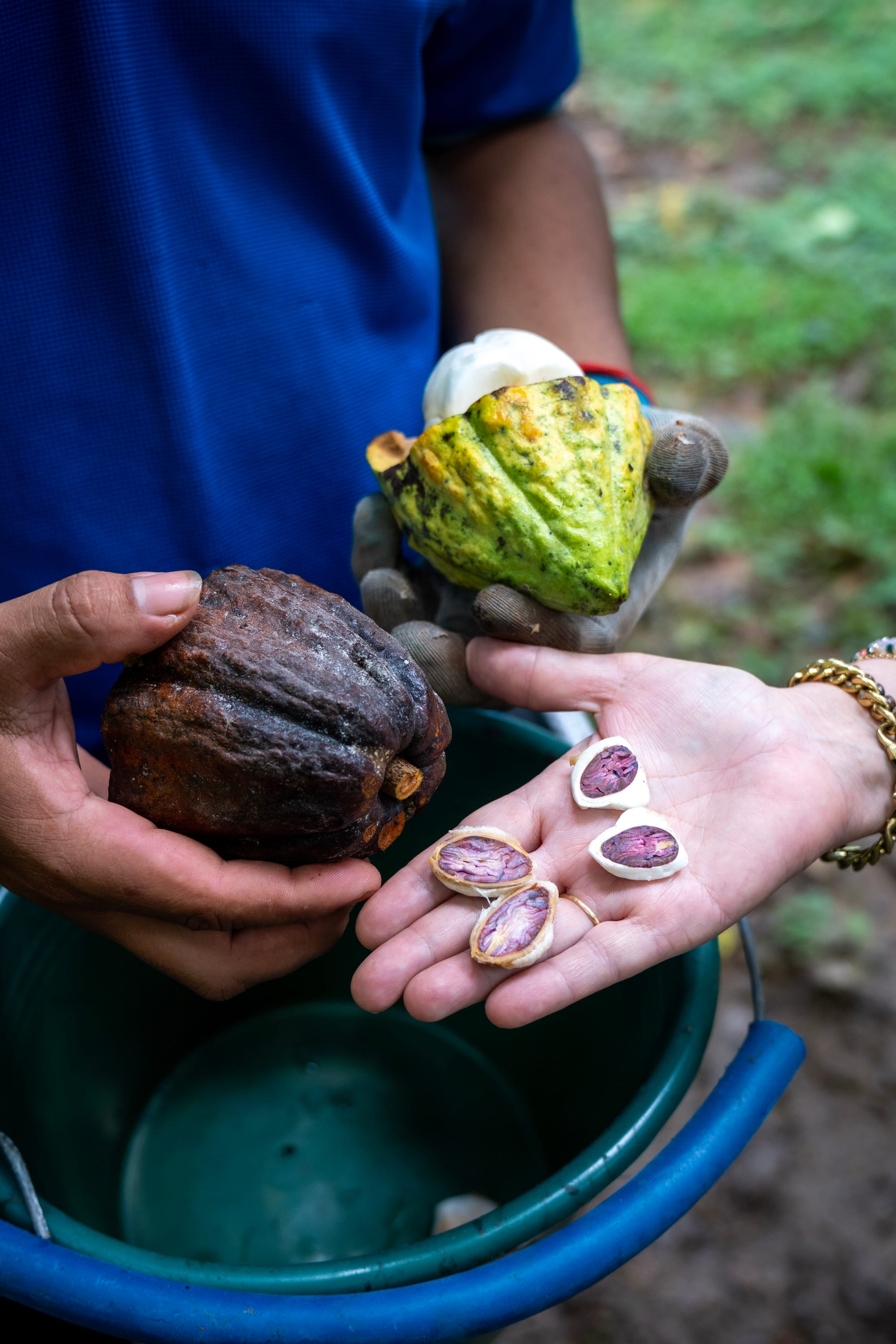
This is the same logic that underlies the region's traditional agroforestry model, which long predates any modern sustainability framework. Cacao here was never grown as an open, sun-exposed monoculture. It was grown under a canopy, beside nitrogen-fixing trees like poró (Erythrina poeppigiana), among fruiting species and medicinal plants, in a structure that moderates temperature, builds soil fertility through continuous leaf litter, and gives insects, birds, and soil organisms enough habitat to keep pest and disease pressure in check biologically rather than chemically. Costa Rica's own national cacao-production guidance still recommends this exact model today, for the same reasons farmers arrived at it generations ago: regulate light entry to the canopy and pest pressure follows.
THE GENETICS THAT GREW OUT OF THAT ATTENTION
Sustained, close observation of a single valley over time is also how a genetics program gets built. At Finca Blue Valley, the current production farm at Llano Azul (roughly 13.26 hectares, more than 7,000 cacao trees), generations of selection pressure and, more recently, deliberate propagation work have produced 26 distinct, non-clonal cacao selections: Maleku 1 through Maleku 26, each grown from seed and each genetically unique. Of these, Maleku 1 and Maleku 2 are formally registered as distinct cacao varieties; the rest exist and are producing on the farm without formal registration, which is a meaningful distinction and not a technicality to gloss over.
These selections carry Trinitario lineage, the natural hybrid of Criollo and the hardier, higher-yielding Forastero, which is the genetic background behind Costa Rica's reputation as a source of fine-flavor cacao. Maleku 2 in particular stands out for an unusually smooth, low-bitterness profile even at high cacao percentages, a trait that shows up directly in the finished bars. None of these 26 selections would exist without decades of people paying close enough attention to which trees, in which corners of this specific valley, were worth propagating. That is Maleku ecological knowledge and modern varietal science arriving at the same conclusion from different directions.
Blue Valley Chocolate's second property, Finca El Higuerón (roughly 84 hectares, nearly 60,000 trees planted), extends this same organic, agroforestry-based approach across significantly more land. It is still in agricultural development and is not yet a bean source for Maleku Chocolate bars; every bar sold today still comes from Llano Azul alone. That distinction matters for the same reason precision matters throughout this piece: the story is stronger for being exact about what is proven, what is producing, and what is still becoming.