
- agroforestry,
- artisanal chocolate craft revival,
- artisanal chocolate fine flavor cacao,
- cacao from costa rica,
- cacao finca costa rica,
- cacao fermentation control chocolate flavor,
- chocolate awards,
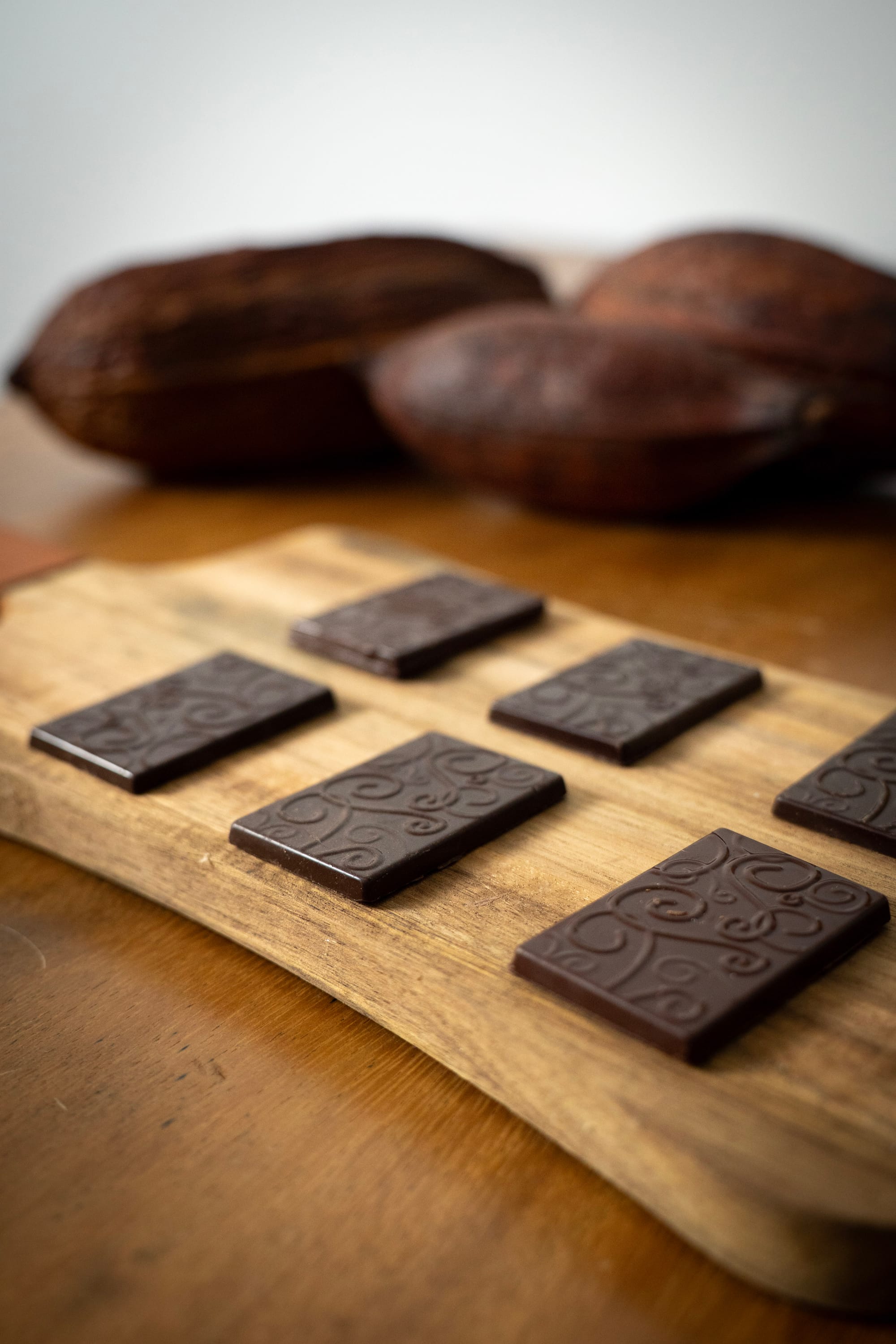
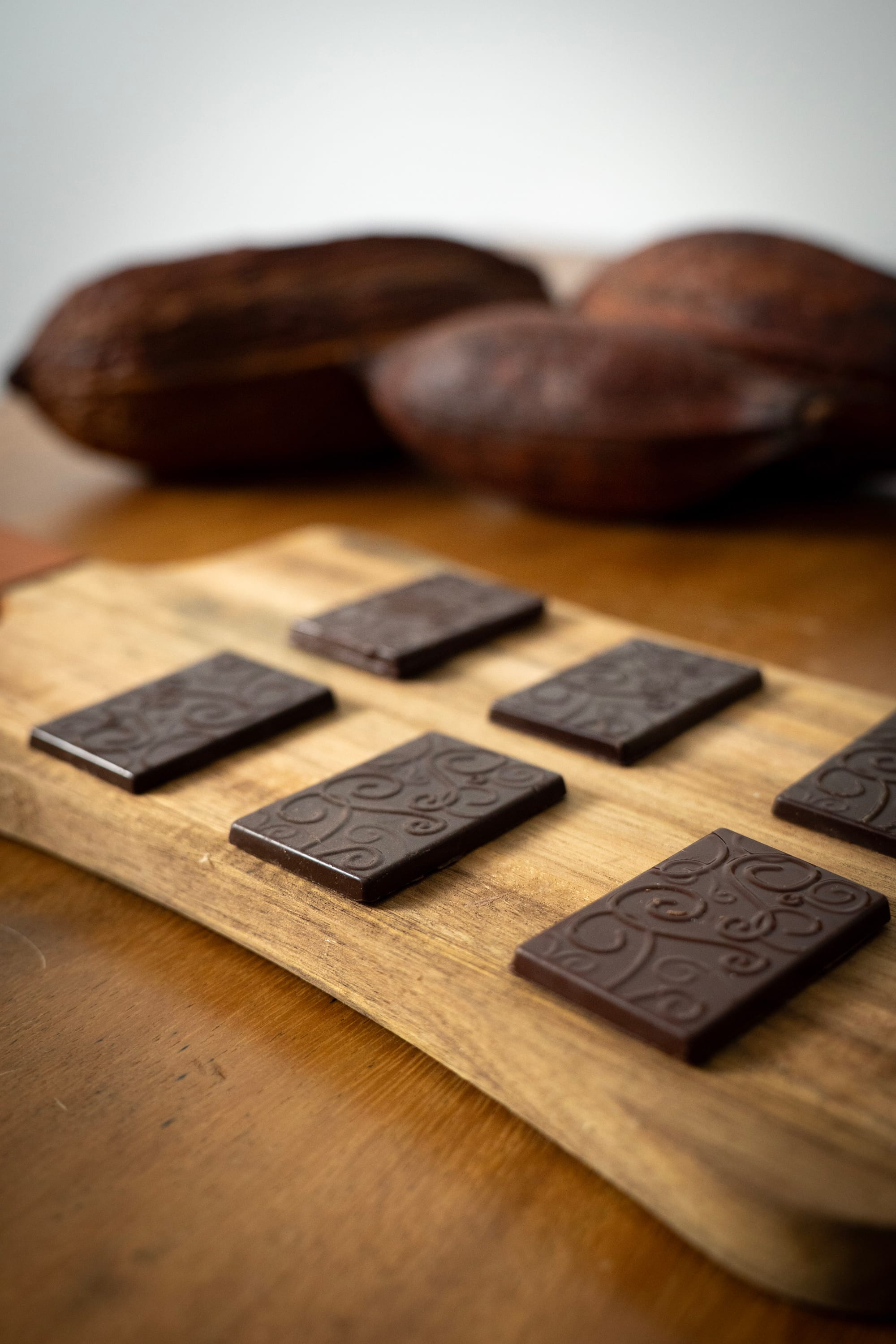
- chocolate bar,
- costa rica forest
What a Bar of Maleku Chocolate Actually Pays For: A Line-by-Line Accounting
Organic farms, 26 proprietary cacao varieties, skilled fermentation, and legal stewardship of an archaeological site. Why Maleku Chocolate costs what it costs.
Ask a fine chocolate maker why their bar costs three or four times what a supermarket bar costs, and you will usually get a story. Passion, craft, terroir. Those things are real, but a story is not an answer to a cost question. A cost question deserves a ledger.
So here is the ledger. Not a mood, an itemized account of where the money in a bar of Maleku Chocolate actually goes, what each line would cost to skip, and why skipping it is not on the table.
Line Item Zero: Why the Category Itself Is Small
Before the line items, one number that most chocolate marketing leaves out: fine-flavor cacao (the category Maleku Chocolate's beans fall into) makes up somewhere around 5 to 10 percent of the world's total cacao supply. The other 90-plus percent is bulk commodity cacao, mostly Forastero-variety beans traded on the London and New York cocoa exchanges, grown for yield and blended across origins for consistency. Fewer than 1 in 10 chocolate businesses are actual bean-to-bar makers working with cacao at this level of specificity; most are remelting industrial couverture. That scarcity is not a marketing claim. It is a supply-side fact that sets a floor under what fine chocolate can cost, before a single farming or production decision is made.
Cocoa pricing has also become considerably more volatile in recent years, driven by climate stress on West African growing regions, aging tree stock, and disease pressure. When commodity cocoa prices spike, industrial makers respond by reformulating (more sugar, less cacao, added emulsifiers) to hold their price point. A single-estate maker sourcing 100 percent of its own beans does not have that lever, for better and worse: the cost structure below is fixed by the farm, not by a trading desk.
Line Item One: One Working Estate, Not Two
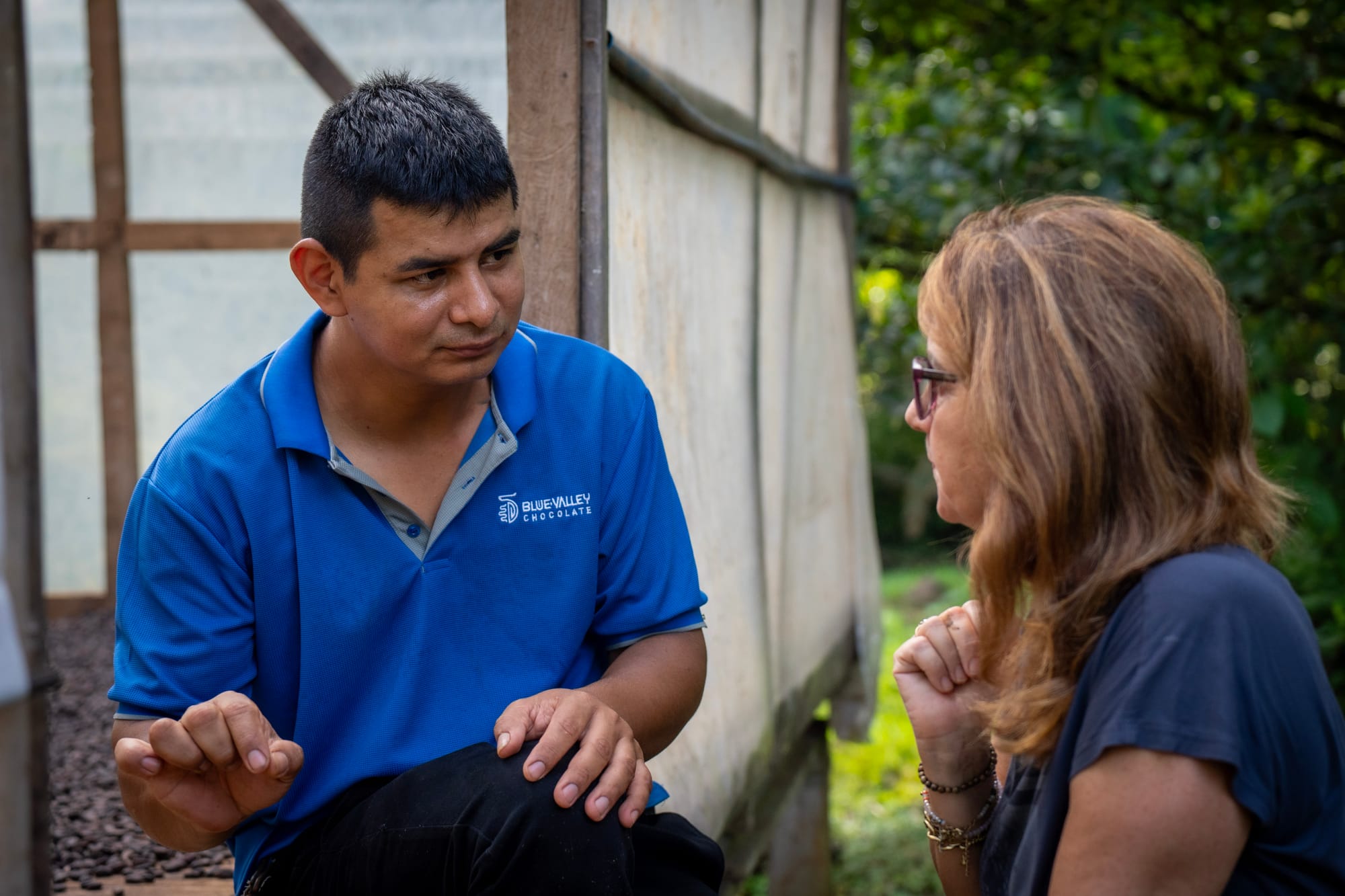
Maleku Chocolate is a single-estate brand. Every bar sold today is made from cacao grown at Finca Blue Valley in Llano Azul, roughly 13.26 hectares (about 33 acres) carrying more than 7,000 cacao trees. That is the correct, current picture, and it is worth being precise about it, because it is easy to round up.
Blue Valley Chocolate also owns a second, much larger property, El Higuerón, at roughly 84 hectares (208 acres) with nearly 60,000 trees planted. El Higuerón is real, it is organic-managed, and it is the company's growth engine for the next several years. But it is still in agricultural development. It is not yet a bean source for Maleku Chocolate bars. Folding it into "what you're paying for today" would overstate the current footprint. What you are actually paying for today is the yield of one 33-acre estate, farmed to organic standard, supporting the entire Maleku Chocolate line. That concentration, not scale, is precisely what makes the flavor traceable to a single valley instead of a blended average.
Line Item Two: The Organic Substitution Cost
Certified organic production (Kiwa BCS Costa Rica Limitada, USDA NOP Operation ID 4191121374) means no synthetic fertilizer, herbicide, or fungicide, full stop. Every input a conventional farm buys in a bag, an organic farm has to build or manage by hand:
- Fertility comes from composting, agroforestry leaf litter cycling under the rainforest canopy, and cover crops, not a bag of synthetic NPK. Organic matter has to be built over seasons, not applied in an afternoon.
- Weed control is manual cultivation, not a herbicide pass.
- Disease and pest management (a real threat in humid tropical cacao, where fungal pressure from pod-level pathogens is constant) relies on selective pruning for airflow, shade management, and biological controls, worked tree by tree, rather than a scheduled fungicide spray.
Published research on tropical cacao puts established farm operating costs between roughly $3,500 and $6,000 per hectare per year, and organic management sits at the high end of that range because labor, not chemistry, is doing the work. Across 13.26 hectares in active production, that is a recurring, non-optional annual cost baked into every kilogram of beans before a single one reaches the factory.
Line Item Three: The Genetics Program, Carried for Years Before It Pays Off
This is the line item almost never discussed publicly, and it is the one that most separates a fine-flavor single-estate maker from anyone buying commodity beans.
The farm has identified and is propagating 26 distinct, non-clonal cacao selections, Maleku 1 through Maleku 26, each one genetically unique because each was grown from seed rather than cloned. Of those 26, only Maleku 1 and Maleku 2 are currently formally registered cacao varieties; the rest exist and are producing on the farm but have not completed registration. Alongside these proprietary selections, the farm also maintains professional clonal lines bred for the Costa Rican context: CATIE-1, CATIE-4, and CATIE-6 from Costa Rica's own tropical agriculture research center, plus ICS (Imperial College Selection) and TSH lines with a long track record in Latin American cacao breeding.
Propagating any of this by grafting is skilled, specialist work. Crown grafting, the standard method for cloning selected material, requires a trained grafter working with rootstock at the right age and cutting buds at the right stage of dormancy; it is not a task you hand to seasonal labor. Costa Rica's own national cacao-production manuals treat grafting as a distinct discipline with its own nursery-management protocol, separate from general farm labor.
The financial reality of this program is the lag: a grafted cacao tree takes three to four years to begin producing pods. Every peso spent on the grafting nursery this year buys nothing this year. A commodity buyer never carries this cost, because a commodity buyer is not selecting or propagating genetics at all; they are purchasing beans that someone else already grew from stock someone else already selected. Maleku Chocolate carries the multi-year gap because the flavor identity of the brand depends on genetic material nobody else has access to.
Line Item Four: Post-Harvest Precision, Where Flavor Is Actually Made
Cacao's flavor potential is set by genetics and terroir, but its flavor is made during fermentation, and the research on this is specific: fermentation time and the ambient climate conditions during fermentation materially change the final sensory profile and aroma-compound chemistry of the chocolate. Rush it, run it at the wrong temperature, or standardize it across mixed lots (as aggregation centers serving industrial buyers typically do) and the flavor ceiling drops before the beans even leave the farm. A single-estate operation controls fermentation timing and box conditions directly, lot by lot, because there is no aggregator in between. Sun drying, rather than mechanized fast-drying, adds time but preserves the compounds fermentation developed.
Line Item Five: A Factory Built Around Reading the Batch, Not Running the Line
Industrial chocolate runs on continuous-process equipment, roller refiners and continuous tempering lines, processing tonnes per hour with minimal human judgment involved. The Brasilito factory runs the opposite model: small-batch roasting profiles read per lot rather than averaged, extended conching to build the smoothness the Maleku 2 genetic profile is capable of, and hand tempering, where a skilled operator reads the chocolate's crystallization behavior in real time and adjusts rather than trusting a fixed program. A misread temper produces visible bloom and a dull melt. A correct one produces the clean snap and fast, even melt that lets fine aroma compounds actually reach the palate. This is direct, ongoing manufacturing labor, the single largest recurring cost category identified across studies of small-batch craft chocolate production, and it exists at every batch, not just the first one.
Line Item Six: A Cost No Other Chocolate Maker on Earth Carries
Finca Blue Valley sits on top of the Caju archaeological site, a registered pre-Columbian settlement (registry A-549 Ca, dated approximately 300 BC to 300 AD) on land the company owns and is legally responsible for preserving. That is not a marketing flourish; it is a real stewardship obligation, layered on top of farming, that comes with the specific 33 acres the cacao is grown on. No amount of capital lets a competitor buy their way into that history. It exists at exactly one address, and every bar made from that estate's cacao carries the cost, and the story, of protecting it.
Why the Ledger Does Not Shrink With Volume
Every line item above scales with hectares and trees, not with bars sold. Doubling bar output without doubling verified organic acreage means diluting the source, which is precisely the trade industrial chocolate already made decades ago: cheaper inputs, faster processing, blended origins, flavor gaps patched with synthetic vanillin and emulsifiers like soy lecithin standing in for real cacao butter. That trade works when the goal is shelf price. It does not work when the goal is a specific, traceable flavor from one valley.
El Higuerón's eventual maturity will expand the estate real Maleku Chocolate can draw from, but it will not change this math. It will extend the same ledger across more hectares; it will not shorten any line item on it.
The price on a bar of Maleku Chocolate is not a margin decision. It is the sum of one working estate farmed without synthetic shortcuts, a genetics program that is still years from full payoff, fermentation and drying controlled lot by lot, a factory that treats every batch as its own decision, and a piece of land the company is legally and ethically bound to protect. Remove any one line and the chocolate changes. That is the actual accounting, not a story about it.


