
- agroforestry,
- artisanal chocolate,
- artisanal chocolate craft revival,
- artisanal chocolate fine flavor cacao,
- chocolate master,
- costa rican chocolate,
- costa rica exports,
- Maleku cacao heritage Costa Rica,
- maleku chocolate,
- Maleku single estate cacao experience,
- master chocolatier
When Chocolate Becomes Cultural Preservation
Explore how chocolate becomes cultural preservation. Maleku Chocolate's bars are the activation layer of this entire preservation project.
The valley of Llano Azul in northern Costa Rica, at the base of Tenorio Volcano, has been a cacao landscape for at least 2,300 years. We know this not from written records but from the ceramic fragments found during cacao planting on the Blue Valley Chocolate Farm in 2019 - fragments that led to the registration of a new pre-Columbian archaeological monument by the National Museum of Costa Rica. The site is named Caju, the Maleku-language word for cacao. Its ceramics date to the Ron Ron phase of Costa Rican prehistory, from approximately 300 BC to 300 AD.
The people who left those ceramics belonged to a lineage of communities for whom cacao was not a commodity. It was a sacred crop - a plant with spiritual significance, ceremonial use, and economic importance that structured social life in the forest valleys of what is now northern Costa Rica. Their descendants, the Maleku people, continue to inhabit the region. And in that valley, Maleku Chocolate now grows cacao on the same land where those 2,000-year-old fragments were buried.
This is not a coincidence that the company has turned into a marketing story. It is a responsibility they have formally taken on: under Costa Rica's Ley N6703, Maleku Chocolate is legally designated as the entity responsible for the conservation of the Caju site. The cacao trees planted across and around the monument area are now its protectors - a living buffer that prevents any further earthworks in the 6,300 square meters of pre-Hispanic ceramic remains for the 20 to 25-year lifespan of each tree.

WHAT IT MEANS TO NAME SOMETHING
The 26 proprietary cacao hybrid varieties developed at the Blue Valley Chocolate Farm are named Maleku 1 through Maleku 26. The brand itself carries the name. The archaeological site is Caju - cacao, in the Maleku language. Every element of this project's identity is anchored in the language and presence of a people who have been growing and revering cacao in this landscape for millennia.
Naming matters in cultural preservation because names carry knowledge. When a word for a plant exists in a language, it means that plant is significant enough to the people who speak that language to require a specific term. The Maleku word Caju is not a generic term for a tropical fruit. It is cacao specifically - which tells us that cacao was distinct and important enough to the Maleku people to merit its own designation. The site named Caju is, in that sense, a record of a relationship between a people and a plant that predates any commercial chocolate industry by roughly 2,000 years.
Cultural preservation in agriculture happens when the practices, the genetics, the place-knowledge, and the naming systems of indigenous communities are maintained in active, working form rather than archived as historical curiosities. At the Blue Valley Chocolate Farm, that maintenance is happening literally: varieties selected for their flavor quality in the specific conditions of Llano Azul, grown under an agroforestry model that mirrors the indigenous forest-integrated approach to cacao cultivation, on land that carries a registered archaeological record of the people who understood this crop first.
THE RISK THAT CULTURAL PRESERVATION IS TRYING TO PREVENT
The global cacao supply faces a convergence of pressures that makes the work of farmers like those at Maleku Chocolate's two organic farms more critical than it might otherwise appear. Climate change is shifting the viable growing zones for cacao. The genetic diversity maintained in landrace and farmer-selected cacao varieties is a crucial resource for breeding programs that will need to develop climate-adapted varieties. When a farmer loses a farm, or abandons a traditional variety in favor of a high-yield hybrid, that genetic material is often gone permanently.
The 26 Maleku varieties - non-clonal hybrids developed from selection on the Llano Azul farm, found nowhere else on earth - represent exactly the kind of genetic resource that has no price but incalculable value. Their flavor profile, their adaptation to the specific soil and climate conditions of northern Costa Rica, and their performance characteristics under organic management are properties that took years of patient observation to identify. Maleku 2, selected for its exceptionally smooth, low-bitterness profile at high cacao concentrations, is the kind of variety that can only come from a farm with the patience to watch, select, and maintain over a long time horizon.
A LIVING ARCHIVE
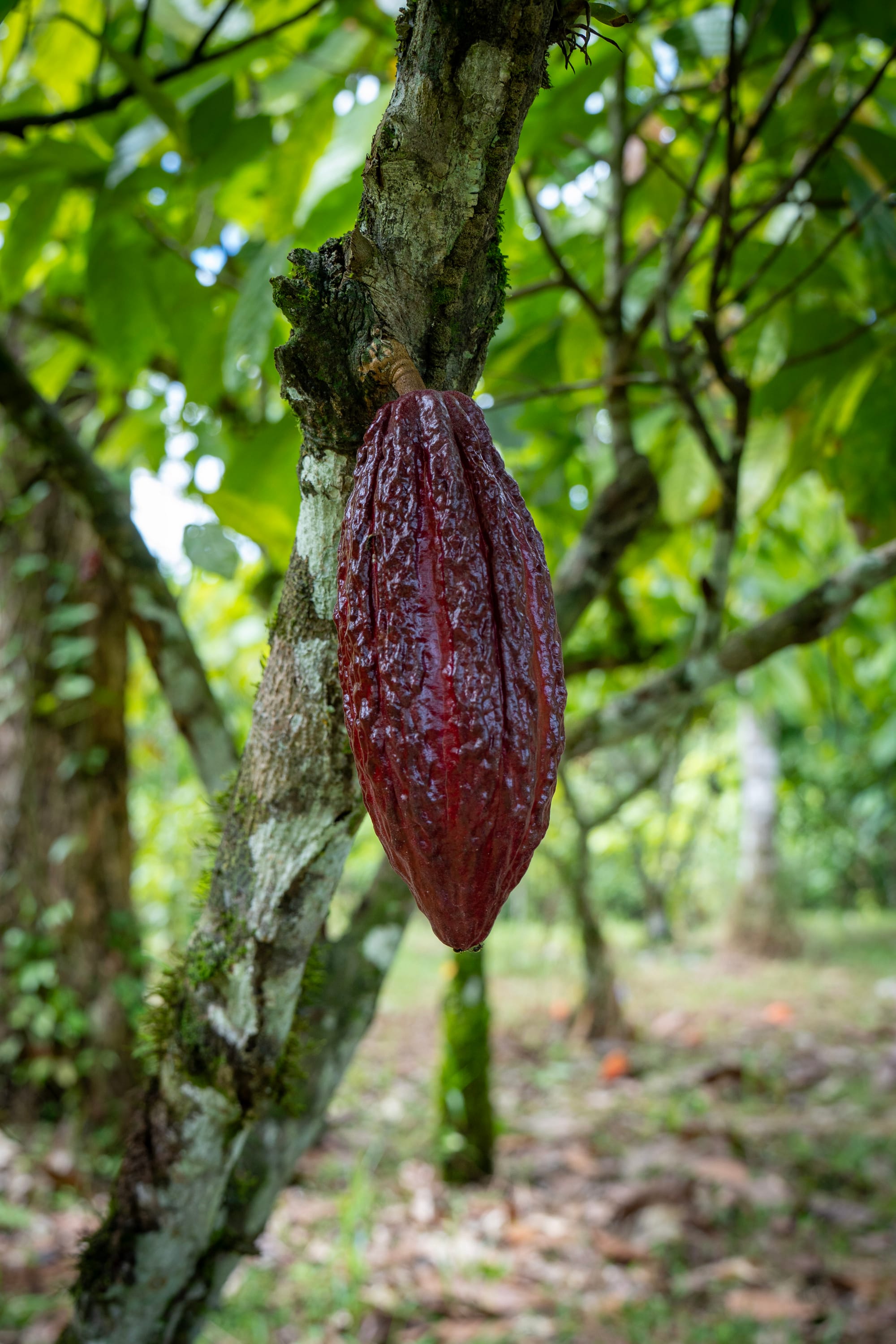
The Blue Valley Chocolate Farm is not a museum. It is a working farm that produces the cacao for Maleku Chocolate's full bar collection. The 7,184 cacao trees at Llano Azul and the 42,069 trees at El Higueron are grafted, pruned, fermented, and processed by a team who understands the specific behavior of each variety under each set of seasonal conditions. The Gold medals won by specific bars at the International Chocolate Awards and at Costa Rica's Feria de Chocolate - nine awards in total, three of them Gold - are the external validation of what that knowledge produces.
Living archives require active stewardship. The team at the Blue Valley Chocolate Farm and El Higueron makes decisions every day that determine whether this archive continues to function. Each of those decisions is an act of cultural preservation in the most practical possible sense. Learn more about the farms and the history behind this work at the Blue Valley Chocolate Farm page.
CHOCOLATE AS A FORM OF MEMORY
There is a line of thinking in cultural heritage work that asks: what is the best way to keep a practice alive? The answer is usually not a museum. It is continued use. A language stays alive when it is spoken. A craft stays alive when it is practiced. A farming knowledge system stays alive when it is applied to a working farm that produces something people want.
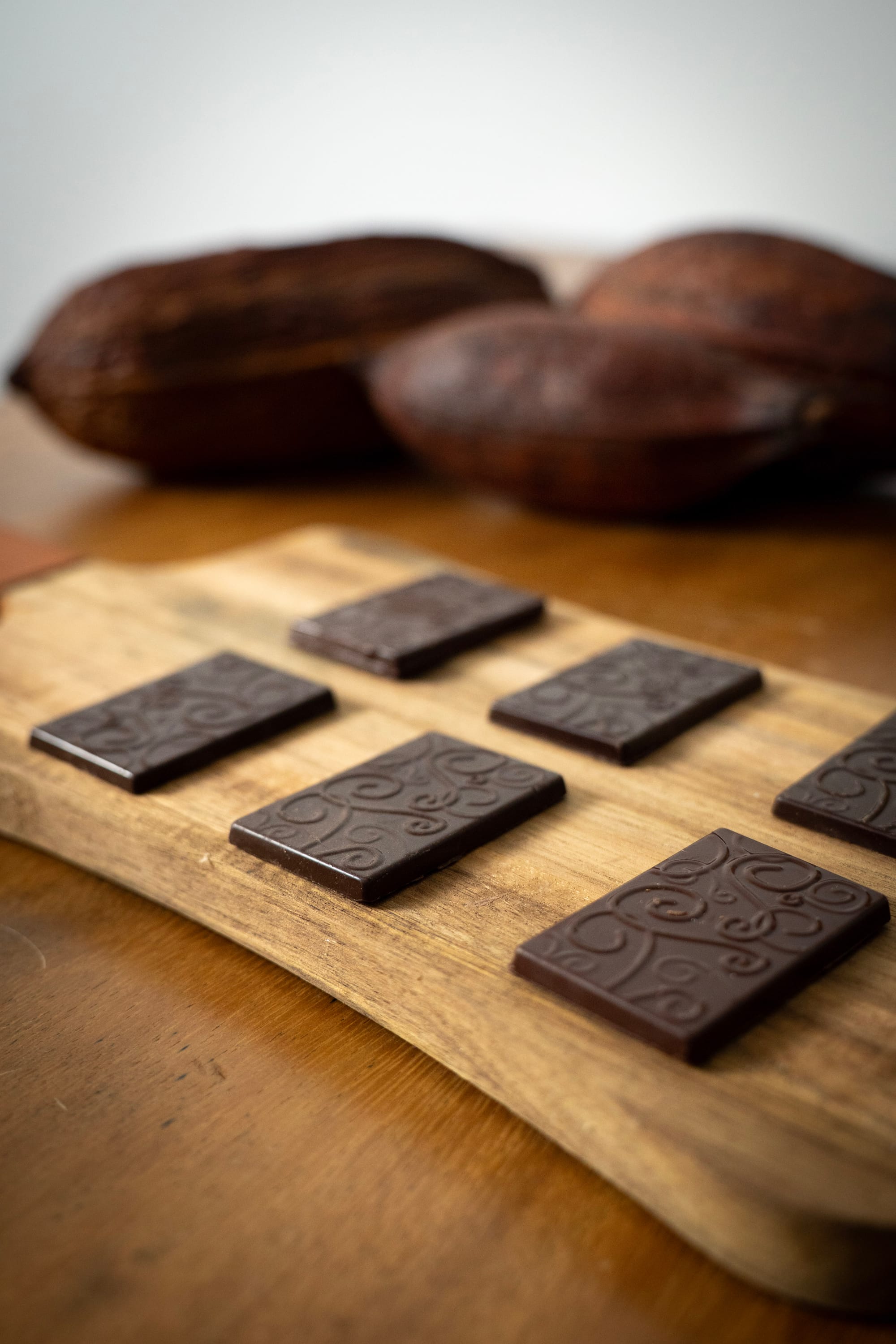
Maleku Chocolate's bars are the activation layer of this entire preservation project. Every bar purchased is a contribution to the continued operation of the farm - not as a charitable donation, but as a transaction in which the buyer receives genuinely excellent chocolate and the farm receives the resources to keep doing what it does.
When chocolate becomes cultural preservation, it means the act of eating it carries a consequence that extends beyond the moment of consumption. The cacao trees at Llano Azul, growing over a site named in a language that has spoken the word for cacao for more than two thousand years, will continue to grow as long as the farms continue to operate. That continuity is what Maleku Chocolate is committed to. Taste what that commitment produces through the full bar collection.