
- agroforestry,
- artisanal chocolate,
- artisanal chocolate craft revival,
- cacao finca costa rica,
- cacao from costa rica,
- chocolate bar,
- chocolate master
Luxury Without Excess: Why True Chocolate Prestige Comes from Restraint, Not Decoration
Explore the quieter, harder to make, and far more consequential chocolate making. The same model Maleku Chocolate operates by, and it starts with a single premise.
Walk into any airport duty-free chocolate section and you will find what the industry has decided luxury looks like: gold foil, embossed boxes, ribbon closures, names in serif fonts that reference European capitals, and a price premium that has almost nothing to do with what is inside the wrapper. This is chocolate luxury as theater. It is designed to signal value through packaging signals and brand heritage rather than through the quality of the cacao itself.
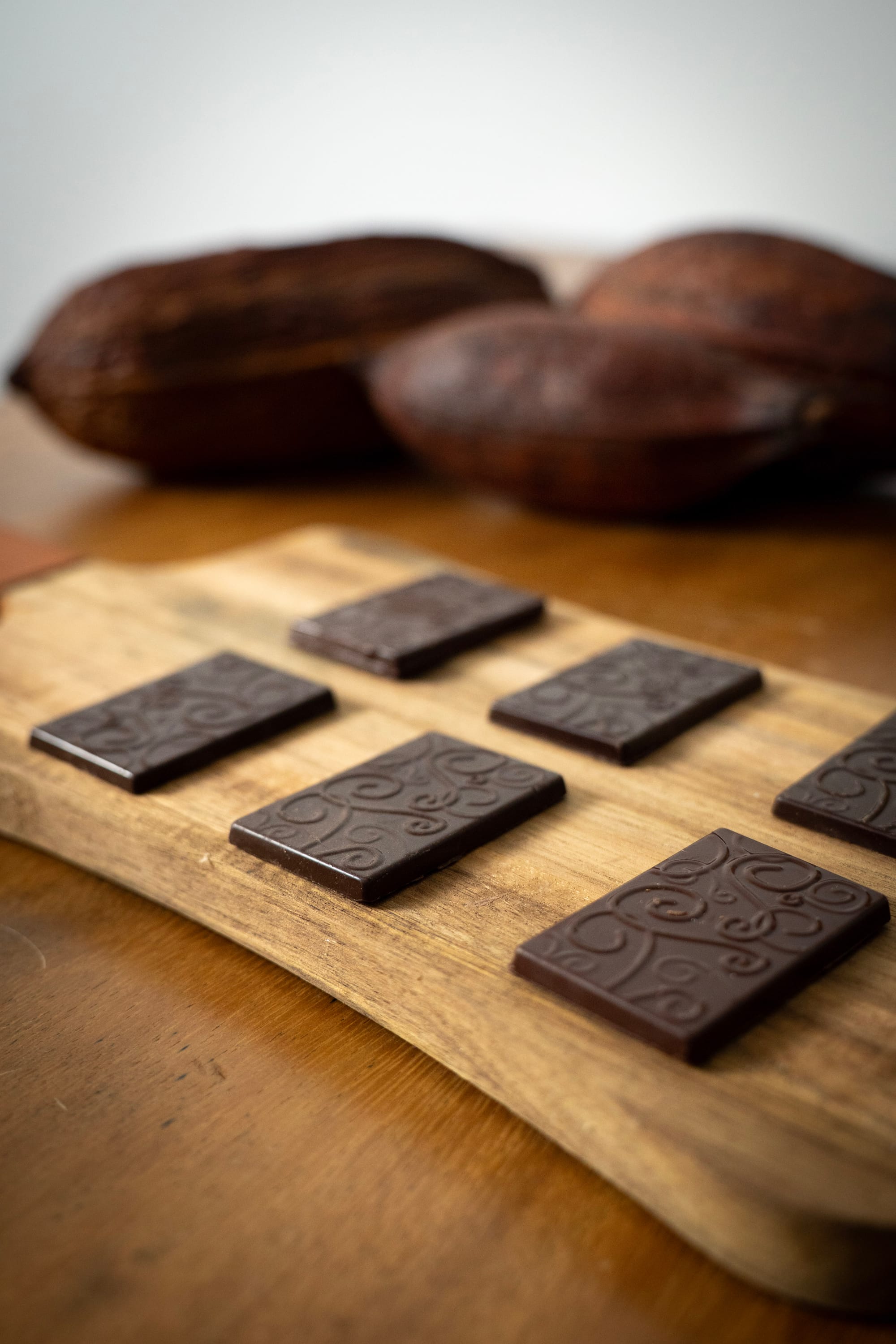
There is a different model. It is quieter, harder to make, and far more consequential for the person who takes the time to understand it. It is the model that Maleku Chocolate operates by, and it starts with a single premise: if the ingredient is extraordinary, decoration is a distraction.
THE SOURCE IS THE LUXURY
Fine luxury in any category - wine, olive oil, coffee, chocolate - ultimately rests on ingredient provenance. You can dress a mediocre wine in a beautiful bottle, but you cannot make it taste like a Grand Cru. The same principle applies to chocolate more directly than most people realize, because cacao's flavor complexity is entirely determined before the chocolate maker touches the bean.
The genetics of the cacao tree, the soil it grows in, the microclimate of the farm, the timing of the harvest, and the precision of the fermentation and drying: these determine the full flavor potential of the bean. No amount of skilled chocolate-making can manufacture complexity from a bulk commodity bean. And no amount of expensive packaging can put that complexity into a bar that starts with inferior raw material.
Maleku Chocolate grows its cacao on two certified organic farms in Costa Rica: the Blue Valley Chocolate Farm in Llano Azul, at the base of Tenorio Volcano in the northern highlands, and the El Higueron Chocolate Farm to the south. Together, the farms span approximately 241 acres and hold more than 67,000 trees - including 26 proprietary cacao hybrid varieties, named Maleku 1 through Maleku 26, found nowhere else on earth. The farm is also the only chocolate operation in the world that protects a certified pre-Columbian archaeological monument on its working farmland: a site named Caju, which means cacao in the Maleku language, associated with human habitation dating to 300 BC. That history is not branding. It is what the valley actually is.
This is where the luxury lives. Not in a box. In a piece of land with a 2,000-year relationship with cacao, farmed without synthetic chemicals, under a canopy of shade trees, by people who understand the plant at a level that takes years to develop.

RESTRAINT AS A TECHNICAL DISCIPLINE
Restraint in chocolate-making is not a philosophical posture. It is a specific set of technical choices, each of which requires confidence in the raw material.
The first choice is additives. Mass-market chocolate typically contains vanilla (synthetic vanillin, usually) to mask the flat flavor of commodity cacao, lecithin to improve viscosity and reduce cocoa butter content, and often milk powder even in products marketed as dark chocolate. These are corrective additives. They compensate for what the cacao itself cannot provide.
A chocolate maker who works with fine aroma cacao from a well-managed organic farm does not need to correct anything. The flavor is already there. Adding vanilla would cover up the fruity top notes that formed during fermentation and survived roasting. Adding excess lecithin would smooth out a texture that is already clean. The discipline of restraint means trusting what the bean produces and not interfering with it.
The second choice is roasting. Heavy roasting destroys volatile aromatic compounds - the esters, terpenes, and aldehydes that carry the fruity, floral, and complex notes in fine aroma cacao. It is an irreversible process. Once those compounds are gone, they are gone. Light to moderate roasting requires more precision because the margin for error is smaller, but it is the only approach that preserves the full flavor potential of the bean.
The third choice is percentage. Maleku Chocolate's bars run from 40% white to 85% dark. At the high end, the Maleku 2 variety's low astringency and bitterness means the chocolate is genuinely smooth at 85% - not because sugar masks the intensity, but because the variety doesn't carry the aggressive bitterness that most people associate with very high percentage bars. That is a genetic fact, not a processing trick.
THE ECONOMICS OF REAL PROVENANCE
Genuine single-estate chocolate from organically managed fine aroma farms costs more to produce than commodity chocolate. The reasons are straightforward.
Certified organic farming without synthetic inputs requires more labor for weed management, more investment in biological soil fertility, and a willingness to accept slightly lower yields in exchange for long-term soil health. Fine aroma varieties are more susceptible to fungal disease than the hardy bulk varieties bred for resistance - which means more attentive management, more skilled labor, and more time. Agroforestry systems require ongoing species selection, canopy management, and the patience of watching a long-cycle system mature over years and decades.
All of this is reflected in the cost structure of the final bar. What it is not reflected in is the packaging. Maleku Chocolate's pricing reflects the cost of growing and making genuinely excellent chocolate - not the cost of a box designed to look like something expensive on a shelf.
This is a real distinction for the buyer who wants to spend their money on what they taste rather than on what they see. The Four Seasons Resort Costa Rica at Peninsula Papagayo, the W Hotel Reserva Conchal, and the Westin Reserva Conchal - confirmed hospitality partners of Maleku Chocolate - all source this chocolate for their properties because the quality of the ingredient is what serves their guests best. A luxury hotel kitchen makes those sourcing decisions based on what lands on the plate, not on what arrives in an ornate outer box.

WHY LESS TELLS YOU MORE
A bar of chocolate with two or three ingredients - cacao mass, cacao butter, sugar - is harder to make well than a bar with a long list of emulsifiers, flavorings, and corrective additives. Each element in the formula has to carry its weight because there is nowhere to hide. Every decision the farmer made about the cacao is audible in the bar. Every decision the chocolate maker made about roasting, grinding time, and conching temperature is equally present.
This is exactly why fine aroma, single-estate chocolate is a more informative luxury than decorated commodity chocolate. It tells you something. It carries a place, a set of practices, a season, and a specific set of choices made by specific people - from the farm worker who reads the tree's leaves for signs of stress to the chocolate maker who determines when the roast has reached its exact target profile.
When you open a bar of Maleku Chocolate and register the particular character of that first moment on the palate - the way the fat melts, the progression from top note to body to finish - you are reading all of those decisions simultaneously. That is what restraint makes possible. Decoration just gets in the way.
Explore the full Maleku Chocolate collection, or read more about the story and values behind every bar. The less that stands between you and the cacao, the more you will find when you get there.