
- agroforestry,
- artisanal chocolate,
- cacao from costa rica,
- cacao finca costa rica,
- chocolate bar,
- chocolate master,
- costa rica exports
Ancestral Intelligence in the Forest: How Indigenous Knowledge Shaped the World's Most Resilient Cacao Systems
Explore the farming systems that have proven most resilient to disease, most productive over generations, and most capable of producing fine-flavor beans.
There is a tendency in agricultural science to treat indigenous farming knowledge as anecdotal - interesting from an anthropological standpoint, but secondary to the findings of experimental stations and peer-reviewed journals. Cacao tells a different story. The farming systems that have proven most resilient to disease, most productive over generations, and most capable of producing fine-flavor beans are almost all descended from practices developed and refined by indigenous communities who understood the cacao tree not as a crop but as a living part of a forest system.
The Maleku people of Costa Rica's northern lowlands knew this long before any scientific classification of cacao genetics existed. In the valley of Llano Azul, at the base of Tenorio Volcano, cacao held a sacred status that shaped how it was planted, tended, harvested, and consumed for thousands of years. That understanding is not folklore. It is a body of ecological knowledge that modern agroforestry science is still working to fully document and explain.
CACAO AS A FOREST SPECIES, NOT A PLANTATION CROP
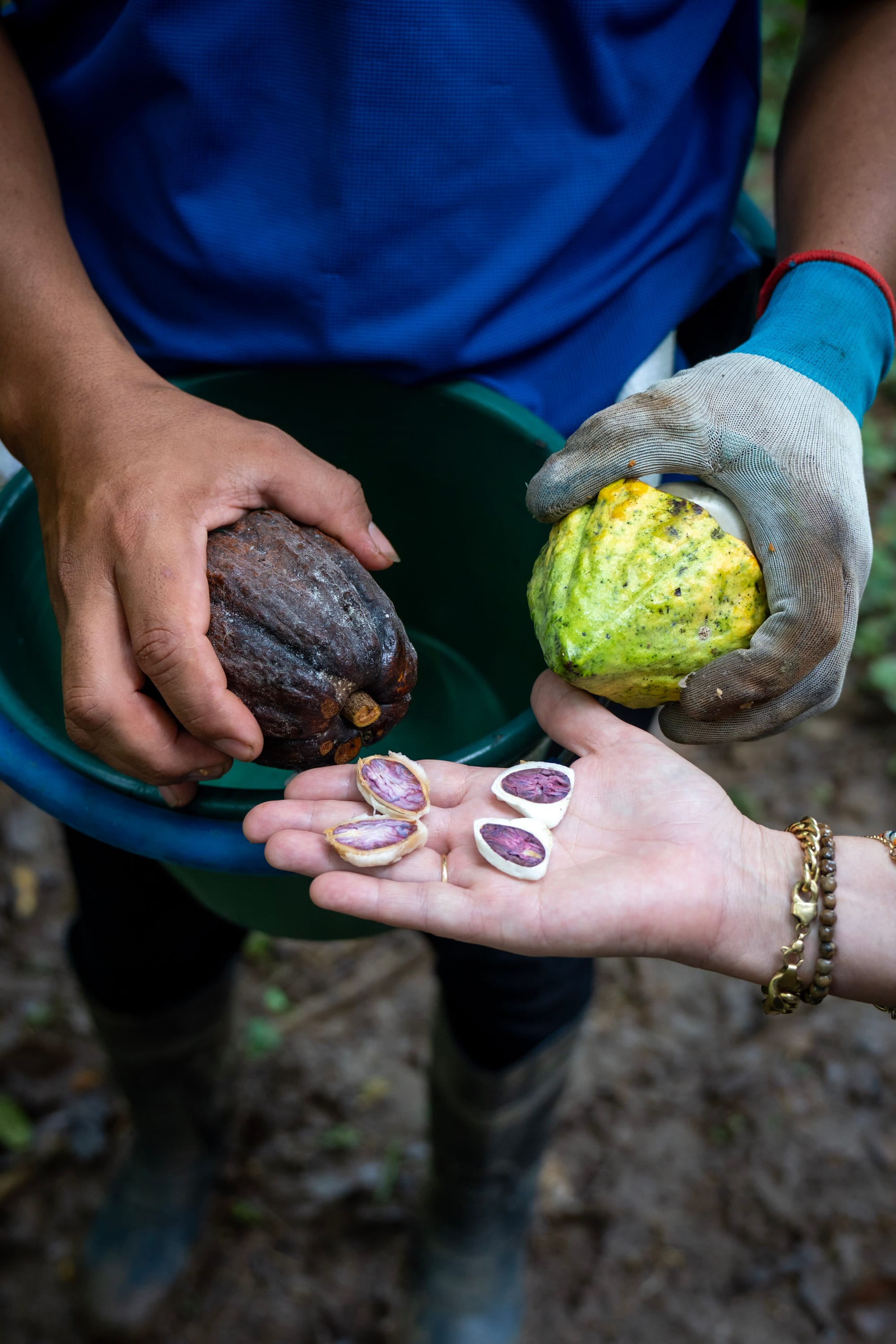
The earliest cacao cultivation by Mesoamerican indigenous communities was not a plantation model. Cacao was integrated into diverse forest systems - grown in the shade of taller trees, in proximity to medicinal plants, fruiting species, and nitrogen-fixing trees that continuously renewed the soil's fertility. The tree was understood as a species that required shade, that benefited from the biological diversity of the forest floor, and that produced its best fruit when treated as a member of a complex community rather than a monoculture row crop.
This model - what we now call agroforestry - is the operating framework of both farms managed by Maleku Chocolate: the Blue Valley Chocolate Farm in Llano Azul and the El Higueron Chocolate Farm. Together, these two farms cover approximately 241 acres and house more than 67,000 cacao trees growing under a canopy of shade trees, alongside secondary forest species that support the biological activity of the soil and the farm ecosystem. The agroforestry model does not just honor the indigenous approach philosophically - it produces measurably better cacao because of how forest diversity functions in practice.
Under full sun monoculture, cacao trees are exposed to temperature extremes, require constant synthetic fertilizer to replace nutrients that natural litter cycles would otherwise provide, and are highly vulnerable to fungal pathogens that thrive in warm, humid, single-species environments. Under an agroforestry canopy, ambient temperature is moderated by shade, leaf litter from multiple species builds organic matter continuously, and the diversity of insects, birds, and soil organisms creates a biological balance that suppresses pathogen pressure naturally.
THE GENETICS OF RESILIENCE
Indigenous cacao farmers throughout Mesoamerica understood, centuries before genetics as a science existed, that seed selection mattered. Not all cacao trees in a forest produced equally. Some carried more fruit, some were more resistant to the pod rots and wilts that periodically devastated less careful growers, and some produced beans with a flavor quality that made them worth preserving. The selection of superior trees as seed sources - the practice now called mass selection - was an indigenous knowledge system operating at scale long before formal plant breeding programs existed.
At the Blue Valley Chocolate Farm, that tradition of selection has produced 26 proprietary cacao hybrid varieties, named Maleku 1 through Maleku 26, found nowhere else on earth. These varieties were identified from trees growing on the Llano Azul farm, selected for their flavor profile, disease performance, and adaptation to the specific conditions of that microclimate. They carry Trinitario lineage - the natural hybrid between Criollo (the most aromatic and delicate variety) and the more robust Forastero - which is characteristic of Costa Rica's recognized fine and flavor cacao status. The Maleku 2 variety stands out particularly for its unusually smooth, low-bitterness profile at high cacao concentrations, a trait that traces directly to the specific tree from which it was selected on-farm.
This process of localized selection, adapted to a specific place and its specific conditions, is exactly what indigenous cacao farmers did across Mesoamerica. The science has since provided the vocabulary of genetics and microbiology to explain why it works. The underlying logic was already present in the practice. Learn more about the farm and its cacao genetics.

READING THE LAND: OBSERVATION AS AGRICULTURAL SCIENCE
One of the most underestimated aspects of indigenous agricultural knowledge is the time scale over which it operates. Formal agricultural research typically works in three to five year study cycles. Indigenous farming knowledge is accumulated over generations, transmitted through practice, and tested against the slow variables that only become visible over decades: shifts in rainfall patterns, the long-term succession of forest canopy, the gradual changes in soil biology as a farm matures.
Experienced cacao farmers can read a tree's health from the color of its leaves before any laboratory test could detect a deficiency. They know which weeks in the dry season the air carries the particular humidity that triggers Moniliophthora roreri spore release - the fungal pathogen responsible for frosty pod rot, one of the two major disease threats to cacao in Central America. They know which sections of a farm drain poorly after heavy rain and how that affects the behavior of Phytophthora palmivora, which thrives in waterlogged soil.
This kind of granular, place-specific knowledge is what makes a farm genuinely resilient over time. It cannot be acquired from a textbook. It is built through sustained, attentive presence on the land across multiple growing seasons - the same relationship to place that indigenous cacao communities developed and maintained over centuries.
WHAT THE ARCHAEOLOGICAL RECORD CONFIRMS
At the Blue Valley Chocolate Farm in Llano Azul, the depth of the human-cacao relationship in that particular valley became concrete in 2019, when ceramic fragments were discovered during cacao planting activities. The farm proactively reported the find to the National Museum of Costa Rica. The site was registered as a new archaeological monument, designated A-549 Ca and named Caju - the word for cacao in the Maleku language. The ceramic remains were associated with the Ron Ron phase of Costa Rican prehistory, dating from approximately 300 BC to 300 AD, and cover approximately 6,300 square meters of the farm.
Maleku Chocolate is now the only chocolate maker in the world to protect a certified pre-Columbian archaeological monument on its working farmland. The cacao trees planted around and across the site create a living buffer against further earthworks, ensuring the site's preservation for decades. The word Caju is not incidental. It tells you that the people who lived in this valley between 300 BC and 300 AD already had a specific name for cacao in their language - which means cacao was not a passing presence in that ecosystem. It was central enough to name.
HOW ANCIENT PRACTICE SHAPES MODERN FLAVOR
The connection between indigenous ecological knowledge and the flavor of Maleku Chocolate's bars is not metaphorical. It is mechanistic.
The agroforestry model that indigenous Mesoamerican cacao farmers developed produces shade conditions that slow pod maturation and allow flavor precursors to concentrate more fully in the bean. The biological diversity of a forest-adjacent farm supports the soil microorganism communities that drive nutrient cycling, making minerals available to the tree in forms it can absorb and use - which influences the mineral composition of the bean and, ultimately, the chocolate's flavor. The practice of late harvesting - allowing pods to reach full ripeness before opening - which is standard at Maleku Chocolate, mirrors indigenous harvest traditions that recognized riper pods as producing sweeter, more complex pulp for fermentation.
Each of these practices has a scientific explanation. But the knowledge that they work, and that they work together as a system, was developed by people who had no scientific vocabulary for it. They observed, selected, and refined across generations.
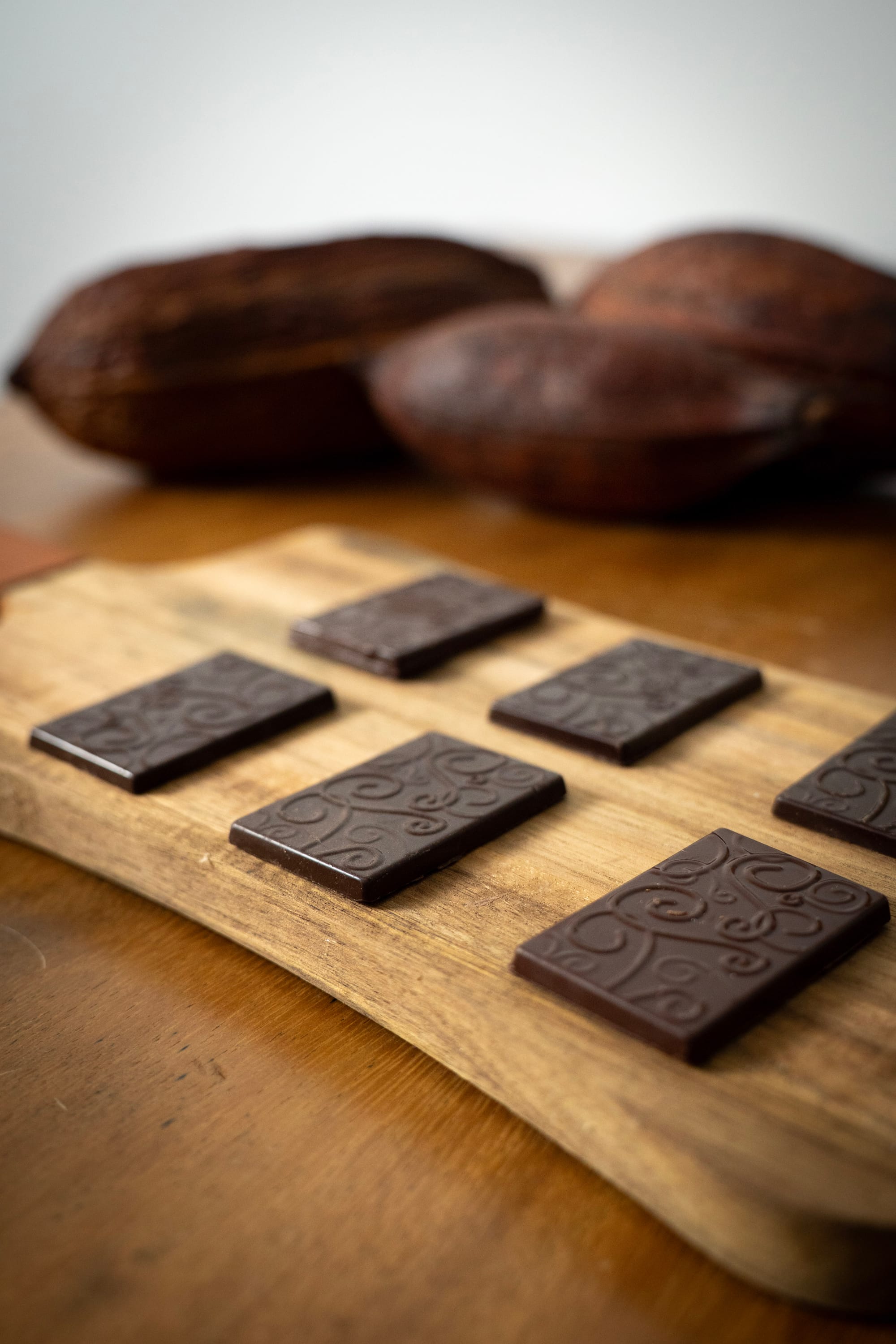
The full collection of Maleku Chocolate bars is what that accumulated knowledge - ancient and contemporary together - produces when it is respected in full. Tasting them is, in a real sense, tasting thousands of years of observation about a single plant and a single valley.
That is not a marketing claim. It is the record.