
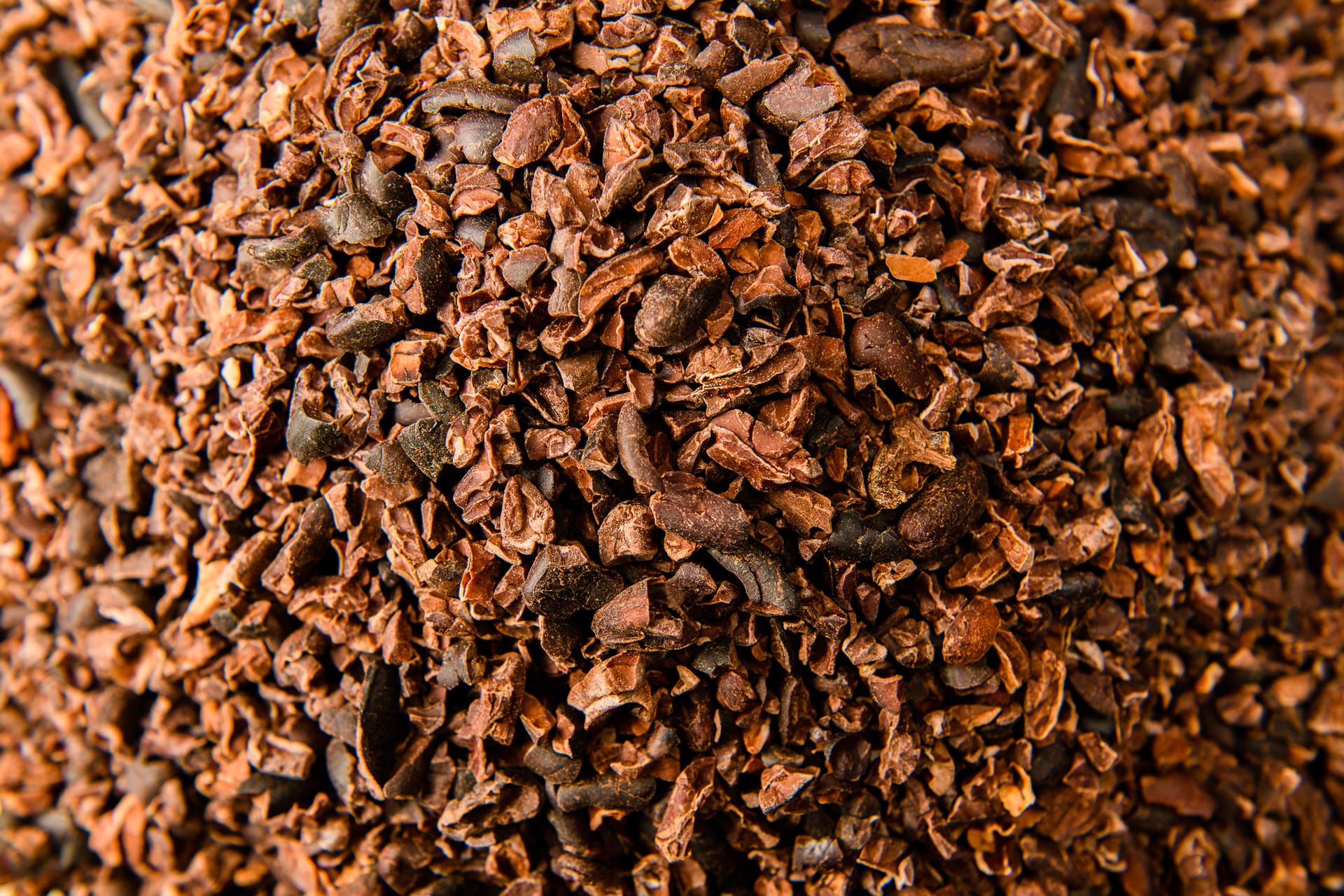
- cacao nibs chocolate making, fine chocolate pastry ingredients, Costa Rica cacao nibs,
- single-origin cacao nibs pastry
Why the World's Best Pastry Kitchens Are Reaching for Single-Origin Nibs
There is a quiet revolution happening in the pastry kitchens of Costa Rica's finest resorts. It does not involve a new technique or a trendy imported ingredient. It involves what is left after a cacao bean is roasted, cracked, and separated from its shell: the nib.
Cacao nibs are among the most underappreciated ingredients in professional cooking. Pure, unprocessed, and intensely flavored, they carry the terroir of the farm they came from in every bite. When the source is single-origin and the cacao has been grown organically in the rainforest conditions of Costa Rica's northern Pacific, that flavor is unmistakable.
What Makes a Cacao Nib a Premium Ingredient
Not all nibs are the same. The quality of a cacao nib is determined by three things before it ever leaves the farm: the genetics of the cacao tree, the fermentation process, and the roasting approach.
Most commodity chocolate uses bulk cacao varieties - Forastero and lower-grade hybrids - selected for yield rather than flavor. Nibs from these beans taste bitter, flat, and astringent. They exist to add texture, not character.
Fine-flavor cacao varieties - principally Trinitario and its hybrids - produce nibs with complexity: fruit notes, florals, nuttiness, even gentle acidity that holds up in baking. Trinitario is a natural hybrid of Criollo and Forastero that combines Criollo's aromatic depth with Forastero's resilience, and it accounts for only around 10-15% of global cacao production. A skilled pastry chef can use nibs from these beans the way a sommelier uses a wine with genuine structure - not as background, but as a defining note in a dish.
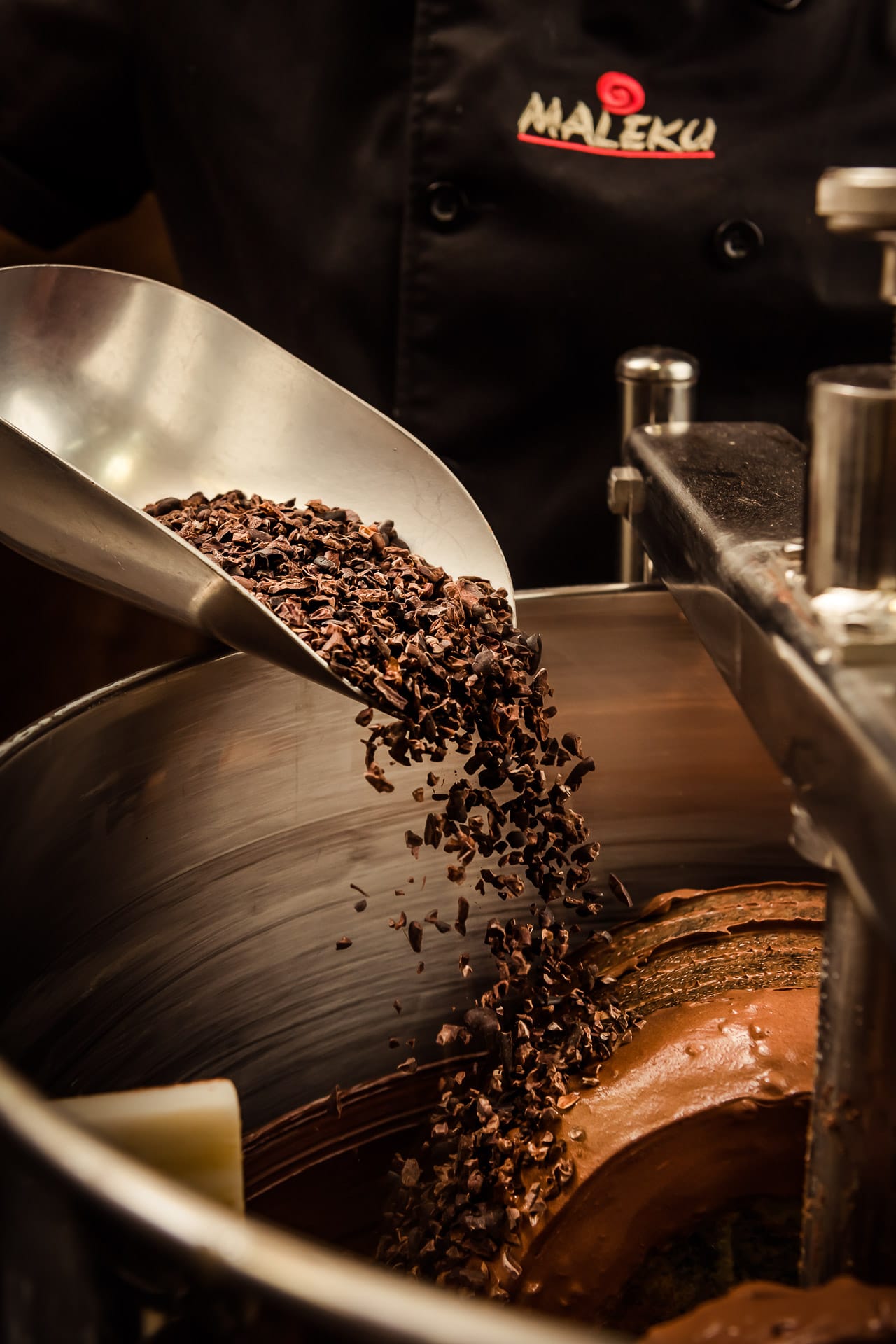
At Maleku Chocolate, cacao is grown on organic farms in Guanacaste and Alajuela Province under rainforest canopy. The farm's varieties are Trinitario-lineage hybrids - including locally developed selections bred specifically for the conditions of our farms. They are harvested by hand, naturally fermented, and sun-dried before roasting. The nibs that come out of that process carry specific flavor characteristics tied directly to the soil, the altitude, and the fermentation tradition of those farms. You cannot replicate them from a generic bulk source.
How Single-Origin Nibs Perform Differently in a Kitchen
Professional pastry chefs who work with single-origin nibs quickly notice something that sets them apart from the standard pantry nib: they do not need to hide.
Commodity nibs need to be buried in sugar, fat, or competing flavors to be palatable. A single-origin nib from a fine-flavor cacao source can be the focal point of a preparation - pressed into a chocolate ganache just before setting, scattered over a dark chocolate tart, folded into a butter-roasted ice cream base, or used as a textural element in a plated dessert where they carry flavor of their own rather than just crunch.
The difference is not subtle. It shows up in the aroma when you open the bag. It shows up in the finish when you taste the finished dish.
Why Sourcing Traceability Matters to Professional Kitchens
Luxury hospitality has moved decisively toward provenance-based menus in the past decade. Guests at high-end properties increasingly expect their food and beverage programs to connect to a place and a story, not just a SKU. This is as true for chocolate as it is for coffee, olive oil, or honey.
A cacao nib that can be traced to a named farm, a known fermentation protocol, and a specific harvest season is a fundamentally different product from one that cannot. It gives the kitchen team something to talk about on a menu and something to stand behind when a guest asks where an ingredient came from.
Maleku Chocolate's nibs come with that traceability built in. The cacao is single-estate, single-origin Costa Rican. The farms are named. The process is documented. The award record of the resulting chocolate - nine international awards, including gold at the International Chocolate Awards - exists because the raw material is genuinely exceptional.
The Practical Case for Nib-Forward Pastry
Beyond flavor, cacao nibs offer pastry kitchens a set of practical advantages worth noting.
They are shelf-stable and easy to store without the tempering demands of finished chocolate. They can be incorporated at almost any stage of a recipe, from being blended into batters before baking to being added post-setting as a garnish. They pair naturally with flavors that appear across dessert menus: citrus, vanilla, caramelized dairy, stone fruits, and roasted nuts.
And because a small amount carries significant flavor impact, a premium nib program is not an expensive proposition relative to the product differentiation it delivers.
A Craft Ingredient That Starts at the Farm
What distinguishes Maleku Chocolate nibs specifically is that nothing has been added and nothing has been removed. They are the roasted, cracked cacao bean. The flavor profile you taste is the direct result of soil composition, tree genetics, post-harvest care, and roasting precision - no shortcuts, no blending to average out the character.
For a pastry kitchen that wants to serve something genuinely traceable to a place and process, that transparency is the point.
Costa Rica produces some of the most distinct cacao in the Americas. Its beans are internationally classified as 100% fine flavor - a designation that fewer than 8% of global cacao production can claim. When that cacao is grown organically, on farms committed to regenerative agriculture, by a maker with a demonstrated award record, the nib that results is a serious culinary ingredient.
That is what sits inside every bag of Maleku Chocolate cacao nibs. Not a commodity. Not a garnish. A story, expressed in flavor, that starts at the farm and finishes on the plate.
Explore the Maleku Chocolate collection at www.malekuchocolate.com. Wholesale and hospitality enquiries welcome.