
- is dark chocolate healthy,
- dark chocolate health benefits,
- cacao flavonols,
- theobromine benefits,
- chocolate and heart health
Is Dark Chocolate Actually Healthy? What the Science Says | Maleku Chocolate
The research on dark chocolate and health is stronger than most people realize -- but only for the right chocolate, processed the right way. Here is exactly what the science shows.
IS CHOCOLATE A HEALTH FOOD? THE SCIENCE IS CLEARER THAN YOU THINK
The caveat that should open every article like this one: it depends on which chocolate, and how it was processed.
With that on the table. The science is more robust than most people realize. And the gap between "chocolate that makes a health claim plausible" and "the chocolate in most grocery stores" is large enough that the caveat actually matters.
Here is what the research says, as of the best available evidence.
START WITH THE MACRONUTRIENTS
Before the bioactive compounds, there is a more basic case to make. A 100-gram serving of minimally processed dark cacao contains approximately 7-8 grams of protein and 10-11 grams of dietary fiber (USDA FoodData Central). Those are not trace amounts. For a food that most people categorize as confectionery, those numbers are meaningful contributions to daily macro targets.
This does not make chocolate a protein food or a fiber supplement. It does mean that the "empty calories" framing. Which dominates casual discussion of chocolate and health, is not accurate for high-quality dark chocolate. It starts as a real food with a real macronutrient profile. The bioactive compounds build on that foundation.

CARDIOVASCULAR EVIDENCE: THE COSMOS TRIAL
The strongest evidence in the cacao-and-health literature comes from the COSMOS trial: Cocoa Supplement and Multivitamin Outcomes Study. Sesso et al., published in the American Journal of Clinical Nutrition in 2022 (DOI: 10.1093/ajcn/nqac055), tracked 21,442 adults over 3.6 years in a randomized, double-blind, placebo-controlled study. The intervention group received daily non-alkalized cacao flavanol supplementation.
The result: a 27% reduction in cardiovascular disease mortality in the flavanol group. This is one of the largest randomized controlled trials ever conducted on a food-derived compound, and the effect size is clinically meaningful -- not a marginal difference.
The critical word is non-alkalized. The trial used non-alkalized cacao specifically because alkalization strips the flavanol content that was being studied. Alkalized cocoa. The kind in most commercial hot chocolate mixes, baking cocoa, and mass-market confectionery does not contain sufficient flavanols to replicate this effect. The percentage on the front of a bar does not tell you whether it was alkalized. The processing decision does.
Maleku Chocolate does not alkalize. This is not a compliance choice; it is a quality choice. Alkalization changes the bioactive profile of the chocolate, and not in the direction the evidence points.
COGNITIVE HEALTH: COSMOS-MIND
A companion study, COSMOS-Mind (Baker et al., Alzheimer's and Dementia, 2023), examined cognitive outcomes in a subset of the COSMOS population. The full-population result did not show statistically significant cognitive improvement from cacao flavanol supplementation. Within that result, however, a positive signal appeared in a specific subgroup: participants who came into the trial with lower dietary flavanol intake at baseline showed more pronounced cognitive benefit.
The honest read of COSMOS-Mind: the primary cognitive outcome was null for the general population. The subgroup finding is hypothesis-generating, not conclusive. It is consistent with a model in which flavanol-deficient diets benefit more from supplementation than already-adequate diets do. It is not proof that eating chocolate improves memory. Both things are true: the signal is interesting and the overall result was null. We report both.
THEOBROMINE: THE METHYLXANTHINE THAT ISN'T CAFFEINE
A 40-gram serving of quality dark chocolate contains approximately 250-300mg of theobromine, the primary alkaloid in cacao. Theobromine is a methylxanthine -- the same class as caffeine -- but with a distinct mechanism and profile.
Where caffeine primarily inhibits adenosine receptors (producing alertness with a sharp onset), theobromine primarily inhibits phosphodiesterase enzymes, causing vasodilation (blood vessel widening), mild bronchodilation, and a stimulant effect that is gentler, slower, and longer-lasting than caffeine. Its half-life is approximately 6-10 hours. It does not produce the cortisol spike associated with coffee. People describe the physiological effect as warm, open, present -- distinct from the focused, tense alertness of caffeine.
This is not a minor compound in a marginal amount. 250-300mg of theobromine in a serving is a pharmacologically meaningful dose of a documented vasodilator and mild stimulant with a clean safety profile.
MAGNESIUM: THE OVERLOOKED MINERAL
A 40-gram serving of dark cacao also delivers approximately 50-70mg of magnesium -- roughly 13-17% of the recommended daily intake, depending on age and sex. Magnesium is a cofactor in over 300 enzymatic reactions, including the pathways that produce serotonin and dopamine. It is one of the most common micronutrient deficiencies in Western diets.
The serotonin connection is mechanistic and well-established, though it stops well short of proving that eating chocolate reliably elevates mood. The enzymatic role of magnesium in neurotransmitter synthesis is real. The dose from a quality dark chocolate serving is meaningful in the context of a deficient diet. This is not a reason to eat chocolate instead of magnesium-rich whole foods; it is a reason to note that cacao is one of them.
ANANDAMIDE: REAL COMPOUND, HONEST FRAMING
Di Tomaso, Beltramo, and Piomelli (Nature, 1996) identified anandamide – an endocannabinoid sometimes called the "bliss molecule" – in chocolate, and found that cacao contains N-acylethanolamines that inhibit FAAH, the enzyme responsible for breaking anandamide down. This means cacao both introduces a small amount of anandamide and slows its degradation.
The concentrations in a typical serving are small. Whether they are sufficient to produce detectable mood effects is an active area of research without a settled answer. The wellness market overclaims this mechanism significantly. The honest version: the mechanism is real, the pharmacology is plausible, the evidence at serving doses is preliminary. We include it because excluding it would be incomplete, not because it is proven.
ATHLETIC PERFORMANCE
A Kingston University study found modest improvements in cycling performance in athletes who consumed dark chocolate compared to white chocolate. The proposed mechanism involves flavanol-driven nitric oxide production and improved oxygen efficiency. This is a single study with a small sample. It is interesting, consistent with the vasodilation mechanism, and far from definitive. A companion article in this series covers exercise and cacao in more depth.
THE PROCESSING CAVEAT
All of this evidence applies to non-alkalized, minimally processed cacao. Here is what processing costs:
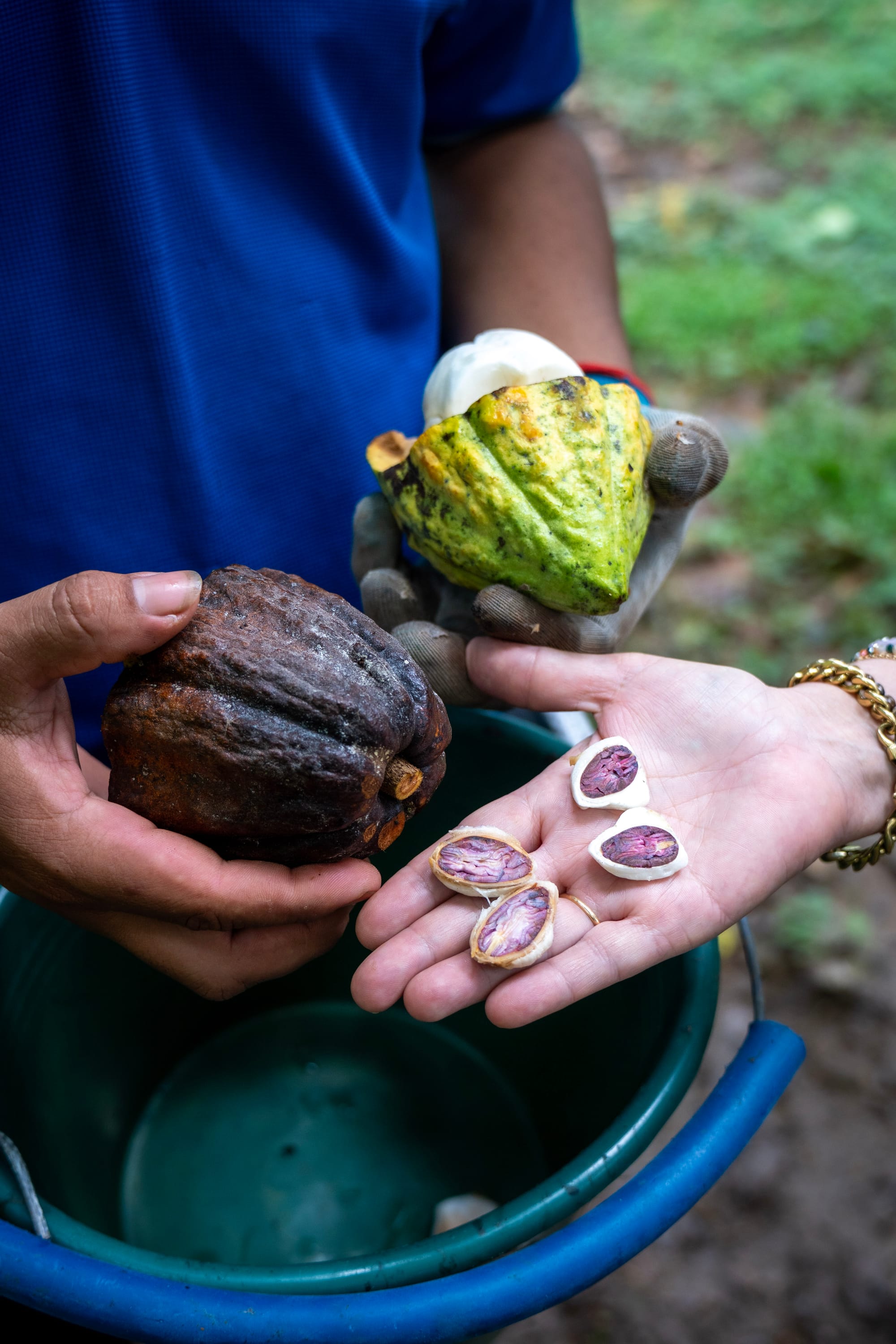
Traditional fermentation degrades approximately 70% of the polyphenols in fresh cacao beans (Eskes, CocoaTown Webinar, June 2026). This is a necessary trade-off, fermentation builds flavor. Poorly controlled fermentation loses both.
Roasting reduces flavanol content by 27% to 90% depending on temperature and duration (Suarez-Quiroz et al.; Payne et al.). Lighter roasts preserve more. Moderate controlled roasting is the balance most quality producers aim for.
Alkalization (Dutch processing) is the most damaging step. It strips flavanol content far more dramatically than fermentation or roasting. Every major clinical trial that found cardiovascular or cognitive benefit used non-alkalized cacao. This is not incidental.
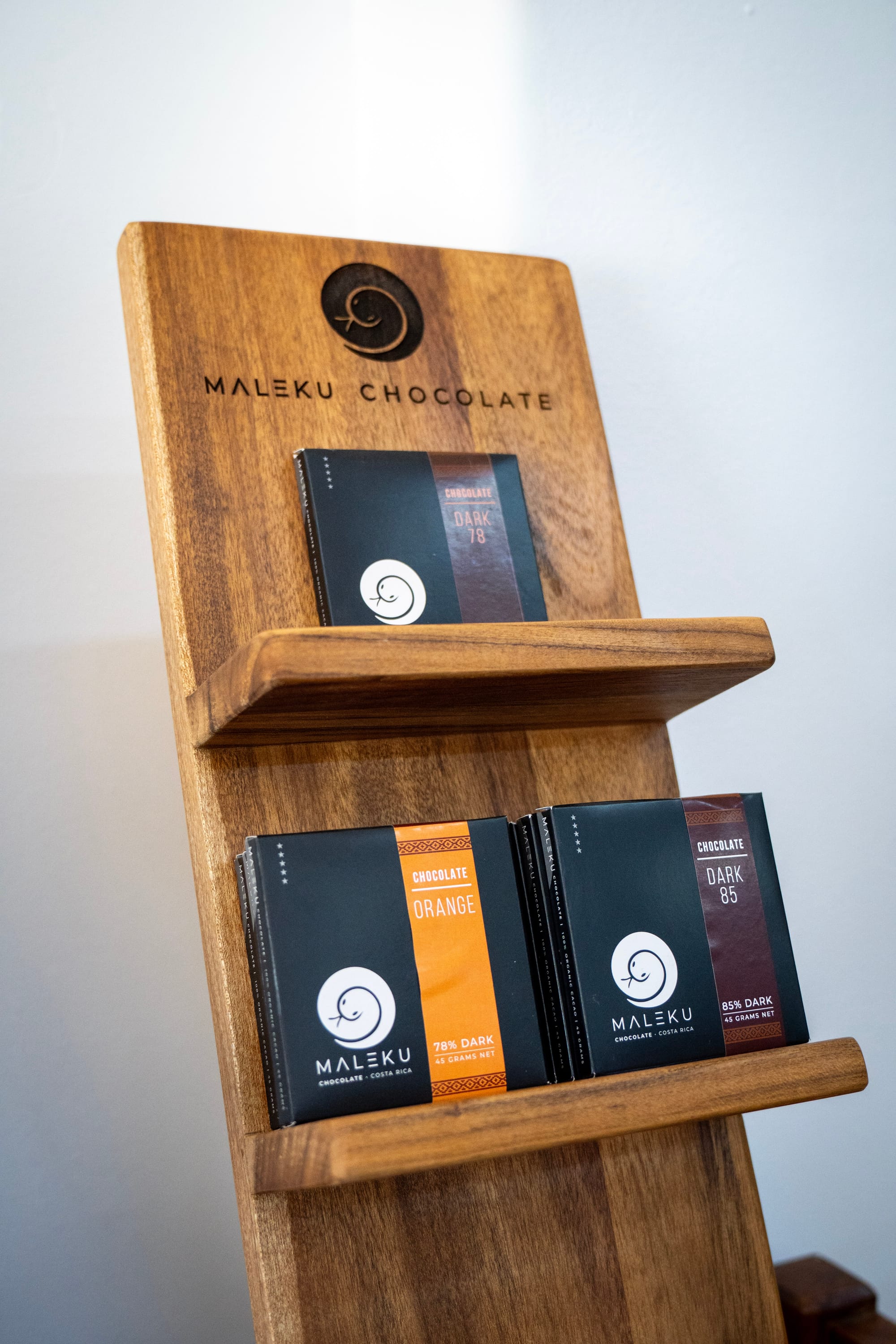
Maleku Chocolate: non-alkalized, minimal processing, single-estate Kiwa-certified organic cacao from volcanic soil at the base of Tenorio Volcano, 9 International Chocolate Awards. The supply chain was built around these decisions.
A NOTE ON HEAVY METALS
Consumer Reports and EU regulatory bodies have raised legitimate concerns about cadmium and lead levels in some dark chocolate products. This is a real issue in the cacao supply chain, particularly for cacao grown in cadmium-accumulating volcanic soils without controlled processing.
Blue Valley Chocolate & Maleku Chocolate grows its cacao in Costa Rican volcanic soil and processes entirely at origin. We do not claim, and have not claimed, that our products are free from naturally occurring trace minerals. What we can say is that our supply chain is fully traceable to specific farms and specific harvests – the transparency that makes meaningful testing and accountability possible. We will continue to monitor and communicate on this as the regulatory conversation evolves.
LOOKING AHEAD
The science of cacao and health is an active field. The cardiovascular evidence is now robust enough to take seriously; the cognitive evidence is promising but incomplete; the mood and performance effects are plausible and under-studied. Future research will clarify all of these. We will update this article as the evidence develops.

FAQ
Q: Is dark chocolate really good for you?
A: For the right chocolate, processed the right way, the evidence is stronger than most people expect. The COSMOS trial found a 27% reduction in cardiovascular mortality from daily non-alkalized cacao flavanol supplementation in a large randomized controlled study. The key qualifiers are "non-alkalized" and "cacao flavanols" -- not the chocolate percentage, not any chocolate, but specifically flavanol-rich, non-alkalized cacao. Most commercial dark chocolate has been significantly processed and may not retain sufficient flavanol content to replicate these effects.
Q: Does processing matter for chocolate health benefits?
A: Yes, significantly. Alkalization is the most damaging step -- it strips the flavanol content that clinical trials have linked to cardiovascular benefit. Roasting temperature and fermentation control also affect bioactive compound retention. A bar's percentage tells you cacao content by weight, not bioactive compound content. How the cacao was processed is the more important variable.
Q: How much dark chocolate should you eat?
A: The COSMOS trial used a daily supplement containing 500mg of cocoa flavanols, roughly equivalent to a moderate serving of high-quality non-alkalized dark chocolate. This is not a prescription. Individual needs vary, and chocolate is calorie-dense. The evidence supports moderate regular consumption of quality dark chocolate as part of a varied diet -- not as a health food that overrides other nutritional choices.