

What Does the Percentage on a Chocolate Bar Actually Mean? | Maleku Chocolate
The number on your bar is not a bitterness rating. Here is what it actually measures, why higher is not always better, and how to find the percentage that fits your palate.
You pick up a bar. One says 70%. Another says 85%. Your instinct says the higher number means more bitter, more serious, more of an acquired taste. So you reach for the 70% as a safe middle ground and move on.
Here is what almost nobody tells you: the percentage is not a bitterness rating. It is not a quality score. It is a simple measurement of ingredients - and once you understand what it is actually measuring, choosing a bar becomes a completely different experience.
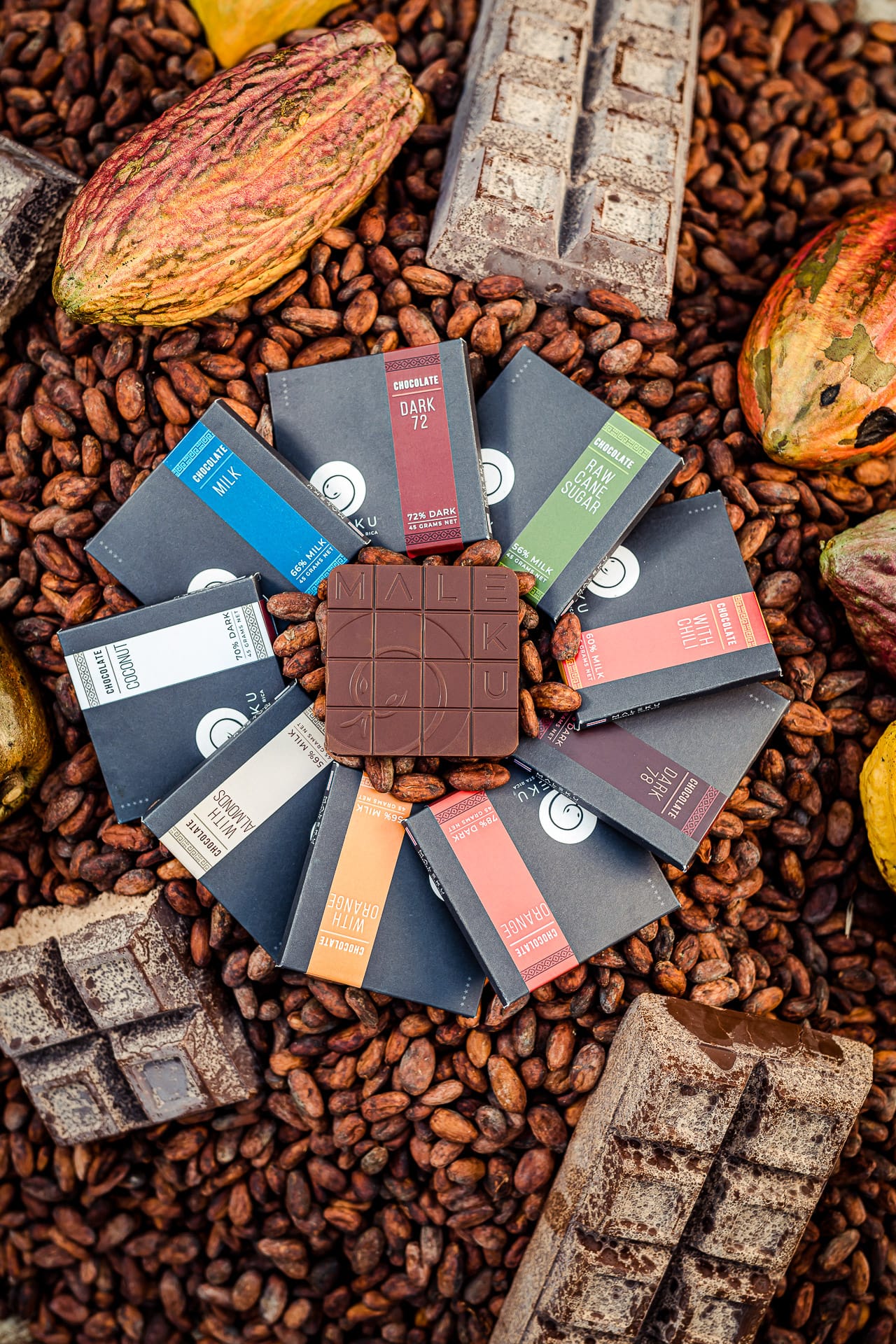
What the Number Is Actually Counting
The percentage on a chocolate bar represents the total proportion of ingredients derived from the cacao plant - cacao mass, cacao butter, and cacao powder - as a share of the bar's total weight. Everything else in the bar, sugar, milk powder, inclusions, makes up the remaining portion.
A 70% dark chocolate is 70% cacao-derived ingredients and 30% other ingredients, almost always cane sugar. A 60% milk chocolate is 60% cacao and 40% sugar and milk powder combined. White chocolate - even a 40% white - contains no cacao mass at all. The percentage there represents pure cacao butter, which is why it has no chocolate color and a cream-forward flavor.
That is the whole mechanic. What the percentage does not tell you is anything about origin, fermentation, roasting method, farming practices, or how the bar will actually taste. Two bars with identical percentages from two different producers can taste completely different. The number is a starting point, not the story.
The Bitterness Myth, Corrected
The idea that higher percentage equals more bitter chocolate is understandable - and mostly wrong.
Bitterness in chocolate comes from two sources that have little to do with percentage: tannins in the cacao that become harsh when fermentation is incomplete, and roasting that is either too aggressive or too careless. High-quality cacao that is fermented well and roasted with precision will have dramatically lower perceived bitterness even at 85% or 90%. Industrial chocolate can taste punishing at 60% if the underlying cacao and process are poor.
This is exactly what blind-judging competitions like the International Chocolate Awards reveal. When expert judges evaluate bars without knowing the brand, they are scoring precisely this distinction: does the percentage reflect genuine cacao quality, or is the intensity just astringency poorly managed?
At 90% and 100%, however, the reality shifts. A 90% bar has so little sugar that most palates - even trained ones - find it intense and stark. A 100% bar contains no sugar whatsoever. It is not a casual eating experience. It exists for cooking, for drinking chocolate, for the rare person who wants to understand what cacao tastes like completely unmediated. You can consume it, but you should go in knowing what you are signing up for.
Where the Award Winners Sit - and What They Tell You
The most honest guide to what percentage actually tastes like is not a chart. It is the record of what independent judges, tasting blind, called exceptional.
Maleku Chocolate's 70% Dark Chocolate took Gold at the 2018 International Chocolate Awards - the highest tier of recognition in craft chocolate. The judges' tasting notes hit tropical fruit, hazelnut, caramel, red cherry, and vanilla. That range of flavors in a 70% bar is not an accident of percentage. It is what happens when single-estate cacao from Llano Azul, at the base of Tenorio Volcano in Costa Rica, is fermented on-farm and roasted with care. At 70%, there is enough sugar to round the natural acidity without suppressing the cacao's voice. It is the bar that most clearly shows what this cacao can do.
The contrast with the 78% Dark Chocolate with Orange is instructive. Eight percentage points higher, and the character changes direction entirely. Where the 70% is round and fruit-forward, the 78% is zesty and citrus-driven - not because of the orange peel, but because at 78% the cacao's own natural acidity becomes the primary flavor. The candied orange was chosen to amplify what was already there. Mr. Choco's palate mapping registers the shift clearly: sweetness drops from 4 to 3, acidity climbs from 4 to 6, and the overall profile moves from velvet to zesty. [LINK: use anchor text "chocolate palate mapping" linking to mrchoco.com]
Drop down to the 60% Milk Chocolate - ICA Silver 2018 - and the dynamic changes again. The milk softens the cacao's acidity, pulls forward the caramel and hazelnut notes, and creates a bar that is simultaneously approachable and genuinely complex. The judges scored cream, red berry, and malt alongside the roasted cacao. At 60%, milk chocolate stops being a simple sweet thing and starts being a vehicle for terroir - which is why this percentage earned an award alongside the darks.
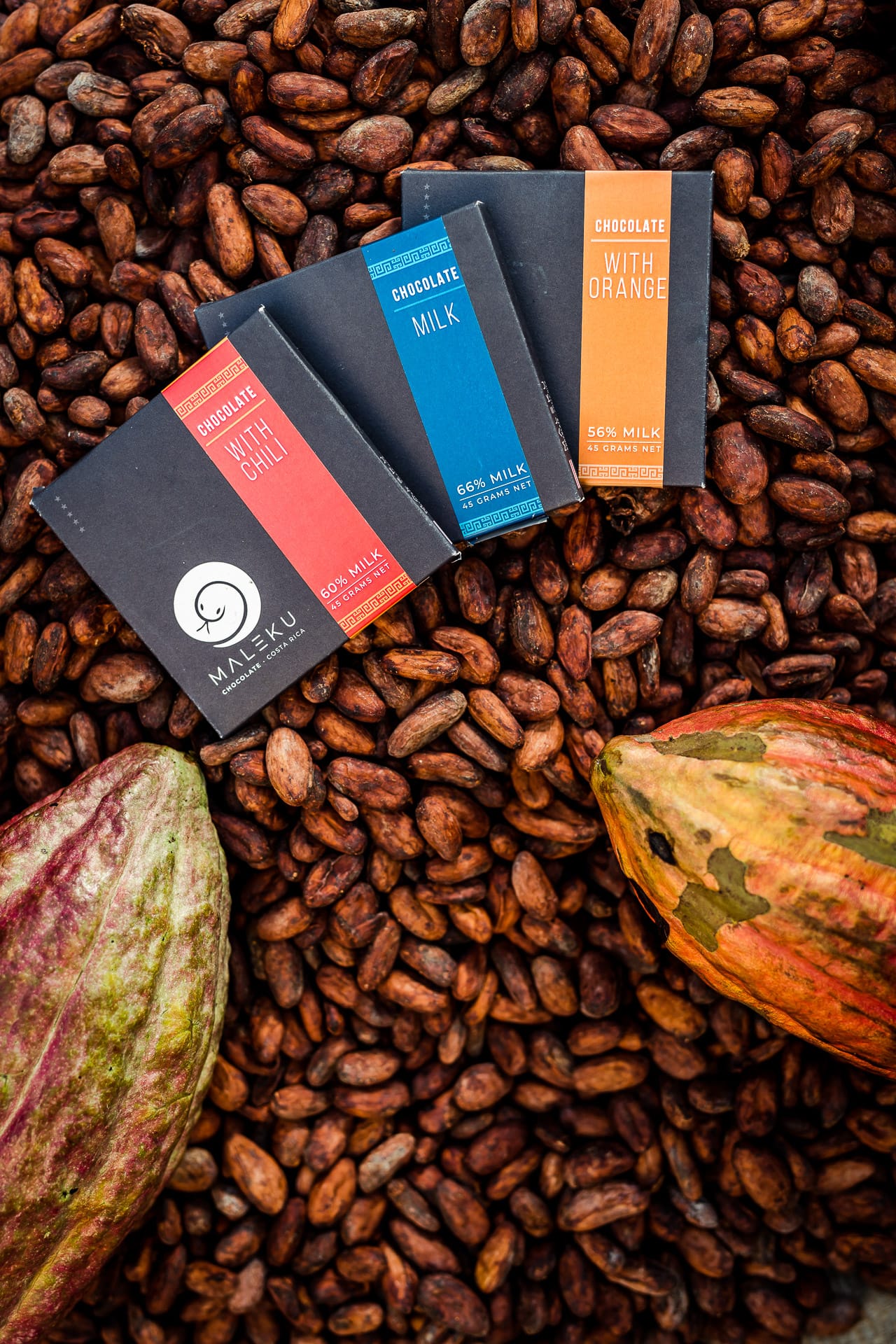
The 40% White Chocolate with Nibs occupies a different space entirely. No cacao mass, only cacao butter, with a scattering of real nibs for crunch and a flash of roasted flavor. The Mr. Choco profile shows sweetness at 8, creaminess at 9, bitterness at 2. This is the entry point for someone who thinks they do not like chocolate - the bar that demonstrates what single-estate organic cacao butter actually tastes like before you introduce the intensity of cacao mass. It also holds an ICA Silver from the Americas.
Between and beyond these anchors, the lineup spans from the 56% milk range - where bars like the Lava have enough cacao concentration to taste serious without losing creaminess - through the 85% Dark (ICA Bronze 2018, with espresso, dark wood, and red berry notes that read more like a contemplative experience than a snack), and up to the 90% and 100% for those who want to meet the cacao at its most unguarded.
What Changes as You Move Through the Scale
As percentage rises, three things shift together. Sugar decreases, which means the cacao's natural flavor compounds - fruit acids, roasted notes, earthy undertones - have nowhere to hide. Milk solids decrease or disappear, removing the softening effect that rounds bitterness and adds cream. And the fat composition shifts, changing the melt and mouthfeel in ways that are subtle but real.
The result is that moving up the percentage scale is not a linear journey toward bitterness. It is a journey toward the cacao itself - toward a flavor profile that is increasingly defined by what the bean actually tastes like rather than what has been added to it. Whether that is pleasurable depends entirely on how well the cacao was grown, processed, and made. With exceptional cacao, moving up the scale is revelatory. With poor cacao, it just gets worse.
How to Find Your Range
Reading about percentages takes you only so far. The fastest way to understand what the numbers actually mean is to taste them in sequence with guidance.
If you are in Costa Rica, the Maleku Chocolate cacao tasting experience at the Blue Valley factory in Playa Brasilito walks you through this progression in person alongside a Chocolate Master - tasting the same cacao at different percentages side by side, building a real sensory reference from direct experience rather than description.
For exploring at home, start with your palate. Mr. Choco (mrchoco.com) is an AI chocolate tool that maps your flavor preferences - sweetness, acidity, bitterness, creaminess, intensity - and then matches you to specific bars based on what you actually enjoy, not what a percentage suggests you should. If you already know you gravitate toward caramel and cream over fruit and acid, it will point you toward the 60% Milk or the 66% Dark Milk. If you lean into roasted intensity and earthy depth, it will take you toward the 85%. It is a faster way to find your range than guessing from labels - and it works across the full Maleku Chocolate lineup.
Explore the full Maleku Chocolate bar range and find the percentage that fits your palate.
One Thing Worth Remembering
A 70% bar from Maleku Chocolate and a 70% bar from a mass-market producer share a number on the label. They share nothing else. The percentage does not tell you whether the cacao was fermented on a working farm in Costa Rica or processed in bulk commodity facilities. It does not tell you whether the roasting temperature was calibrated to preserve the volatile compounds that produce fruit and floral notes, or set purely for throughput. It does not tell you whether the cacao grew in volcanic soil under a living forest canopy or in a monoculture.
Those are the variables that determine what is in your mouth when you eat a bar. The percentage tells you the ratio of cacao to everything else. The rest of the story is on the farm.
