
- Maleku people Costa Rica,
- indigenous costa rica,
- Maleku cacao heritage Costa Rica,
- Maleku indigenous cacao heritage Costa Rica
You Are Not Maleku. But You Are Maleku Chocolate.
Informational / brand trust - readers who want to know why the brand is named what it is, and whether that naming was done with integrity.
Before I purchased Maleku Chocolate, I went to find Jakhima.
I did not go because I was required to. There is no law in Costa Rica that says a chocolate company must seek permission before using an indigenous name in its branding. I went because I believed - and still believe - that a name carries weight, and that weight belongs to the people who built it.
Jakhima is a shaman and medicine man. He is one of the heads of the Margarita community, one of three Palenques that make up the Maleku Indigenous Reserve in northern Costa Rica. He is a keeper of language, of ceremony, of medicinal knowledge, and of a cultural inheritance that has survived rubber barons, colonization, and land dispossession that reduced a people's 2,500-square-mile territory to a reserve of 11.5 square miles - of which only a fraction remains in Maleku hands.
I asked him, in Spanish - the language we share, not his first - how he felt about someone using the Maleku name for a chocolate company. Jakhima's mother tongue is Maleku Jaica, a Chibchan language spoken today by only around 300 people. The conversation we had, one that would shape the entire direction of this brand, happened across that bridge of a second language. I want to note that, because it matters: he chose to be understood, and I chose to listen carefully.
He looked at me and said: "Usted no es Maleku."
You are not Maleku.
My heart stopped.
He waited a beat. Then he said: "Pero usted es Maleku Chocolate."
But you are Maleku Chocolate.
What He Meant
Jakhima was not simply giving permission. He was drawing a line with precision. I am not Maleku. I will never be Maleku. The name does not belong to me and I do not claim it. What belongs to the Maleku people is their history, their language - Maleku Jaica, spoken today by only around 300 people - their spiritual traditions, their art, and their relationship with the rainforest they have inhabited for more than 10,000 years. The cacao we grow on our farms carries their name in every variety: Maleku 1 through Maleku 26, Trinitario-lineage hybrids bred specifically for our land, named as an act of permanent attribution.
What Jakhima was saying is that Maleku Chocolate, as a product and a story, could be a vehicle. A way for the outside world to encounter a people it knows almost nothing about. He wanted the name used. Not because it benefits the brand - though perhaps it does - but because every person who asks "what does Maleku mean?" is one more person who learns that approximately 650 Maleku people are still here, still fighting for their land, still planting trees, still preserving a language that is at genuine risk of disappearing within a generation.
That is not a marketing strategy. It is a responsibility.
What We Committed To
Jakhima made clear what the use of the name required of us. Not in a formal contract - but in the way people who carry cultural responsibility actually communicate: clearly, directly, and in full expectation that the other person will act with integrity.
We committed to awareness. Every article we write, every bar we sell, every conversation we have about the origin of this brand is an opportunity to tell the Maleku story to people who have never heard it. We take that seriously.
We committed to support. We purchase Maleku artwork directly from the community - the hand-painted balsa wood masks and jicara gourd bowls that Maleku artisans create as both cultural expression and economic livelihood. These purchases are not token gestures. They are one of the most direct ways that an outsider business can put meaningful resources into an indigenous community's hands without intermediaries.
We committed to access. We act as a gateway. When visitors come to our factory and ask about the Maleku - and they do, because the name prompts the question - we tell them how to reach the community, how to visit respectfully, and what to expect. We have sent people to the Palenques. We believe that the most durable thing we can offer is a connection, not a transaction.
Why 650 People Matters
There are approximately 650 Maleku people remaining on earth. I want to sit with that number for a moment.
Six hundred and fifty.
That is a small enough population that a single generation making the wrong choices - about language, about land, about whether to stay or leave - could represent an irreversible turning point. The Maleku elders are aware of this. Jakhima is aware of this. The Maleku's stated number one mission is reforestation: reclaiming and restoring the ecological relationships that define their identity as a people. They have used income from cultural tourism to fund reforestation projects. They plant trees not as an environmental gesture but as an act of cultural survival.
This is also why the comparison to the Ron Ron people - whose presence on the farm at our El Higueron estate goes back to 300 BC - matters so deeply. The Ron Ron are gone. What remains are the traces: a pre-Columbian archaeological site on our working farmland, certified and protected. The Maleku are still here. The difference between those two outcomes is not ancient history. It is a few hundred people making choices right now about what to preserve, what to fight for, and what story gets told about them.
We want to be on the right side of that story.
There is a symmetry here that I find striking. The Maleku's primary mission is reforestation - replanting the trees that colonization and land loss took from their territory, restoring the ecological relationships that define who they are as a people. At Blue Valley Chocolate, reforestation is also a core commitment: our farms at El Higueron and Llano Azul practice regenerative agroforestry, planting shade trees and native species alongside cacao, rebuilding the canopy rather than clearing it. We are not doing this for the same reasons the Maleku are. But we are doing it on the same land, with the same understanding that the forest is not a backdrop - it is the thing itself.
What This Relationship Actually Looks Like
I want to be honest about what the relationship between Maleku Chocolate and the Maleku community looks like in practice, because vague language about "giving back" is one of the ways brands erode trust rather than build it.
We are not a charity. There is no formal obligation. What there is instead is an ongoing commitment that we take seriously and act on every year. We make annual contributions to the community. We purchase their artwork directly - the hand-painted balsa wood masks and jicara gourd bowls that Maleku artisans create as both cultural expression and livelihood - and we do that consistently, not as a one-time gesture. We send visitors to the Palenques. We tell the story every time someone asks what the name means, which is more often than you might think.
And we are building toward something more. We are currently developing a product that will directly support the Maleku community - a project in progress for next year that ties the commercial side of what we do to the people whose name we carry. I am not ready to say more about it yet. But it is coming, because the relationship should keep growing, not stay static.
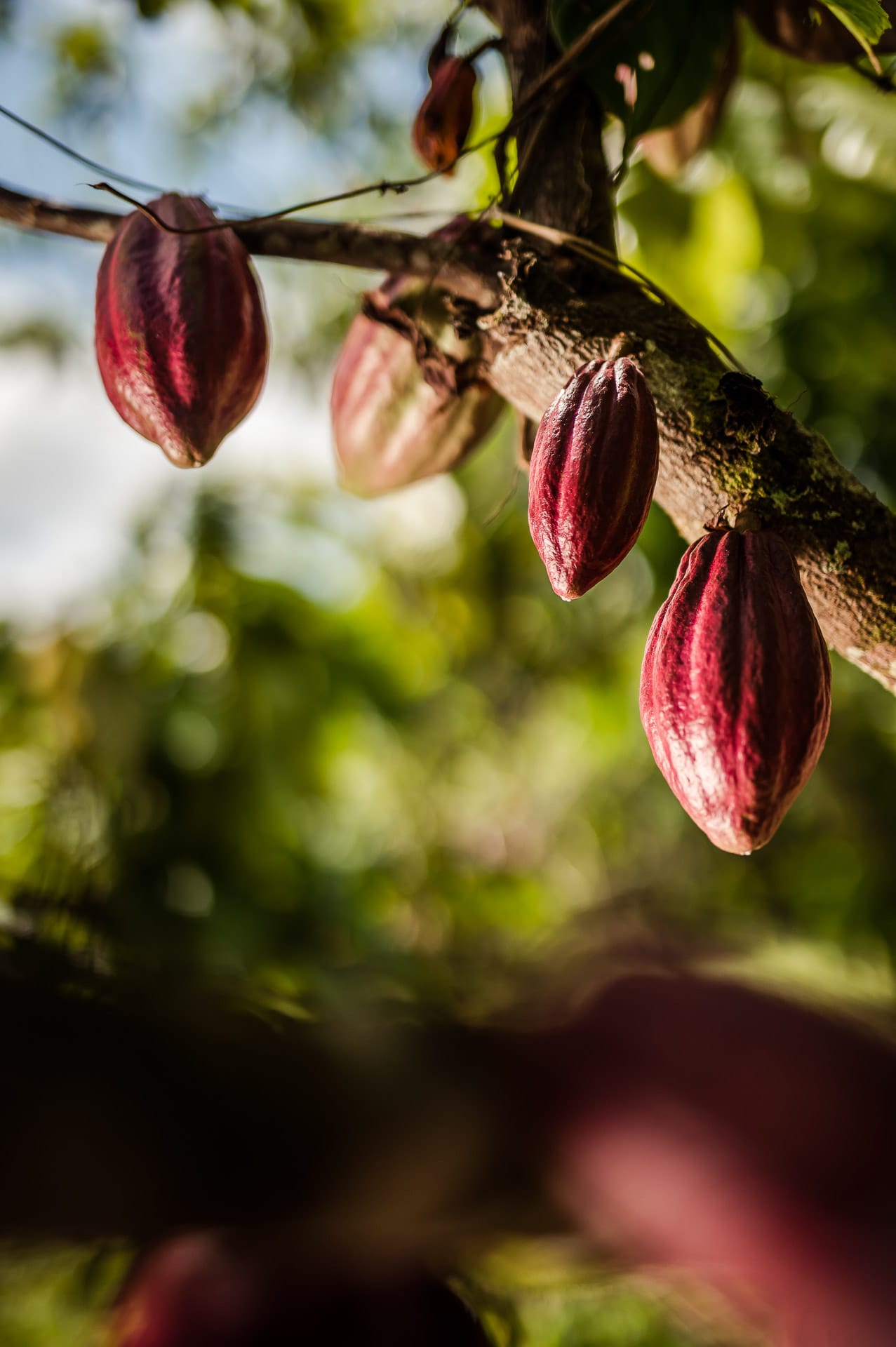
The Maleku's number one stated mission is reforestation. Ours, at the farm level, is the same: we practice regenerative agroforestry at both El Higueron and Llano Azul, planting shade trees and native species alongside cacao, restoring canopy rather than clearing it. We are not doing this for the same reasons the Maleku are planting trees on their reserve. Their reforestation is an act of cultural survival and land reclamation. Ours is an act of agricultural responsibility. But there is a symmetry in the work that I find meaningful - two parties, in the same country, both putting roots back into the ground.
I sought out Jakhima before I purchased this company. He told me in Spanish - a second language for both of us, his first being Maleku Jaica - that I was not Maleku but I could be Maleku Chocolate. That conversation was brief. The responsibility it created is not.
What we are claiming is this: we asked before we used the name. We received a clear answer, and with it a clear understanding of what we owed. We have tried to honor that every year since, and we will keep doing so.
Jakhima did not hand us his community's name because we asked politely. He handed it to us because he decided, in the way that someone with genuine authority decides things, that we could be trusted to carry it forward.
We intend to keep earning that.
---
By Gideon Rubin
Owner, Maleku Chocolate / Blue Valley Chocolate
Maleku Chocolate is made in Costa Rica, from Costa Rican cacao, under a name that belongs to the Maleku people of the Guatuso Reserve. Learn more about the brand at www.malekuchocolate.com.