
What Fermentation Really Does to Chocolate's Health Benefits (And Why It Matters for What You Buy)
Research suggests traditional chocolate processing destroys up to 94% of cacao's original polyphenols and flavanols. Learn what compounds are in cacao, what fermentation and alkalization do to them, and why non-alkalized bean-to-bar chocolate from Costa Rica preserves more.
Fermentation builds chocolate's flavor - but research suggests it also degrades most of cacao's original health-active compounds. Presented at a CocoaTown webinar in June 2026, findings from Albertus Eskes, independent cocoa quality consultant with over 20 years in the field, indicate that traditional 5-7 day fermentation reduces cacao's bioactive compounds by approximately 70%. When the industry then applies alkalization (Dutch processing), roughly 94% of the original bioactives are lost. That means most supermarket chocolate retains only about 6% of what was inside the original cacao bean - before the flavor ever reaches your tongue.
At Blue Valley Chocolate, we use traditional natural fermentation because it is what produces the complex flavors in our award-winning bars. We are not changing that. But we are non-alkalized, additive-free, and single-estate - which puts us in a very different category from most chocolate on the shelf. And the science behind that difference is worth understanding.
What Are Cacao's Health-Active Compounds?
Cacao is one of the most phytonutrient-rich crops on earth - containing over 300 compounds including flavanols, methylxanthines, amino acids, and polyphenols. Here are the ones with the strongest research behind them:
Flavanols (epicatechin and catechin): Cacao is one of the richest dietary sources of epicatechin on earth. These compounds stimulate nitric oxide production in the walls of blood vessels, improving blood flow and reducing arterial stiffness. The COSMOS trial (Sesso et al., American Journal of Clinical Nutrition, 2022), which followed 21,442 adults over 3.6 years, found that daily cocoa flavanol supplementation was associated with a 27% reduction in cardiovascular mortality compared to placebo.
Theobromine: A methylxanthine in the same class as caffeine, but gentler. It has a longer half-life, produces no spike-and-crash effect, and acts as a mild vasodilator. A 40g serving of 70% dark chocolate contains roughly 250-300mg.
Anandamide: Known as the bliss molecule, named from the Sanskrit word ananda meaning bliss. Researchers first identified anandamide in cacao in 1996 (di Tomaso, Beltramo, and Piomelli, Nature, 1996). Cacao also contains compounds that slow anandamide's natural breakdown in the body, gently extending its effect.
Magnesium: A 40g serving of 70% dark chocolate provides approximately 15% of the adult recommended daily intake. Magnesium is involved in over 300 enzymatic reactions and plays a key role in mood, stress regulation, and sleep quality.
Polyphenols: Broad-spectrum antioxidant and anti-inflammatory compounds. The concentration in cacao varies significantly depending on how the beans are grown and processed.
What Does Fermentation Actually Do to These Compounds?
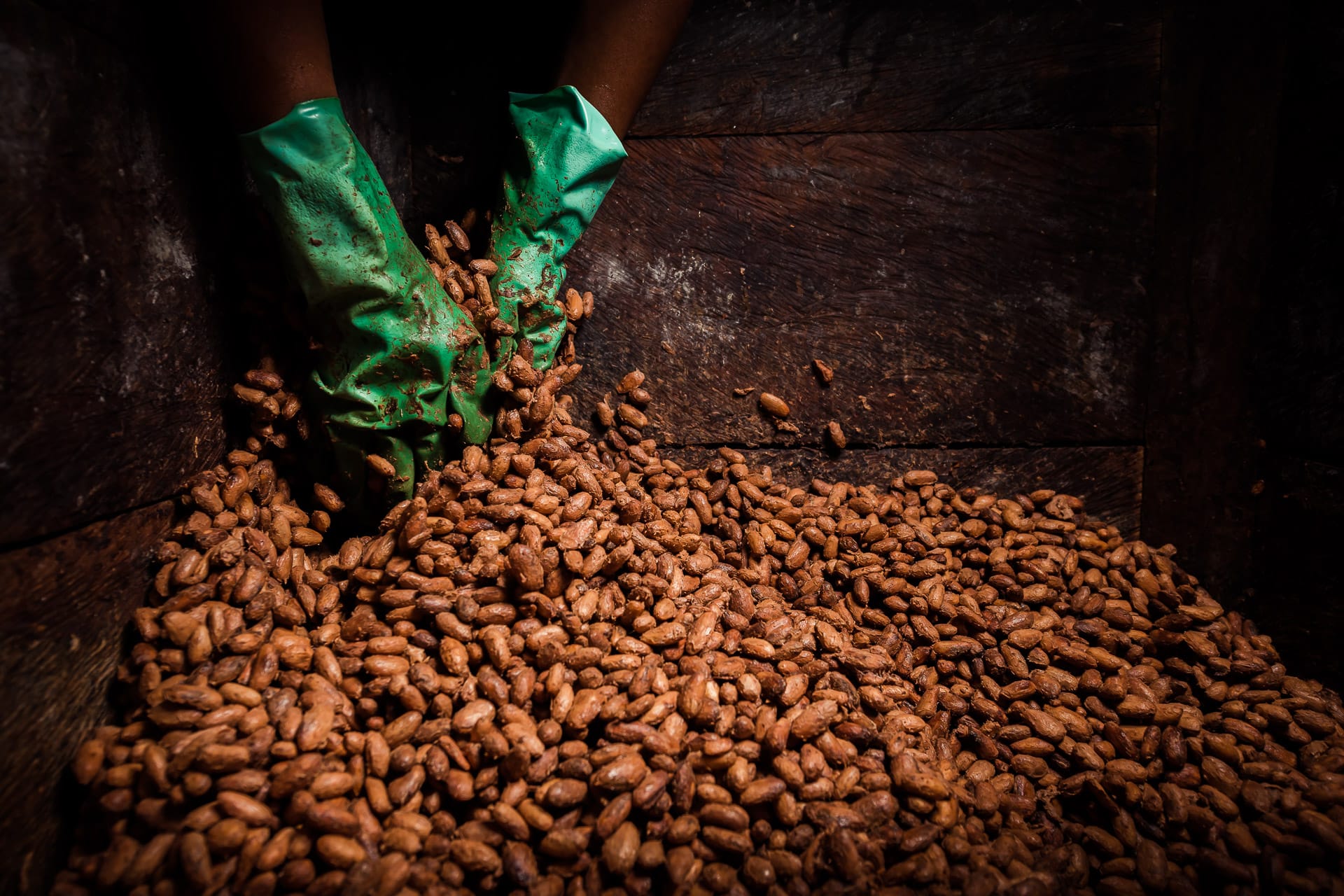
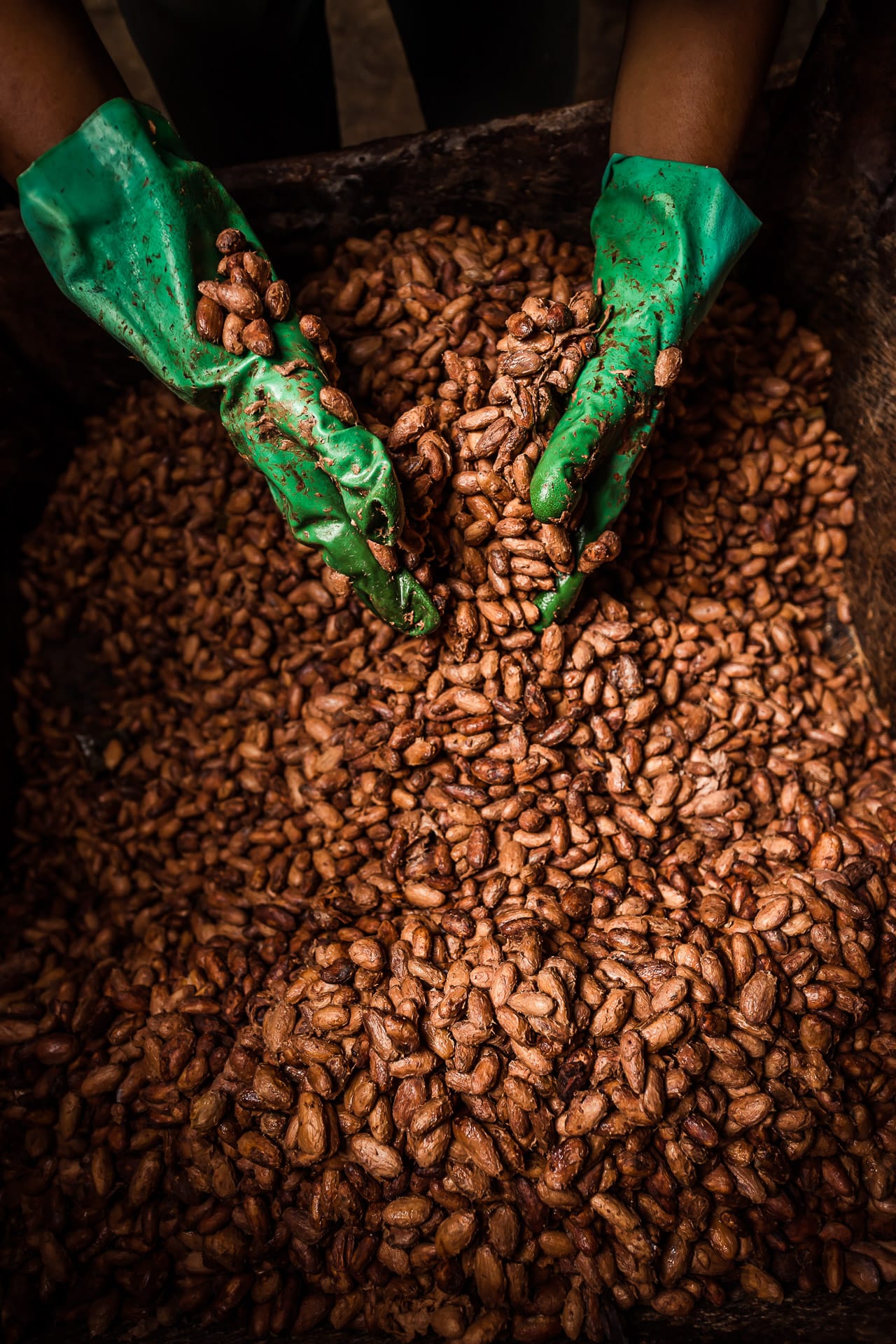
Fermentation is necessary for chocolate as we know it. The heat, acids, and microbial activity of the fermentation box break down proteins and sugars in ways that create the precursors to chocolate's flavor - without it, you get something that tastes more like raw bean than anything we would recognize.
But fermentation also triggers enzyme-driven oxidation that degrades polyphenols and flavanols. Research suggests this degradation is approximately 70% across a traditional 5-7 day fermentation. Eskes' findings, drawn from experiments across multiple countries and varieties, showed that sensory quality itself also peaks early - at zero to two days - and that each additional day of fermentation beyond three adds approximately one bitterness point while reducing the fine-flavor attributes that make specialty cacao worth seeking out.
Alkalization (Dutch processing), used by most mass-market chocolate manufacturers to reduce bitterness and darken color, degrades polyphenols a further 80%. Combined with full fermentation, this means the typical supermarket chocolate bar retains roughly 6% of the bioactive compounds present in the original cacao bean.
Blue Valley Chocolate does not alkalize. We never have.
Where Blue Valley Fits in This Picture
Our non-alkalized, additive-free, bean-to-bar process already preserves far more of cacao's original compounds than conventionally processed chocolate. Every step we skip - no Dutch processing, no artificial flavors, no fillers - is a step that leaves more of what the cacao naturally contains intact.
There is another layer to this that often goes unmentioned: farming method. Cacao grown under agroforestry canopy - as ours is at El Higuerón and Finca Blue Valley - produces higher levels of polyphenols as a stress response to dappled light, varying humidity, and natural pathogen pressure. Our regenerative farming practices are not just an environmental position. They are also a health position.
Eskes' research has also introduced something new to our thinking: CacaoNuts. Fresh cacao beans, dried at low temperature without any fermentation, test at 35mg/g polyphenols - seven times more than dark chocolate, with twice the fiber and 60% more protein. It is a public domain method, and we are beginning to explore what it might look like as a wellness product from our farm. More on that soon.
The Maleku People and Cacao: A Living Tradition
The Maleku people of northern Costa Rica - the indigenous community after whom our Maleku bar line is named - have maintained a living relationship with cacao for generations. They grow cacao as a primary food crop across the Guatuso region of Alajuela Province, and use it in traditional medicine, cultural ceremonies, and as a central element of spiritual practice. Maleku elders lead cacao ceremonies of purification and blessing that are considered among the most culturally significant activities in their community. The Bribri, Cabécar, Maleku, and Ngäbe-Buglé peoples of Costa Rica have all used cacao as a ceremonial and medicinal drink, regarding it as a gift with healing and spiritual properties - a tradition documented by researchers and still practiced in indigenous territories today.
The cacao preparation these communities have used for generations does not resemble a European chocolate bar. It is closer to what the science now identifies as the highest-bioactive form: minimally processed, unroasted, and prepared as a drink from whole or ground beans - with no fermentation stage and no alkalization. What Albertus Eskes is now measuring in laboratory settings, the Maleku have practiced as lived knowledge for centuries. His research does not introduce this idea. It gives it a number.
When we named our bar line Maleku, we took on a responsibility to that heritage. Part of that is learning from it.
Frequently Asked Questions
Does fermentation destroy all the health benefits of chocolate?
Not entirely, but research suggests it reduces cacao's bioactive compounds significantly - approximately 70% during traditional 5-7 day fermentation. Non-alkalized, naturally fermented chocolate preserves considerably more than alkalized mass-market chocolate.
What is Dutch processing and why does it matter?
Dutch processing (alkalization) is used by most commercial chocolate manufacturers to reduce bitterness and darken color. It destroys approximately 80% of remaining polyphenols after fermentation. Blue Valley Chocolate does not use this process.
What is the healthiest form of cacao?
Research by Albertus Eskes (CocoaTown webinar, June 2026) suggests zero or minimally fermented cacao retains the highest levels of bioactive compounds. Fresh beans dried at low temperature tested at 35mg/g polyphenols - seven times more than dark chocolate.
Does the cocoa percentage on a bar tell me how healthy it is?
Not directly. The percentage tells you the ratio of cocoa-derived ingredients by weight. What matters more is how the cacao was processed - specifically whether it was alkalized and how long it was fermented.
Is Costa Rican chocolate higher in health benefits?
Costa Rican cacao classified as 100% fine and flavor by the ICCO is grown under agroforestry conditions that promote higher polyphenol production as a natural stress response. Combined with non-alkalized processing, single-estate Costa Rican chocolate like Blue Valley's offers a meaningfully different nutritional profile from mass-market alternatives.
Taste the difference for yourself. Learn how cacao grows, ferments, and becomes chocolate on a guided experience at our factory in Playa Brasilito - or explore our current bar range online.