
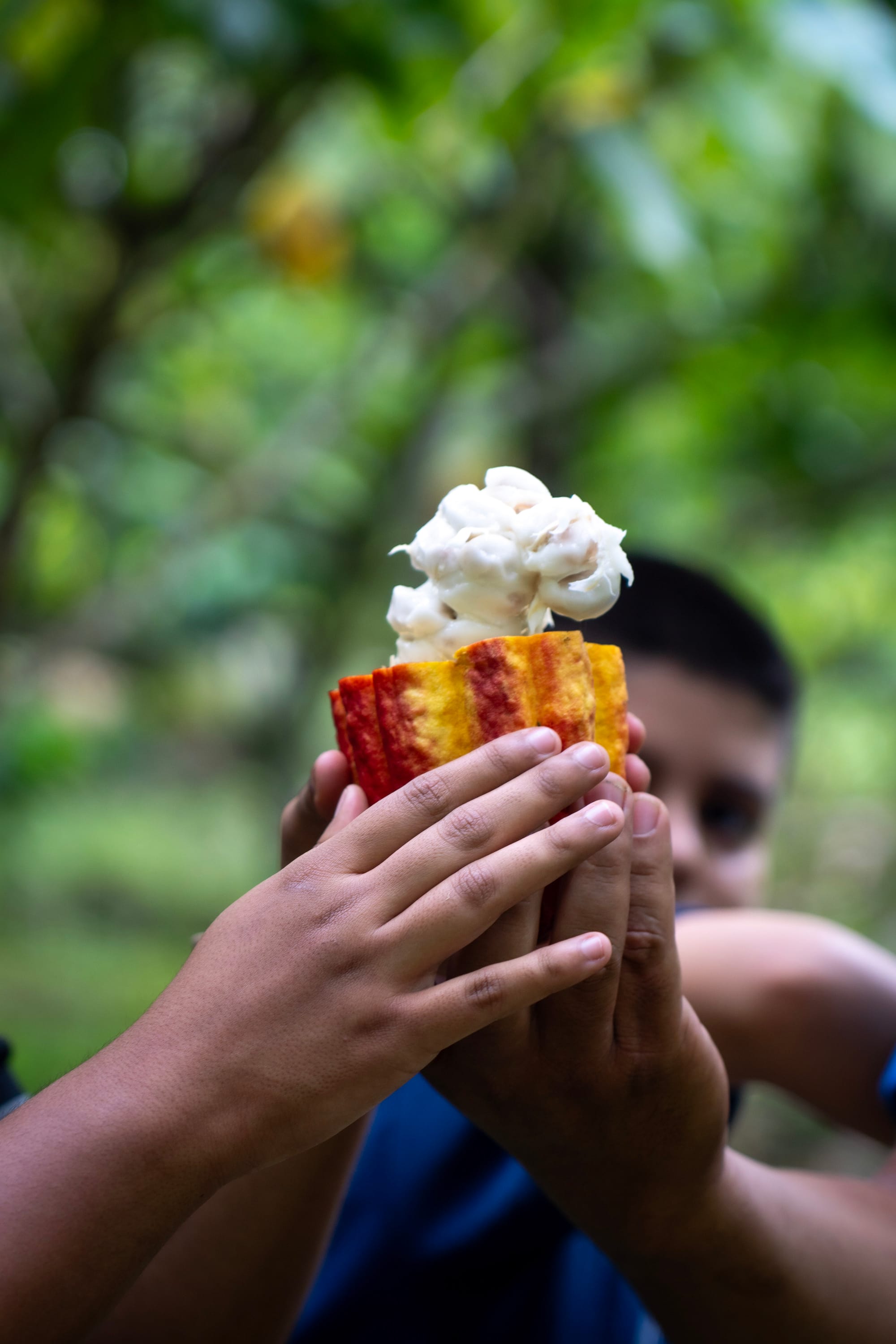
The Science of Sensation: Deciphering Fine Aroma Cacao
Not all cacao is created equal. That statement is not marketing language - it is a classification recognized by the International Cocoa Organization (ICAO), which divides the world's cacao into two formal categories: bulk and fine or flavor. Roughly 95 percent of the cacao grown globally falls into the bulk category. The remaining 5 percent is fine aroma cacao, and it is the only kind worth talking about when the goal is exceptional chocolate.
Costa Rica sits almost entirely within that 5 percent. The country holds one of the few national designations in the world where 100 percent of its cacao output is officially recognized as fine or flavor grade. Understanding what that means - and what it takes to grow it - is the foundation for understanding what makes Maleku Chocolate different from anything mass-produced.

WHAT "FINE AROMA" ACTUALLY MEANS
The term "fine aroma" refers to the aromatic and flavor complexity that a cacao variety can express when grown, fermented, and processed correctly. It is not a single flavor. Fine aroma cacao encompasses a spectrum: fruity esters, floral tones, red berry notes, warm spice, clean acidity, and a depth that lingers on the palate long after the chocolate has melted.
Bulk cacao - the Forastero varieties that dominate West African production - is valued for yield and disease resistance. The flavor tends toward a flat, bitter, generic cocoa note that requires heavy roasting and added vanilla or other masking agents to be palatable as chocolate. Fine aroma cacao asks more of the farmer, the fermentation crew, and the chocolate maker. In return, it delivers flavors that no amount of processing can manufacture from inferior beans.
The genetics of the tree are the starting point. Costa Rican cacao carries a significant Trinitario lineage - a naturally occurring hybrid between Criollo (the most delicate and aromatic variety) and Forastero. Trinitario captures some of the complexity of Criollo while tolerating the more demanding conditions of a tropical farm environment. At the Blue Valley Chocolate Farm in Llano Azul, at the base of Tenorio Volcano in northern Costa Rica, the team has carried this further by identifying and propagating 26 proprietary cacao hybrid varieties - named Maleku 1 through Maleku 26 - found nowhere else on earth.
TERROIR IS REAL, AND IT STARTS UNDERGROUND
The Blue Valley Chocolate Farm sits at the base of Tenorio Volcano, a region characterized by high rainfall, rich volcanic mineral deposits in the soil, and a forest canopy that moderates temperature and humidity throughout the year. The farm operates under an agroforestry model - cacao grown in the shade of larger timber and fruit trees, which slows the ripening of pods, concentrates flavor compounds in the beans, and maintains the forest biodiversity that supports a healthy growing system. Soil acidity at Llano Azul is slightly acidic, a condition that influences mineral uptake and contributes to the farm's characteristic flavor profile. Low nitrogen and potassium levels - managed without synthetic inputs under the farm's organic practices - mean the trees work harder and develop more concentrated flavor compounds in each bean.
THE ROLE OF GENETICS IN FLAVOR DEVELOPMENT
When people taste Maleku Chocolate's 85% dark bar and notice an unusually clean, smooth finish without the harsh bitterness typical of high-percentage bars, they are experiencing the Maleku 2 variety at work. Maleku 2 is one of the 26 proprietary hybrids developed on-farm, distinguished by an exceptionally low astringency and bitterness profile even at very high cacao concentrations. That characteristic is genetic. No amount of skillful processing can manufacture smoothness from a variety that doesn't carry it in its DNA. The CATIE clones used alongside the Maleku hybrids - CATIE-1, CATIE-4, CATIE-6, bred at the Tropical Agricultural Research and Higher Education Center in Costa Rica - also contribute to the flavor complexity of the farm's output. Learn more about how the Blue Valley Chocolate Farm approaches variety selection and long-term flavor development.

FERMENTATION: WHERE GENETICS BECOMES FLAVOR
After cacao pods are harvested and opened, the fresh beans are covered in a white, sugary pulp called mucilage. Over five to seven days, naturally occurring yeasts and bacteria transform the pulp sugars through a succession of microbial stages: yeast fermentation first, followed by lactic acid bacteria, then acetic acid bacteria. The heat generated - fermenting cacao heaps reach 45 to 50 degrees Celsius at their core - kills the seed embryo and triggers a cascade of enzymatic reactions inside the bean. These reactions produce the Maillard precursors: amino acids and reducing sugars that will later, during roasting, combine and transform into the pyrazines, furans, and aldehydes that give chocolate its characteristic roasted, nutty, and complex character. At Maleku Chocolate, fermentation follows a gentle, controlled approach designed to bring out sweetness and clean acidity. Late harvesting for pod ripeness increases the sugar content of the pulp and produces a more complete, balanced fermentation.
ROASTING AND THE MAILLARD TRANSFORMATION
Heat transforms the amino acid and sugar precursors formed during fermentation into hundreds of distinct volatile aromatic compounds through the Maillard reaction. Light roasting tends to preserve the fruity, acidic, and floral notes formed during fermentation. Heavier roasting develops deeper roasted, nutty, and bitter tones. The art lies in reading each batch of beans and adjusting roast profile accordingly.
WHAT YOU TASTE WHEN YOU OPEN A MALEKU CHOCOLATE BAR
The initial brightness - a flash of fruit or floral tone - comes from volatile esters and terpenes formed during fermentation and preserved by careful roasting. The body that develops as the chocolate melts comes from the fat structure and the longer-chain aromatic compounds that take a moment to volatilize at body temperature. The finish - how long and how clean the flavor lingers - reflects both the quality of the genetics and the fermentation.
Maleku Chocolate's bars have earned nine international awards across the International Chocolate Awards and Costa Rica's Feria de Chocolate, including three Gold medals. Explore the full bar collection and taste what fine aroma cacao, grown and made with this level of care, actually feels like. Fine aroma cacao is a category. What Maleku Chocolate makes is an argument for why that category exists.