
The Sacred Geometry of the Farm: How Maleku Land Stewardship Reflects Balance, Cycles, and Respect
Every relationship on an organic cacao farm has a function. Explore how agroforestry, soil cycles, and cultural respect combine on Maleku Chocolate's farms in Costa Rica.
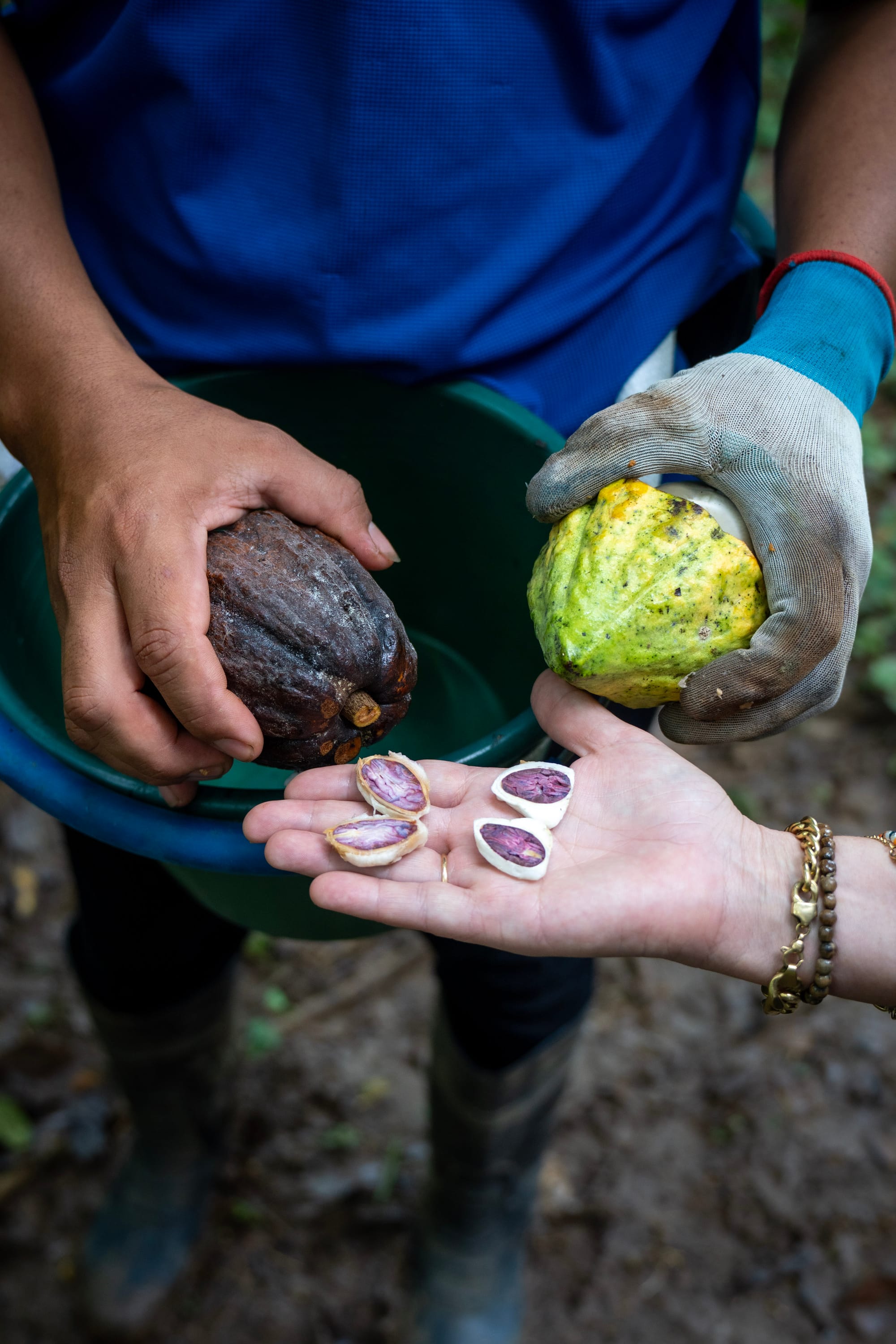
A well-managed organic cacao farm does not look like a conventional agricultural field. Walk through the Blue Valley Chocolate Farm in Llano Azul, at the base of Tenorio Volcano in northern Costa Rica, and what you encounter is closer to a forest than a row crop: cacao trees in the middle canopy, taller timber and fruit trees above them, ground cover plants between their roots, birds calling from the upper branches, and a floor of decomposing leaf matter that feeds the entire system from below. The geometry of this farm is not random. Every spatial relationship on it carries a functional logic.
THE ARCHITECTURE OF AN AGROFORESTRY SYSTEM
An agroforestry system restores the original spatial logic of cacao's native habitat. At the Blue Valley Chocolate Farm and the El Higueron Chocolate Farm. Together spanning approximately 241 acres, with more than 67,000 cacao trees across both properties - the design principle is layered productivity. Cacao occupies the middle canopy. Shade trees above it moderate light intensity and drop leaf litter that becomes organic matter. Leguminous shade species fix nitrogen from the air and deposit it in the soil through their root systems and leaf fall. Remove any one layer and the performance of the others degrades.
CYCLES AS A MANAGEMENT PHILOSOPHY
On a cycle-managed farm, fertility is generated and returned. Cacao husks from the processing facility return to the farm floor as organic matter. Pruned branches decompose in place or are composted into the soil. At the Blue Valley Chocolate Farm, the zero-waste philosophy that runs through Maleku Chocolate's production practices is an extension of this cycle logic into the factory. Cacao pulp is used in beverage development. Pod husks are composted and returned to the farm. Nibs, shells, and off-grade material are directed toward other uses rather than discarded.
THE SOIL AS A LIVING ENTITY
Mycorrhizal fungi - the thread-like organisms that form partnerships with plant roots and dramatically extend their effective surface area for nutrient and water absorption - are particularly abundant in undisturbed organic soils. A mature organic farm develops this network over years. It cannot be purchased and applied; it is built by consistently providing the conditions in which it thrives - no synthetic fungicides, no tillage that disrupts the hyphal networks, and a steady supply of organic matter.
RESPECT AS A LAND MANAGEMENT PRINCIPLE
When ceramic fragments associated with human settlement dating to 300 BC were found on the farm in 2019, the discovery was proactively reported to the National Museum of Costa Rica. The site - named Caju, the Maleku-language word for cacao, and registered as monument A-549 Ca - covers approximately 6,300 square meters and is now protected under Costa Rica's Ley N6703, with Maleku Chocolate legally responsible for its conservation. Learn more about the farms and their history at Blue Valley Chocolate.
BALANCE AS AN OUTCOME, NOT A SLOGAN
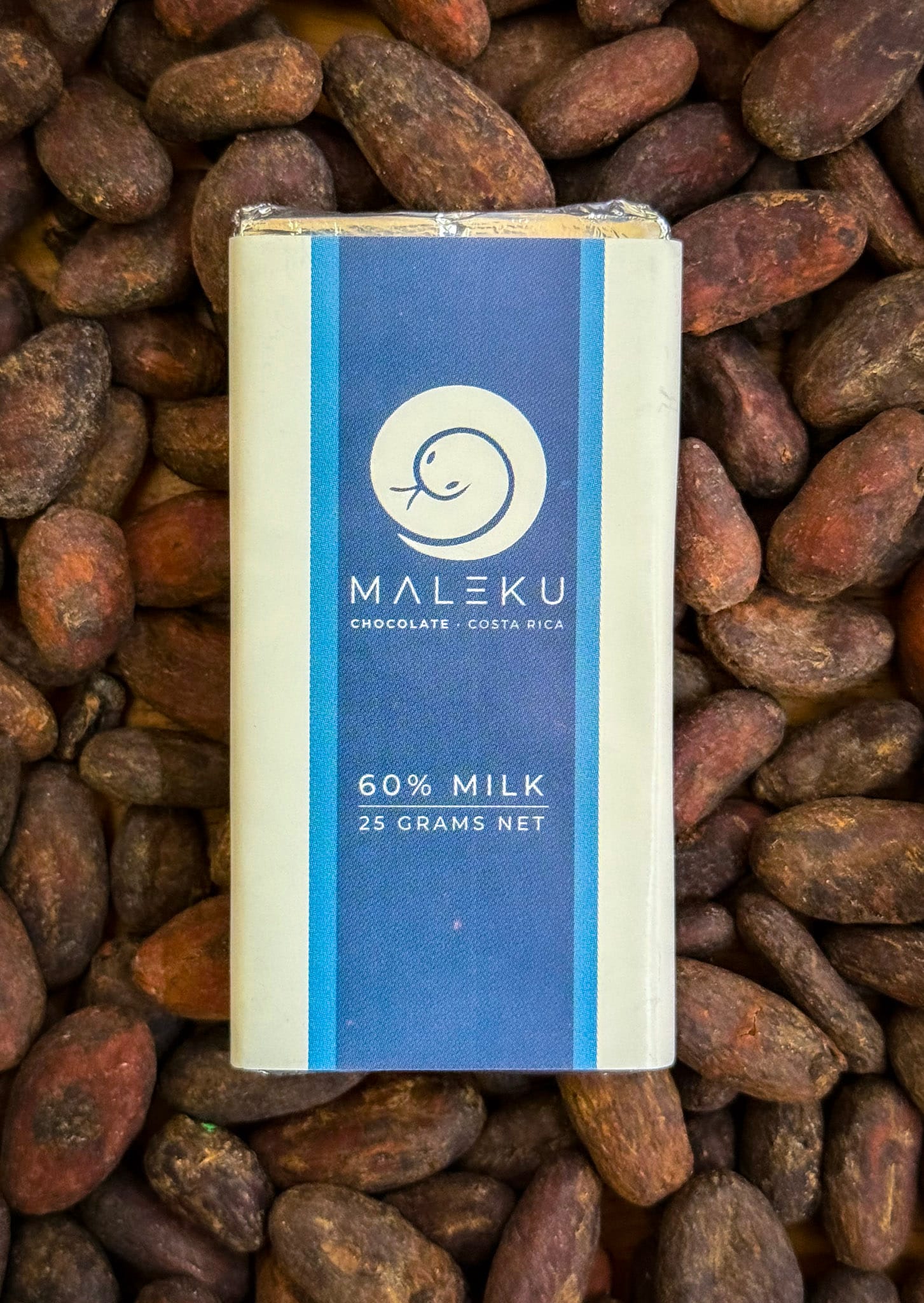
Maleku Chocolate's bars have earned nine international awards across the International Chocolate Awards and Costa Rica's Feria de Chocolate, including three Gold medals. These are outcomes of a balanced process, from the soil through fermentation through roasting through refining. The sacred geometry of the Blue Valley Chocolate Farm is not mystical. It is practical. Shade trees shelter cacao trees. Leaf litter feeds soil microbes. Soil microbes feed tree roots. Tree roots produce cacao pods. Cacao pods, fermented and processed with care, produce chocolate that wins Gold medals and is served at Four Seasons resorts. Explore the full bar collection and the sustainability principles that guide every decision made at both farms.