
- artisanal chocolate,
- agroforestry,
- artisanal chocolate craft revival,
- artisanal chocolate fine flavor cacao,
- cacao belt,
- cacao northern costa rica,
- chocolate awards,
- chocolate master,
- chocolate benefits,
- chocolate bar
The Price of Integrity: Why Maleku Chocolate Will Never Be a Mass Product
Maleku Chocolate has a price that takes into a count history, quality process, organic certification and all sourced locally.
There is a question that comes up whenever someone tastes a Maleku Chocolate bar for the first time and then looks at the price: why does this cost what it costs? The question is fair. It deserves a real answer, not a marketing paragraph about passion and craft. The real answer is about the specific operational choices that Maleku Chocolate has made, each of which makes the product better and makes it more expensive to produce - and each of which rules out the possibility of turning this into a mass-market product without destroying what it is.
THE FIRST COST: TWO CERTIFIED ORGANIC FARMS
Maleku Chocolate sources exclusively from two farms it operates directly: the Blue Valley Chocolate Farm in Llano Azul, northern Costa Rica, covering approximately 33 acres with 7,184 cacao trees, and the El Higueron Chocolate Farm, covering approximately 208 acres with 42,069 cacao trees. Together, they represent roughly 241 acres of organically certified cacao production.
Organic certification is not a label that comes cheaply. It requires ongoing third-party auditing, detailed record-keeping of every input applied to the land, and strict compliance with protocols that prohibit synthetic fertilizers, synthetic pesticides, and genetically modified organisms. The compliance burden alone represents a meaningful operational cost that conventional farms do not carry.
More significantly, organic production without synthetic inputs requires a different and more labor-intensive management approach. Weed pressure must be managed manually or through cultivation rather than herbicides. Pest and disease management relies on biological controls, pruning sanitation, and agroforestry diversity rather than fungicide applications. Soil fertility must be maintained through composting, organic matter management, and the slow-cycle biological processes that take years to build rather than being purchased in a bag. All of this requires skilled, attentive labor - and labor is the largest cost on an organic estate farm.
The choice to operate two certified organic farms, rather than purchasing cacao from a mixed-origin supply chain, is the foundational cost that makes everything else possible - and that makes Maleku Chocolate's price point necessary.
THE SECOND COST: 26 CACAO VARIETIES AND A GRAFTING PROGRAM
The Blue Valley Chocolate Farm has developed 26 proprietary cacao hybrid varieties, named Maleku 1 through Maleku 26, found nowhere else on earth. These varieties emerged from years of on-farm selection: identifying trees with superior flavor characteristics, disease resistance, and adaptation to the specific conditions of the Llano Azul valley, then propagating them through grafting onto rootstock across the farm.
A grafting program is not a one-time investment. It is an ongoing operation. Grafting requires skilled labor, propagation infrastructure, a nursery program to produce rootstock at scale, and years of patience while the grafted trees mature to productive age. Cacao trees grafted from selected material typically begin producing pods three to four years after grafting. The investment in today's grafting program is the investment in the flavor identity of harvests that will happen in 2028, 2029, and beyond.
This long time horizon is incompatible with mass production economics. A commodity producer purchasing cacao from a cooperative does not bear the cost of the grafting program. Maleku Chocolate bears that cost itself because controlling the genetic identity of the cacao is inseparable from controlling the flavor of the bar.
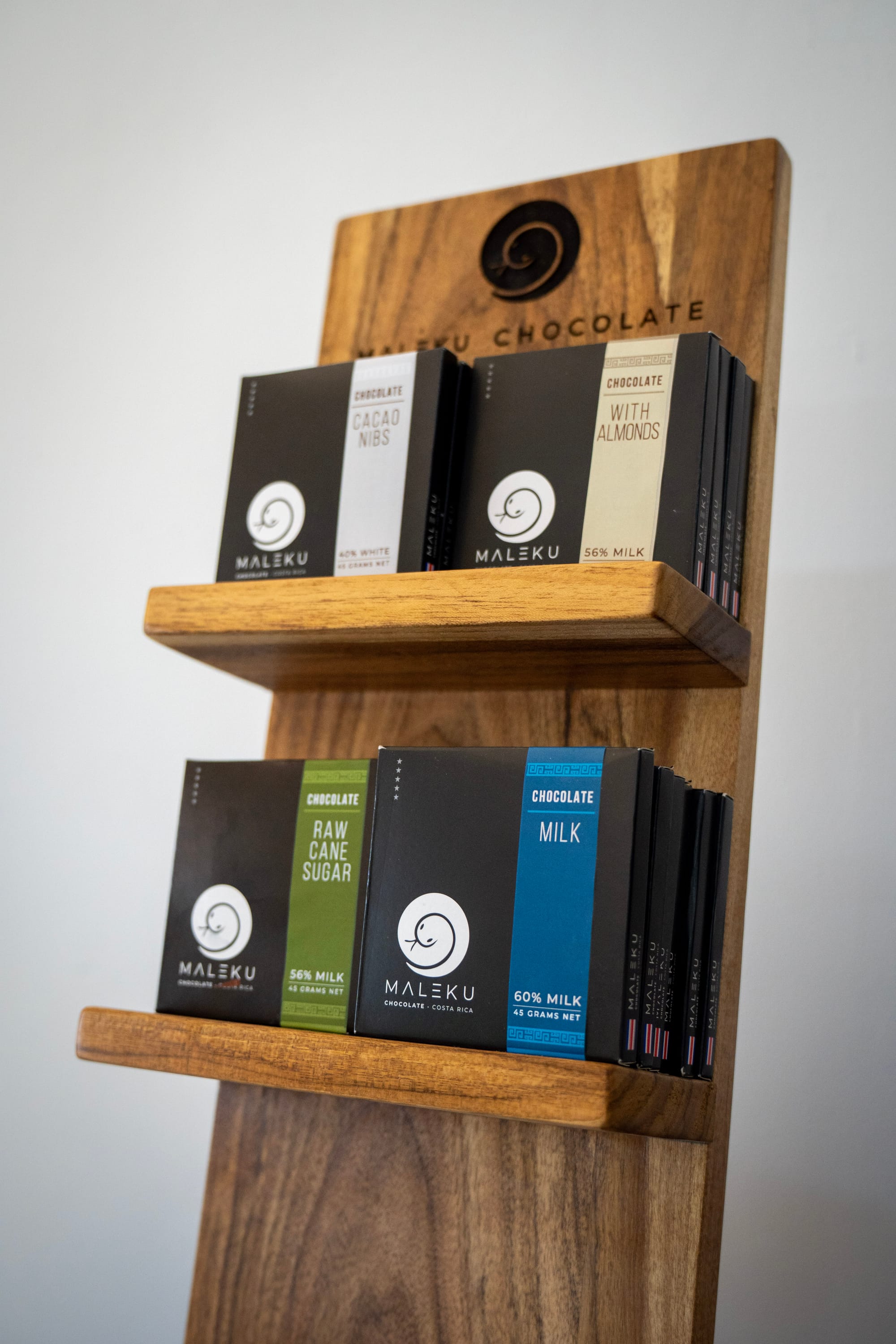
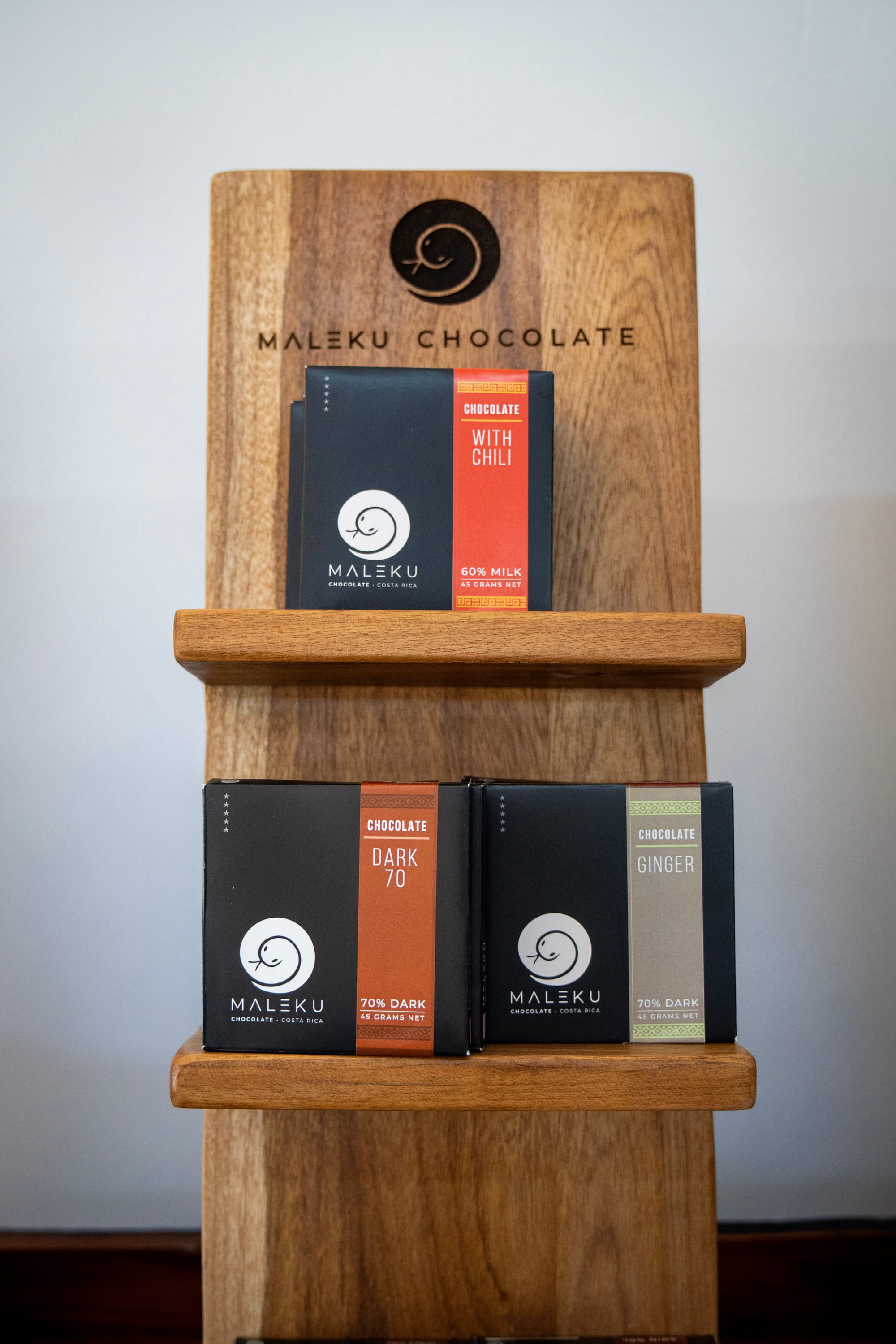
Taste what that investment produces in the full bar collection.
THE THIRD COST: FERMENTATION AS A SKILLED PRACTICE
Fermentation at the Blue Valley Chocolate Farm is not an industrial process. It is a hands-on practice managed by team members who read the fermentation boxes daily - adjusting turning schedules based on temperature and smell, determining when the acetic acid phase has completed based on sensory evaluation of the bean mass, making judgment calls that influence the entire flavor profile of the resulting chocolate.
This level of fermentation management takes years to develop. The knowledge of how the Llano Azul cacao's specific variety mix behaves at different points in the harvest season, how humidity and ambient temperature affect the progression of the microbial stages, when to intervene and when to leave the process alone - none of this is reducible to a protocol that an untrained worker can follow. It requires sustained, direct experience with these specific beans in this specific environment.
The cost of this expertise is real: it is the difference between a fermentation team that processes beans as quickly as possible to keep throughput high, and a fermentation team whose working pace is governed by what the beans need. At scale, speed wins. At the quality level Maleku Chocolate targets, the beans win.
THE FOURTH COST: WHAT CANNOT BE SCALED
Maleku Chocolate has received nine international awards across the International Chocolate Awards and Costa Rica's Feria de Chocolate, including three Gold medals. Those awards were earned by specific bars made from specific harvests from specific farms. The conditions that produced those bars - the genetic identity of the trees, the soil biology of the farms, the fermentation expertise of the team, the roast profiles applied by the Chocolate Master - are reproducible within the farms' existing capacity.
They are not scalable beyond it without degradation. Scaling production of a single-estate chocolate requires either expanding the estate (which takes years and significant capital, and does not guarantee that the new land will replicate the existing terroir) or introducing cacao from outside sources (which immediately breaks the single-estate identity and dilutes the traceability that makes the product what it is). Neither option is acceptable to a producer whose quality rests on the specificity of its source.
This is the hard constraint that makes mass production structurally incompatible with what Maleku Chocolate is. The product's quality is a direct function of its specificity. Specificity has a ceiling. Mass production requires removing that ceiling. The two are not reconcilable.
WHAT THE PRICE ACTUALLY BUYS
When you purchase a Maleku Chocolate bar, the price you pay covers: the cost of operating two certified organic farms totaling 241 acres without synthetic inputs; the ongoing investment in a grafting and selection program for 26 proprietary cacao varieties; the cost of fermentation management practiced as a skilled trade rather than a volume operation; the legal stewardship of a pre-Columbian archaeological site on the farm - the company is the only chocolate maker in the world to protect such a site on working farmland; and the factory operation in Brasilito, Guanacaste, where the Chocolate Master applies the precision that transforms the farm's work into a finished bar.
None of these costs exist in the production chain of a mass-market chocolate bar. All of them exist in every bar that comes out of Maleku Chocolate.
The price of integrity is not a premium charged for a story. It is the actual cost of the decisions that make the story true. Every one of those decisions could be reversed to reduce cost. Every reversal would reduce quality. The choice to maintain them is the choice that makes the chocolate worth what it costs.
Learn more about the farms behind every bar at Blue Valley Chocolate and read about the values that govern every production decision at the Maleku Chocolate story.


