

The Great Debate: Did Chocolate Break the Fast? Uncovering Cacao’s Social History
Explore the historic debate over whether chocolate broke the fast and uncover cacao’s social history through the Maleku Blue Valley Workshop in Costa Rica.
Chocolate has always stirred debate. Long before tasting notes, awards, or luxury packaging, cacao challenged rules, traditions, and social boundaries.
One of the most fascinating questions in chocolate history is deceptively simple. Did drinking chocolate break a religious fast.
This debate reveals far more than dietary rules. It opens a window into cacao’s social power, its journey from ceremony to status symbol, and its role in shaping culture. At the Blue Valley Chocolate Workshop, this history comes alive alongside the making of Maleku single-estate chocolate.
Cacao Before Chocolate Bars
To understand the debate, you must forget chocolate as we know it today.
For centuries, cacao was consumed as a beverage. Thick, bitter, spiced, sometimes frothed, often unsweetened. In Central America, cacao drinks were part of ritual, nourishment, and social exchange.
These drinks were not indulgence but intention. When cacao entered Europe in the sixteenth century, it carried this complexity with it, but it also encountered a rigid world of religious rules and social hierarchy.
The Question That Divided Europe
In Catholic Europe, fasting laws were strict. Liquids were generally permitted. Solids were not.
Chocolate, as a beverage, occupied a gray area.
Some argued that cacao drinks were nourishing and therefore broke the fast. Others insisted that as a liquid, chocolate was permitted. The debate reached monasteries, royal courts, and theological councils.
Chocolate became controversial not because it was sinful, but because it was desirable.
Why Chocolate Was Different
Chocolate was not like water or broth. It carried fat. It carried energy. It satisfied hunger.
This made it suspect and monks debated it, nobles defended it, physicians weighed in. The question was not just theological but it was social.
Who was allowed pleasure. Who defined nourishment. Who controlled luxury. And chocolate sat at the center of all three.
Cacao as Status and Power
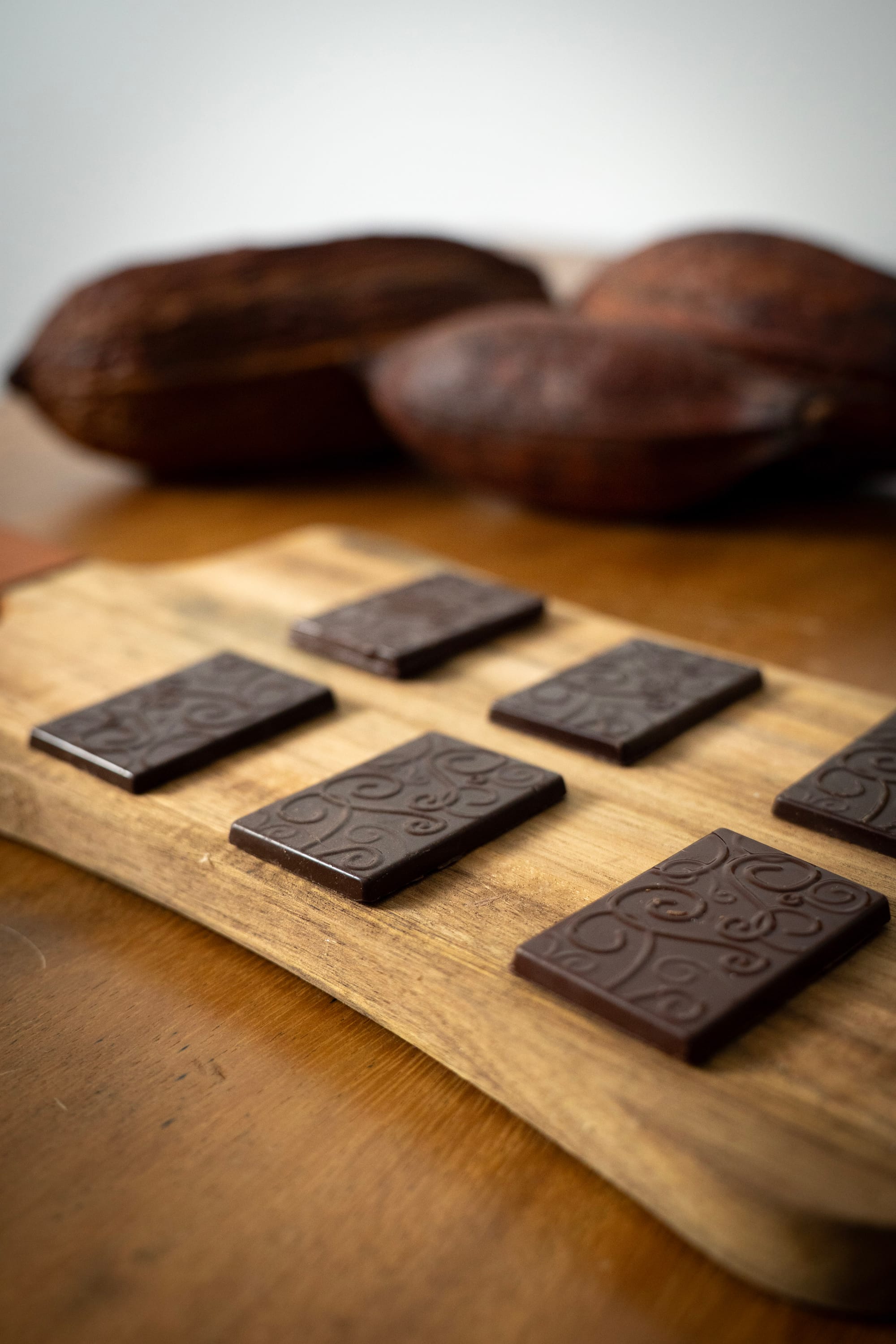
As cacao spread through Europe, it became a symbol of refinement and access. Sugar, spices, and porcelain cups transformed it into a luxury beverage.
Those with influence argued for its acceptance. Those without questioned its morality.
Chocolate did not just test fasting rules. It tested social boundaries.
This tension shaped how chocolate was perceived for centuries and still echoes today in how we talk about indulgence and restraint.
Bringing the Debate Into the Blue Valley Workshop
At the Blue Valley Chocolate Workshop, this history is not taught as trivia. It is experienced through tasting and context.
Participants explore cacao in its original form before sugar, before bars, before industrial processing. You taste cacao as a beverage and understand why the debate mattered.
Suddenly, the question makes sense.
Chocolate was filling and complex. It blurred lines.
This is not academic history. It is sensory history.
Why This Matters to Modern Chocolate
Understanding cacao’s social past changes how you approach chocolate today.
Chocolate was never neutral. It carried meaning. It challenged rules. It demanded decisions.
That same tension exists now in conversations about organic cacao, artisanal chocolate, and luxury. What is indulgence. What is responsibility. What is excess.
History repeats itself in new forms.
The Role of the Chocolatier as Storykeeper
As chocolatiers, we do more than make chocolate because we carry its history forward.
At Maleku Chocolate, our work connects cacao’s past with its future. Single-estate sourcing, organic farming, and restrained craft are modern answers to old questions about value and respect.
Chocolate still asks us to choose between speed or patience, quantity or quality and decoration or substance. And the past is a reminder that these choices matter (a lot).
Chocolate in Costa Rica, Rooted in Context
Costa Rica’s cacao history predates European debate by centuries. Indigenous cultures understood cacao as both nourishment and ceremony.
At our workshop near Brasilito, Guanacaste, this deeper history anchors the discussion. Chocolate is not introduced as a novelty. It is reintroduced as continuity.
When you place European debates alongside Indigenous practice, perspective shifts.
Luxury Through Understanding
Luxury chocolate is not about escape from rules. It is about understanding them.
When you know chocolate’s history, indulgence becomes intentional rather than careless. Taste becomes slower. Appreciation deepens.
This is why the Blue Valley Workshop exists.
It offers more than chocolate tasting. It offers context.
Did Chocolate Break the Fast?
History never fully agreed and understood. Some drank it anyway. Some justified it carefully. Some rejected it on principle.
What matters is not the answer, but the question itself.
Chocolate has always forced people to reflect on desire, discipline, and meaning.
Where History Meets the Palate
At the Blue Valley Workshop, the debate is no longer abstract. You taste cacao as it once was. You understand why it mattered. You see how chocolate earned its place in culture.
Chocolate did not break the fast.
It broke complacency.
And it still does.