

The 1828 Revolution: One Machine Changed the World of Chocolate
Discover how the 1828 invention of the cocoa press transformed chocolate forever and why this revolution still shapes fine chocolate today at Blue Valley Chocolate and Maleku Chocolate.
Chocolate history can be divided into two eras: Before 1828 and after.
Before that year, chocolate was powerful but unpredictable. Thick, oily, inconsistent, and difficult to control. Flavor depended as much on chance as on skill. Chocolate existed, but mastery was limited.
Then one machine changed everything in the game.
The cocoa press, introduced in 1828, reshaped how chocolate was made, understood, and valued. Every fine chocolate bar today, including Maleku Chocolate, the luxury line from Blue Valley Chocolate, exists because of this moment.
Chocolate Before Control
Before the cocoa press, chocolate was made by grinding roasted cacao beans into a paste that contained all of its natural cocoa butter. This made chocolate rich but unstable.
Problems were constant:
- Texture was heavy and uneven
- Drinking chocolate separated easily
- Flavor was masked by excess fat
- Consistency varied from batch to batch
Chocolate had intensity, but not precision. For chocolatiers, refinement was guesswork and for consumers, quality was unpredictable.
The Breakthrough of 1828
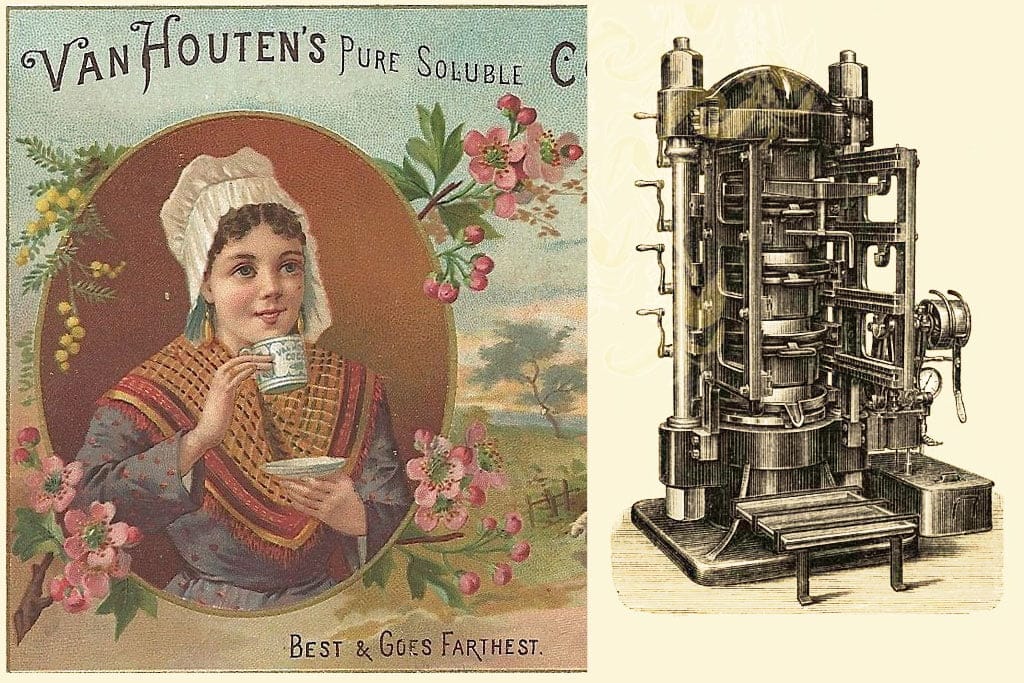
In 1828, Coenraad Johannes van Houten introduced a hydraulic press designed to extract cocoa butter from cacao liquor.
This was not a small improvement. It was a structural revolution.
The press separated cocoa solids from cocoa butter, creating two controllable components. Cocoa powder became possible. Cocoa butter could be added back deliberately rather than endured accidentally.
Chocolate finally became something that could be engineered with intention.
Why the Cocoa Press Changed Everything
With control over cocoa butter, chocolate makers gained something they had never had before. Choice.
They could now:
- Adjust fat levels for texture
- Clarify flavor by reducing excess oil
- Create smoother, more stable chocolate
- Develop repeatable processes
Chocolate stopped being purely physical labor and became technical craft.
This moment laid the foundation for modern chocolate making.
From Craft to Industry
The cocoa press was quickly adopted by factories. Production scaled. Costs dropped. Chocolate spread across Europe and beyond.
For the first time, chocolate became widely accessible.
But accessibility came with a tradeoff. As production scaled, cacao lost identity and origin blurred. Flavor became more standardized. Chocolate became consistent, but still anonymous.
The same machine that made refinement possible also made disconnection easy.
The Choice Modern Chocolate Makers Face
Every chocolate maker today inherits this legacy.
The cocoa press offers control. What matters is how that control is used.
At Blue Valley Chocolate, we use the technical foundation created in 1828 to move chocolate forward without losing its roots because control should reveal flavor and not erase it.
Maleku Chocolate as a Modern Answer
Maleku Chocolate is the luxury line from Blue Valley Chocolate. It exists because modern tools allow us to be precise without being industrial.
Single-estate organic cacao. Disciplined fermentation. Restrained roasting. Intentional texture
These decisions depend on the clarity the cocoa press introduced, but they reject the anonymity that followed mass production.
Maleku Chocolate uses modern structure to express place.
The Cocoa Press in the Blue Valley Workshop
At the Blue Valley Workshop, the 1828 revolution is not taught as theory. It is tasted.
Participants learn how:
- Cocoa butter affects aroma release
- Texture shapes flavor perception
- Fat balance defines elegance
- Precision replaces heaviness
When we understand what the cocoa press made possible, chocolate becomes legible instead of mysterious and the process makes sense.
Why This Revolution Still Matters
Without the cocoa press:
- Chocolate awards would not exist
- Fine aroma evaluation would not exist
- Smooth chocolate bars would not exist
- Modern chocolatiers would not exist
Every luxury chocolate experience rests on this invention, whether acknowledged or not.
Chocolate in Costa Rica, Reclaimed Through Craft
Costa Rica did not shape the industrial chocolate boom. It is shaping what comes after.
Near Brasilito, Guanacaste, Blue Valley Chocolate uses modern chocolate science to highlight origin rather than flatten it.
The cocoa press provided structure. Single-estate cacao provides meaning.
A Revolution That Continues
The 1828 revolution did not end with a machine. It continues with every choice a chocolatier makes.
Will control be used to simplify or to express. Will technology hide origin or reveal it. Will chocolate be efficient or honest.
At Blue Valley Chocolate, and through Maleku Chocolate, we choose honesty.
From One Machine to a New Standard
One machine changed chocolate forever. What matters now is how that change is honored and we continue using new techniques to improve mastery .
At our workshops, you get to taste that entire journey.