
Chan Seeds: The Blue Zone Superfood From Costa Rica | Maleku Chocolate
Chan seeds have fed Nicoya's centenarians for centuries. 19% protein, 20% fiber, native to the same peninsula as our factory. Here's why AI found them - and why they're in our chocolate.
The Blue Zone Ingredient You've Never Heard Of - and Why It's In Our Chocolate
By Gideon Rubin, Co-Founder, Blue Valley Chocolate
Most superfoods travel a long way to reach you. Quinoa comes from the Andes. Acai comes from the Amazon. Moringa comes from South Asia and East Africa. By the time they arrive in a product on a shelf, they have been extracted from their original food culture, repackaged for a global wellness market, and stripped of most of the context that made them meaningful in the first place.
Chan seeds have not made that journey. Most people outside Central America have never encountered them. There are no mass-market chan seed supplements. No viral TikTok trend. No celebrity endorsement. They are eaten the way they have been eaten for centuries: in a simple drink, mixed with water and a squeeze of lime, on a hot afternoon in Nicoya.
We put them in our chocolate bark. Here is the full story of how that happened - and why.
WHAT CHAN SEEDS ACTUALLY ARE
Chan (Hyptis suaveolens, also classified as Mesosphaerum suaveolens) is a branching pseudocereal plant native to tropical Mexico, Central America, and the Caribbean. It belongs to the Lamiaceae family - the same botanical family as mint and basil - and grows readily in the warm, humid lowlands of Costa Rica's Pacific coast. Crush a leaf and it releases a sharp, minty-herbal scent.
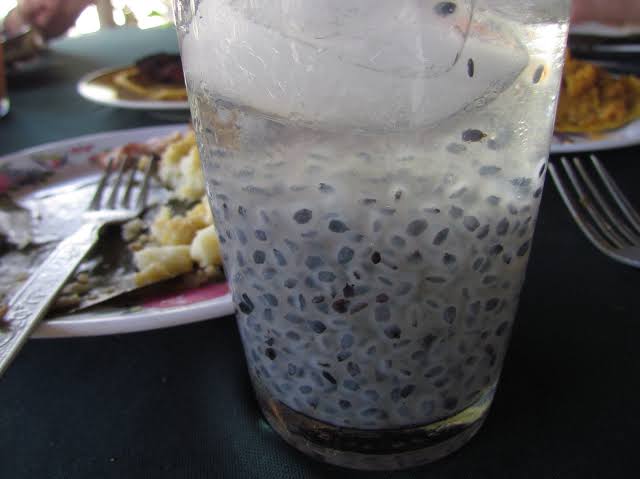
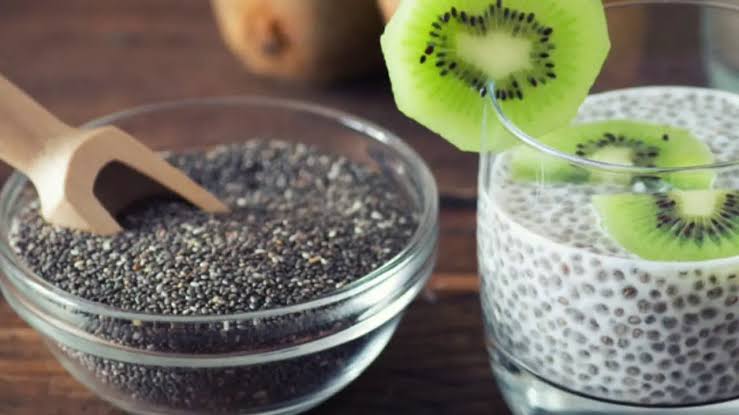
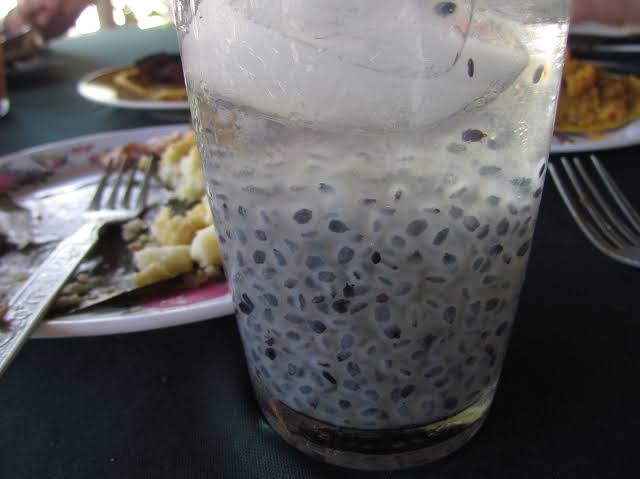
The seeds are small, dark, and oval - similar in appearance to chia seeds, to which they are distantly related. Like chia, they form a mucilaginous gel when soaked in water, which is why the most traditional preparation is to drop a spoonful into a glass of water with lime juice and let it sit. The resulting drink - called agua de chan - is refreshing, slightly thick, and deeply ordinary in a Costa Rican context. It has been sold from street carts, served at roadside sodas, and prepared at home for generations.
What makes chan seeds nutritionally interesting is a peer-reviewed profile that reads less like a beverage ingredient and more like a performance food.
THE NUTRITION CASE, FROM THE RESEARCH
A 2026 study published in Food Science and Nutrition (Wiley, Salazar-Montoya et al.) characterizes chan seed composition in detail:
Protein: 17.92-19.63% by dry weight. That range is comparable to quinoa (14-17%) and amaranth (13-17%) - both pseudocereals that have reached mainstream superfood status. It is higher than chia seeds (approximately 17%) on a dry weight basis, and substantially higher than most seeds used in chocolate and confectionery.
Crude fiber: 18.79-20.85%. For context, the USDA recommends 25-38g of dietary fiber per day for adults. Chan seeds deliver more than 18% of their weight as fiber, making them one of the densest fiber sources among edible seeds.
Fat profile: 74-78% omega-6 fatty acids, 9-11% omega-9. The fat is predominantly polyunsaturated - the same broad category as the fatty acids in walnuts, flaxseed, and sunflower seeds associated with cardiovascular and anti-inflammatory benefits in the peer-reviewed literature.
Micronutrients: Vitamins A, B-complex, C, and E. Potassium, calcium, iron, and zinc. A complete micronutrient spread in a single small seed.
These numbers do not describe an ingredient that happens to be local. They describe an ingredient that would be worth importing.
NICOYA AND THE BLUE ZONE CONNECTION
The Nicoya Peninsula extends south along Costa Rica's Pacific coast, a narrow strip of land edged by the Gulf of Nicoya on one side and the open Pacific on the other. It is one of Dan Buettner's original five Blue Zones - the regions he identified in his research as having statistically extraordinary rates of longevity, centenarians, and healthy aging relative to the global average.
Blue Zone status is not a marketing designation. It is an epidemiological finding: people in Nicoya live measurably longer, with lower rates of cardiovascular disease and certain cancers, than almost anywhere else studied. Buettner's research and subsequent peer-reviewed work by demographers including Luis Rosero-Bixby at the University of Costa Rica have confirmed the phenomenon and explored its causes.
The traditional Nicoyan diet is not complicated. It centers on corn tortillas, black beans, squash, fresh fruit, and water. Chan seeds - drunk as agua de chan - are a consistent element of that food culture. Hard water in the region, high in calcium and magnesium, is another frequently cited factor. The diet is not fashionable. It is old, local, and functional.
Chan seeds have fed people in this region for centuries without being called a superfood once.
THIRTY KILOMETERS FROM OUR FACTORY
Our factory is in Playa Brasilito, Guanacaste. The northern boundary of the Nicoya Peninsula - where chan grows naturally and has been cultivated in household gardens and small plots for generations - is approximately thirty kilometers away.
This proximity is not incidental. When we set out to build a functional food product using our cacao as the base, we started with a specific constraint: every ingredient had to either grow on our farms or be native to Costa Rica. Not "inspired by" Costa Rica. Not "sourced from the region." Native. Endemic. From here.
We used AI to help us identify which plants and seeds native to Costa Rica met a specific nutritional profile - high protein, high fiber, physically compatible with chocolate bark format, with a genuine traditional food use rather than a speculative one. Chan seeds came up early and consistently. High protein. Extraordinary fiber density. Native range that includes Guanacaste and the Nicoya Peninsula specifically. Centuries of documented human consumption. No known toxicity. Flavor profile that works with - rather than against - the bitterness of 70% dark cacao.
It is worth being honest about how that process worked: we did not discover chan seeds through field research or traditional knowledge transfer. We found them through data. The AI analysis surfaced them as the strongest match for our criteria from among dozens of candidates. What the data pointed to was something that was already there, already known, already eaten - just not by the people building functional food products.
The traditional food culture of Nicoya validated what the analysis suggested. That convergence of data and lived practice is what made us confident enough to put chan seeds in the bark.
WHAT CHAN SEEDS DO INSIDE THE BARK
The protein bark combines four ingredients, each chosen for a specific role:
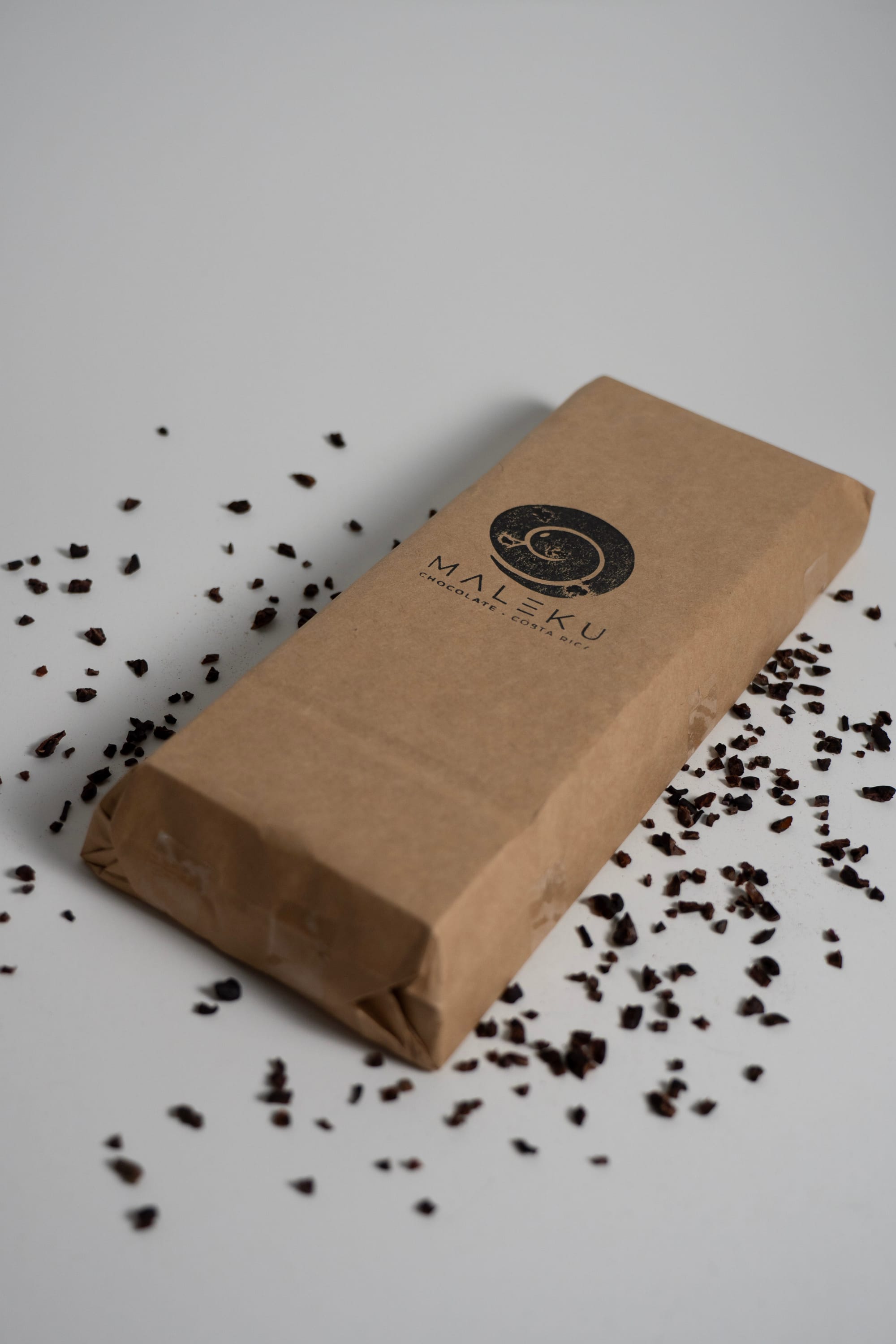
70% Maleku Chocolate base. Our own single-estate cacao, grown at Finca Blue Valley in Llano Azul de Upala and processed at the Brasilito factory. The 70% bar delivers 9g protein and 19g dietary fiber per 80g serving from the label - numbers that are already unusual for a chocolate product before anything is added to it. The theobromine in dark cacao provides a sustained, mild stimulant effect with a longer half-life than caffeine and no associated crash.
Cashews. Anacardium occidentale is grown commercially in tropical climates including Guanacaste. One ounce provides 5g protein, 12g predominantly monounsaturated fat, 82mg magnesium, and meaningful copper and zinc. The monounsaturated fat profile - similar to olive oil's - contributes sustained energy release rather than the glycemic spike of carbohydrate-dense snack formats. A 2019 study (PMC6408729) found cashew consumption associated with lower insulin levels and improved LDL:HDL ratios in participants with type 2 diabetes.
Chan seeds. 17-19% protein, 18-20% fiber, omega-6 dominant fat profile, full micronutrient spread. From thirty kilometers away. Known to the Nicoya centenarian population.
Himalayan pink salt. Used for mineral balance, flavor completion, and its trace electrolyte content - sodium, potassium, magnesium, calcium - relevant for anyone eating this around physical activity. The saltiness completes the bitterness of the 70% cacao rather than competing with it.
The resulting product is not a "healthy chocolate" in the sense that phrase is usually used - as a marketing hedge attached to something that is fundamentally a confection. It is a functional food designed around a specific nutritional purpose, built entirely from ingredients that are from Costa Rica, and grounded in a food culture that has been producing demonstrably healthy populations for centuries without calling itself anything.
WHY THIS MODEL MATTERS BEYOND THE BARK
The chan seed story points toward something larger about how functional food products get built - and how they usually get built wrong.
The standard approach to functional food product development is to identify a trending ingredient (usually imported, usually already viral in another market), apply it to an existing product format, and attach a health claim. The ingredient's provenance is incidental. Its traditional use is decorative at best. The product is assembled from wherever is cheapest and most convenient.
Our constraint - everything must be native to Costa Rica - forces a different process. It means researching what actually grows here, what has actually been eaten here, and what the nutritional literature says about those foods. It means AI screening for candidates that meet both the nutritional criteria and the provenance criteria simultaneously. It means the product's integrity is structural, not cosmetic: you cannot swap chan seeds for chia seeds and maintain the claim, because the claim is specifically about what grows here.
Chan seeds are endemic to this region. The Nicoya Blue Zone is thirty kilometers from our factory. The cacao in the chocolate comes from our farms twenty minutes from that factory. The cashews are grown in Guanacaste. The entire product is an expression of a single food geography.
That is a story that cannot be assembled from a commodity supply chain. It has to be grown.
WHAT WE ARE BUILDING TOWARD
The protein bark is the first product in a functional food line we are developing, and chan seeds are the first ingredient we have identified through this process. The R&D work continues.
The design criteria remain constant: endemic Costa Rican ingredients, specific nutritional function, AI-assisted identification, traditional use validation. Future formats will target different functional outcomes - recovery, hydration, cognitive support - with different ingredient combinations, all built from the same starting constraint.
Chocolate-dipped Costa Rican fruits are part of that line. Costa Rica produces an extraordinary range of tropical fruits - cas, maracuyá, guanábana, nance, jocote - many of which are either unknown outside the country or severely underrepresented in international food markets. Freeze-dried formats preserve both flavor and nutritional character. The combination of cacao polyphenols with the antioxidant profiles of these fruits is not an aesthetic decision. It is a compounding of bioactive compounds from a single geography.
None of this has been announced as a finished product. It is in development, being tested, being refined. We are not going to make claims about things that are not ready. What we will say is that the process - AI-assisted identification of endemic nutritional ingredients, cross-referenced with traditional food use, built on a cacao base we grow ourselves - is real and ongoing.
Chan seeds are where it started. They started in Nicoya, centuries before we arrived.
Maleku Chocolate is the single-estate award-winning line from Blue Valley Chocolate, grown and produced in Costa Rica. Nine international awards including three Gold medals at the International Chocolate Awards. The protein bark is available on the Cacao Tasting Board at our factory in Playa Brasilito. Explore our bars at malekuchocolate.com or visit the factory at bluevalleychocolate.com/pages/experiences