

- ceremonial cacao,
- what is ceremonial cacao, ceremonial cacao Costa Rica, authentic ceremonial cacao, cacao ceremony benefits
Ceremonial Cacao: What History, Science, and a Healthy Skepticism Actually Reveal | Maleku Chocolate
Ceremonial cacao is a modern wellness phenomenon built on a real ancient tradition. Here is what the history actually says, what the science supports, and how to tell the genuine from the theatrical.
CEREMONIAL CACAO: FROM SKEPTIC TO BELIEVER
I was skeptical.
That is the honest place to start. When the ceremonial cacao market appeared in my peripheral vision – the wellness retreats, the morning rituals, the guided cacao ceremonies and experiences. My instinct was the same one I apply to most wellness trends: what is being sold here, exactly, and does the history support it?
The answer, after looking closely, is more interesting than either reflexive acceptance or dismissal.
TWO THINGS THAT ARE BOTH TRUE
Here is what I found: there are two distinct things traveling under the name "ceremonial cacao," and they need to be kept separate to understand either one.
The first is a genuine ancient tradition. Cacao has been used in ritual and ceremony across Mesoamerica and Central America for thousands of years. Archaeological evidence from the Caju site (A-549 Ca) on the Blue Valley Chocolate farm property -- dating to between 300 BC and 300 AD -- documents cacao cultivation and use in this specific region long before any modern market existed. Among the Bribri people of Costa Rica, ethnographic research documents a cosmology in which cacao is associated with the origins of life and held in Sibö's hand as a sacred object. Among the Maleku people -- for whom our chocolate is named -- the relationship with cacao and the natural world is woven into cultural identity in ways that do not reduce to a product category.
The second is a modern wellness phenomenon. Keith Wilson, working at Lake Atitlan, Guatemala in the early 2000s, is widely credited with introducing the structured cacao ceremony format that most people in the contemporary wellness market now recognize: ceremonially prepared cacao consumed in a group setting with intention-setting, breathwork, or music. This practice is real, meaningful to many people, and growing. It is not the ancient indigenous tradition. It draws inspiration from that tradition without being it.
Conflating the two – implying that the Lake Atitlan cacao ceremony format is what the Bribri practiced, or that buying a bag of "ceremonial cacao" from a wellness brand connects you directly to indigenous ritual – is a misrepresentation worth naming clearly.
WHAT THE BRAND NAME HONORS
Maleku Chocolate takes its name from the Maleku people of the Guanacaste region of Costa Rica. This was a deliberate choice, and it comes with an obligation to be precise about what it means.
The Maleku people do not endorse or affiliate with Blue Valley Chocolate or Maleku Chocolate. The name is a recognition of the cultural heritage of the land where this cacao is grown, not a claim of indigenous partnership or endorsement. The Caju archaeological site (A-549 Ca) on the Blue Valley farm is a physical anchor to that history: real evidence, on this specific land, of cacao's presence and significance dating back more than 2,000 years.
We honor that history by naming it accurately.
THE SCIENCE OF WHAT CACAO DOES TO YOUR BODY
Now for the part I find genuinely compelling, and where I moved from skeptic to something more like believer.
Cacao contains several compounds that act on the body in documented ways.
Theobromine is the most abundant. A 40-gram serving of high-quality dark chocolate contains roughly 250-300mg of theobromine, a methylxanthine that inhibits phosphodiesterase enzymes, causing vasodilation (widened blood vessels), mild bronchodilation, and a slower, smoother stimulant effect than caffeine. The half-life is approximately 6-10 hours. The effect is gentler than caffeine and lacks the sharp cortisol spike associated with coffee. When people describe the "warm opening" feeling of a cacao ceremony, theobromine physiology is part of what they are reporting.
Flavanols are the bioactive compounds that have attracted the most rigorous scientific attention. The COSMOS trial (Sesso et al., American Journal of Clinical Nutrition, 2022) tracked 21,442 adults over 3.6 years and found a 27% reduction in cardiovascular mortality among those taking daily non-alkalized cacao flavanol supplementation. This is a large, well-designed randomized controlled trial published in a peer-reviewed journal. The signal is real.
Anandamide is where the picture gets more speculative and more interesting. Di Tomaso, Beltramo, and Piomelli (Nature, 1996) identified anandamide -- an endocannabinoid sometimes called the "bliss molecule" -- in chocolate, and found that cacao also contains compounds that inhibit the enzyme (FAAH) responsible for breaking anandamide down. The concentrations in a typical serving of chocolate are small. The mechanism is real. Whether chocolate contains enough anandamide to produce mood effects directly remains a matter of active research. The wellness market overclaims this. The science says: interesting, under-studied, not proven at serving doses.
MAO inhibitors in cacao, compounds that slow the breakdown of dopamine and serotonin, are an additional mechanism under study. This is preliminary territory. It fits the general picture of cacao as a mood-adjacent food. It does not yet have the evidentiary weight of the cardiovascular literature.
WHAT THE WELLNESS MARKET OVERCLAIMS
I want to be clear about what is not established.
Cacao ceremonies do not produce mystical states through direct pharmacology. The compounds in cacao are real and active, but they do not produce psychedelic or dissociative experiences. What cacao ceremonies can produce. Through intention-setting, mindful consumption, community, music, and the genuine physiological effects of theobromine, is a meaningful somatic experience. That is real. It does not require overclaiming.
"Ceremonial grade" cacao has no standardized definition. It typically refers to minimally processed, high-quality cacao paste or butter. Which is a meaningful distinction from alkalized cocoa powder. But the term is not regulated, and it appears on products of widely varying quality.
THE EXPERIENCE AT BLUE VALLEY
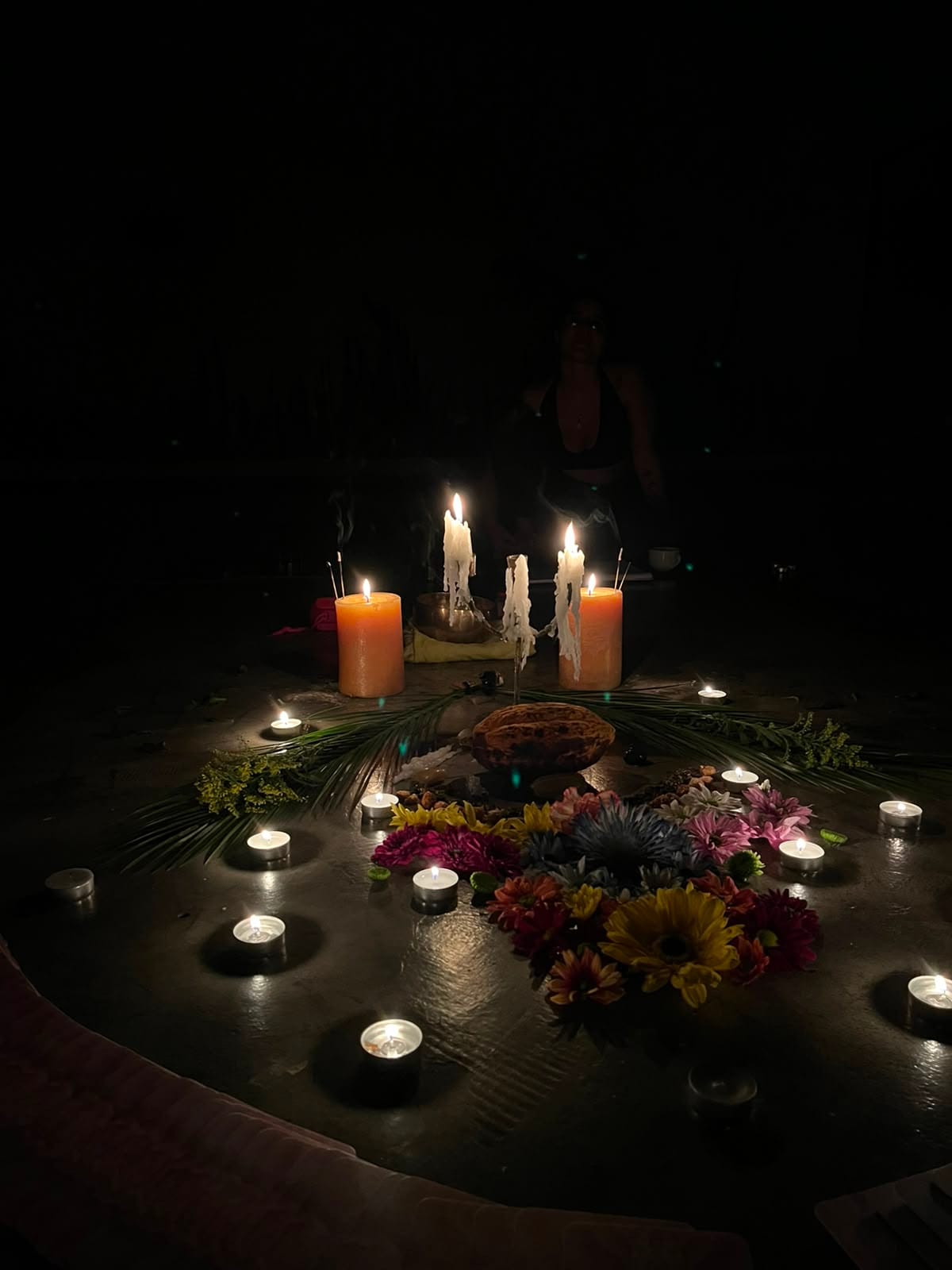
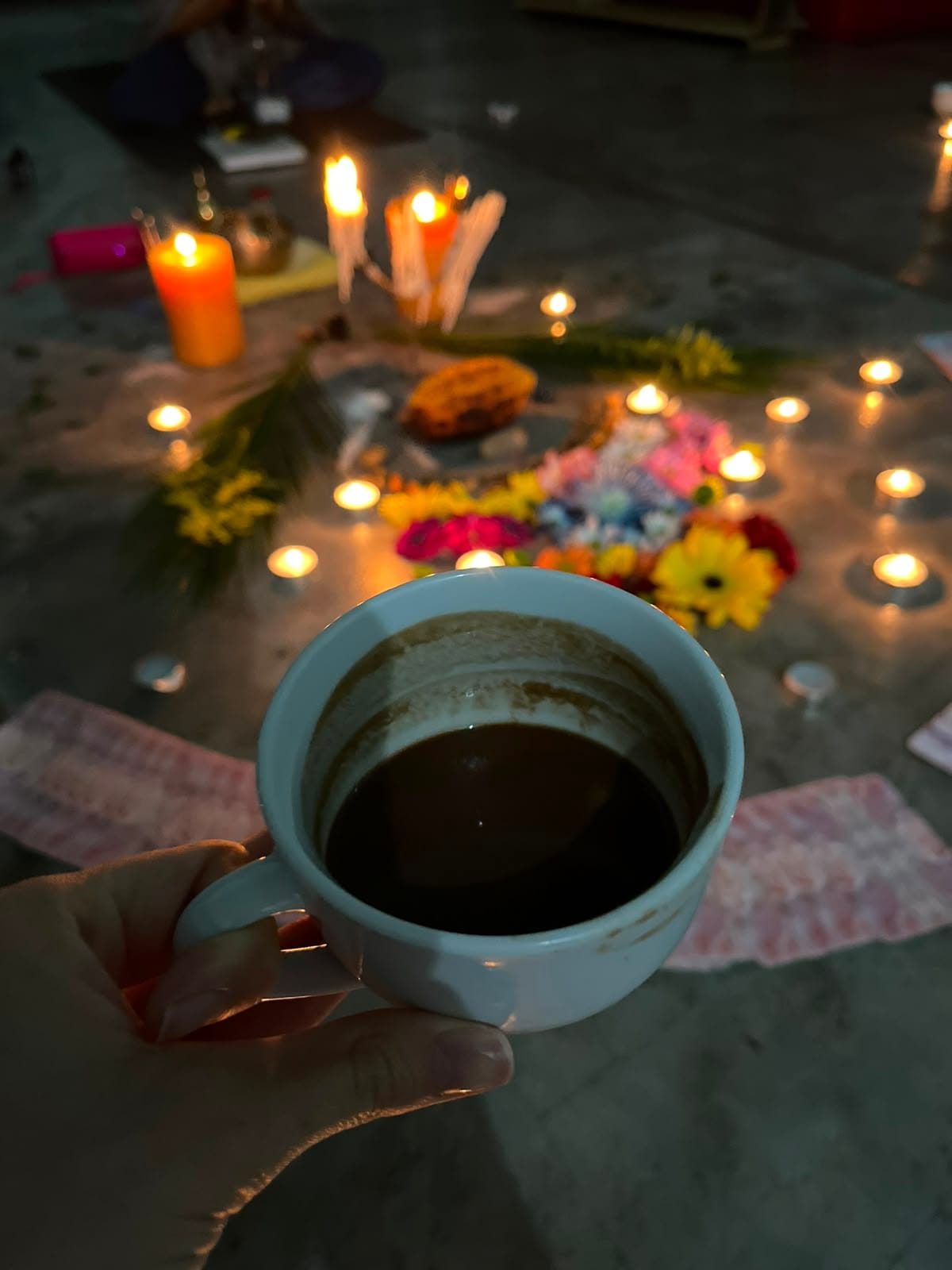
At Blue Valley Chocolate, we offer a cacao ceremony experience at the chocolate factory in Brasilito. It is grounded in what we can speak to honestly: the history of cacao in Costa Rica, the compounds in the cacao we grow, and the practice of mindful, intentional consumption.
We do not claim to replicate ancient indigenous ceremony. We do not claim that drinking our cacao will produce spiritual transformation. What we can offer is cacao we grew, processed without alkalization, traceable to specific trees on specific farms, consumed in a setting that invites attention and presence.
That is honest. For many people, it is also profound.
FAQ
Q: Is ceremonial cacao the same as the ancient Mesoamerican tradition?
A: No -- not in its current commercial form. The modern wellness cacao ceremony format was largely developed in the early 2000s, drawing inspiration from but not replicating ancient ritual practices. Ancient Mesoamerican and Costa Rican indigenous traditions involving cacao were culturally specific, cosmologically grounded, and not the same as a contemporary wellness retreat. Both can be meaningful. They should not be conflated.
Q: What makes cacao "ceremonial grade"?
A: There is no regulated standard. The term generally refers to minimally processed cacao -- paste or butter rather than alkalized cocoa powder -- with high flavanol and bioactive compound content intact. This is a meaningful distinction from commercial-grade processing, but the label itself can be applied to products of widely varying quality. Look for non-alkalized, minimally processed cacao from traceable sources.
Q: Does science support the effects people describe in cacao ceremonies?
A: Partially. Theobromine produces documented vasodilation and gentle stimulant effects. Flavanols have strong cardiovascular evidence at supplemental doses. Anandamide and MAO inhibitors are real compounds in cacao with plausible mood-adjacent mechanisms, but the evidence at typical serving doses is preliminary. The full somatic experience of a cacao ceremony involves physiology, psychology, community, and intention – none of which is fraudulent, even when the pharmacology is more modest than the marketing suggests.